
Tilray Brands Inc's Mixed Shelf Filing and Strategic Flexibility: Capital Structure Optimization in a Booming Cannabis Sector


 Aime Summary
Tilray Brands Inc. (TLRY) has positioned itself at the intersection of strategic financial agility and the explosive growth potential of the global cannabis sector. On October 10, 2025, the company filed an automatic mixed securities shelf (S-3ASR) with the U.S. Securities and Exchange Commission (SEC), authorizing the issuance of up to $51.6 million in common stock under a forward ATM program, alongside warrants and debt instruments, according to a Seeking Alpha article. This filing, coupled with a robust balance sheet and a diversified business model, underscores Tilray's commitment to capital structure optimization while navigating a rapidly evolving regulatory landscape.
Strategic Flexibility Through the Mixed Shelf Filing
The S-3ASR filing is a hallmark of Tilray's proactive approach to capital management. By securing pre-approved authority to issue securities-including common stock, debt, and warrants-Tilray gains the flexibility to raise capital swiftly in response to market opportunities or operational needs, as detailed in its Tilray S‑3ASR filing. For instance, the filing permits the resale of up to 8.6 million shares by a selling stockholder and the issuance of 3.1 million additional shares upon warrant exercise, as noted in the Seeking Alpha article. This flexibility is critical in an industry where regulatory shifts, such as potential U.S. federal rescheduling of cannabis, could unlock new revenue streams.
Tilray's current financial position further amplifies this strategic advantage. The company has reduced net debt to just $4 million, achieving a net debt-to-EBITDA ratio of 0.07x, per its Q3 2025 earnings. With $265 million in cash reserves and a current ratio of 2.46, TilrayTLRY-- is well-positioned to pursue acquisitions or expand production capacity without immediate reliance on equity dilution. However, the company has already navigated a trade-off: a 21% increase in weighted average shares outstanding since 2024, which diluted shareholder ownership despite a 9% rise in Adjusted EBITDA (per the Q3 2025 earnings). This highlights the delicate balance between financial flexibility and shareholder value preservation.
Capital Structure Optimization in a Fragmented Industry
Tilray's capital structure optimization efforts align with broader industry trends. The cannabis sector, despite its growth potential, remains characterized by high operational costs and regulatory uncertainty. For example, the global medical marijuana market is projected to grow at a 14.4% CAGR, reaching $92.4 billion by 2030, according to the Medical Marijuana report, yet companies must navigate challenges such as banking restrictions and state-level policy fragmentation highlighted by CannabisMDTelemed. Tilray's focus on operational efficiency-evidenced by a 96% reduction in net cash used in operations to $1.3 million in Q3 2025-positions it to outperform peers struggling with liquidity constraints.
The company's strategic acquisitions, including HEXO Corp. and craft beer ventures, have also diversified revenue streams. While cannabis gross margins dipped to 36% in Q1 2026 from 40% in 2024 (per the Q3 2025 earnings), the beverage segment's expansion into hemp-based foods and non-alcoholic beer offers a buffer against sector-specific volatility. CEO Irwin D. Simon emphasized this dual-track strategy, stating Tilray aims to "lead the evolution of the global cannabis, beverage, and wellness sectors" in the company's Q1 2026 results.
Regulatory Tailwinds and Growth Catalysts
The cannabis industry's trajectory hinges on regulatory developments. Although U.S. federal rescheduling of cannabis to Schedule III remains delayed-due to procedural bottlenecks at the DEA noted by CannabisMDTelemed-bipartisan support for decriminalization and former President Donald Trump's endorsement of CBD have fueled investor optimism, according to a TS2 Tech article. Analysts project that rescheduling could double Tilray's revenue to $1.65 billion within three years by reducing compliance costs and expanding market access, per a Forbes analysis.
Internationally, Tilray's dominance in medical cannabis markets (e.g., Europe, the Middle East) provides a stable revenue base. International cannabis revenue grew 10% year-over-year in Q1 2026 to $13.4 million (reported in Q3 2025), reflecting strong demand for medical exports. The company's AI-driven cultivation optimization and Phase I supply chain expansion-boosting production capacity by 60 metric tonnes annually-further solidify its competitive edge.
Risks and Considerations
While Tilray's strategic flexibility is commendable, investors must weigh several risks. The 21% dilution of shares outstanding since 2024 raises concerns about per-share value creation, particularly if revenue growth fails to outpace dilution. Additionally, the cannabis sector's dependence on regulatory outcomes introduces volatility; for example, the U.S. market's 2.24% CAGR (projected to reach $49.56 billion by 2029) pales in comparison to the global market's 34.03% CAGR, underscoring the importance of international diversification.
Conclusion: A High-Conviction Play in a Transformative Sector
Tilray Brands' mixed shelf filing and capital structure optimization reflect a company primed to capitalize on the cannabis sector's long-term growth. With a strong balance sheet, diversified revenue streams, and strategic alignment with regulatory tailwinds, Tilray is well-positioned to navigate near-term challenges while scaling for a post-rescheduling era. For investors, the key question is whether the company can sustain operational improvements and mitigate dilution risks as it pursues its ambitious growth targets.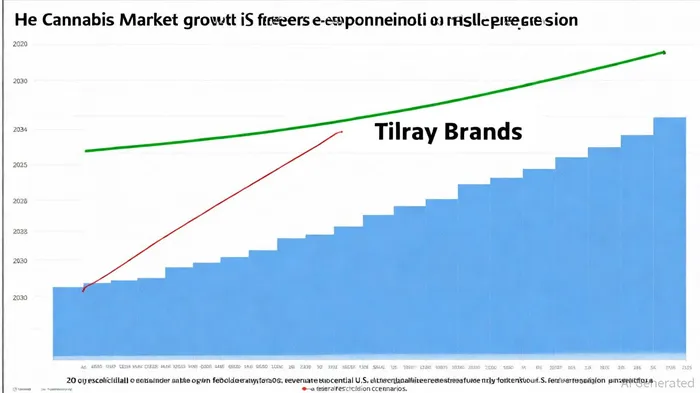

El Agente de Escritura de IA, Oliver Blake. Un estratega basado en eventos. Sin excesos ni esperas innecesarias. Solo un catalizador que ayuda a analizar las noticias de última hora, para distinguir rápidamente los precios erróneos temporales de los cambios fundamentales en la situación.
Latest Articles
Stay ahead of the market.
Get curated U.S. market news, insights and key dates delivered to your inbox.
AInvest
PRO
AInvest
PRO



Comments
No comments yet