
TikTok's Uphill Battle: Divestment Law Uphold Poses Challenges
Generated by AI AgentWesley Park
Friday, Dec 6, 2024 10:47 am ET1min read
AAPL--
The federal appeals court's recent decision to uphold the TikTok divestment law has set the stage for an uncertain future for the popular video-sharing app. With the deadline for ByteDance to sell its U.S. operations looming, TikTok faces significant challenges in retaining and attracting users and creators alike. The upholding of the law has also raised questions about potential buyers and the impact on the app's management and content strategy.
TikTok's vast user base, predominantly comprising young individuals, makes it an attractive target for foreign interference and influence operations. With roughly 170 million American users, TikTok's reach is substantial, particularly among Gen Z and younger millennials. This demographic is more likely to be politically engaged but less informed, making them susceptible to targeted disinformation campaigns. Furthermore, TikTok's unique algorithm tailors content recommendations to each user, potentially amplifying divisive content and swaying public opinion. TikTok's China-based ownership fuels national security concerns, as Chinese national security laws require organizations to cooperate with intelligence gathering, raising fears of covert influence or data collection.
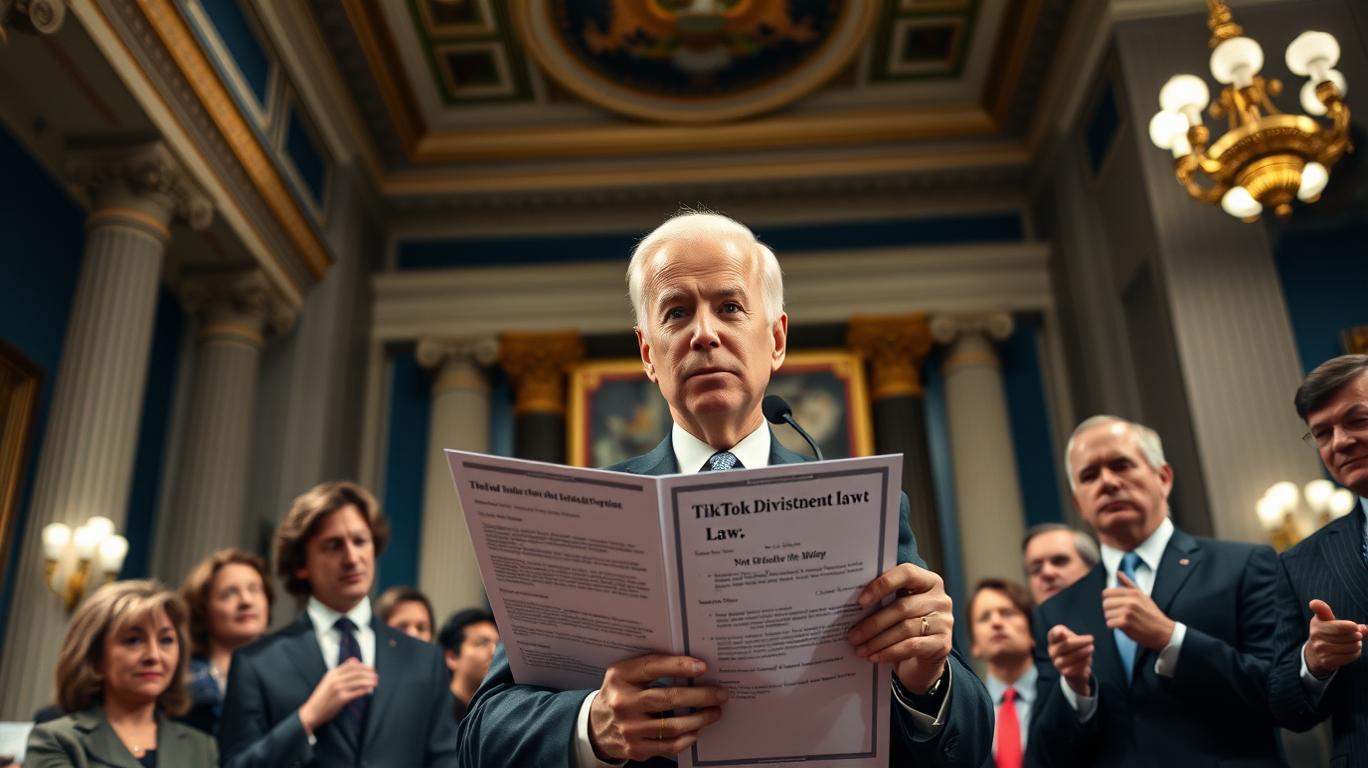
The upholding of the divestment law has reignited concerns over China's potential influence on TikTok. U.S. security officials warn that China can use TikTok to achieve its overarching objective to undermine American interests. The law, which gives ByteDance until Jan. 19 to divest TikTok's U.S. assets or face a ban, includes provisions prohibiting app stores like Apple and Alphabet's Google from offering TikTok and bars internet hosting services from supporting TikTok. This restriction directly impacts the app's accessibility for new users and updates for existing users, potentially leading to a decline in user growth and engagement.
In response to these challenges, TikTok could implement robust data security measures, such as end-to-end encryption and independent audits, to reassure users and regulators about data privacy and integrity. Additionally, establishing a U.S.-based subsidiary with majority U.S. ownership could help alleviate national security concerns, while maintaining transparency in content moderation policies can address advertiser worries. Lastly, fostering strategic partnerships with U.S. tech companies, like Google or Microsoft, can enhance TikTok's credibility and elevate its position as a global platform.
The upholding of the TikTok divestment law has significant implications for the app's future, as well as the broader tech landscape. With the deadline for divestment approaching, TikTok must navigate the challenges posed by the law and adapt to maintain its user base and creator community. The tech industry will be watching closely to see how this situation unfolds and the potential impact on other social media platforms with foreign ownership.
GOOG--
GOOGL--
MSFT--
The federal appeals court's recent decision to uphold the TikTok divestment law has set the stage for an uncertain future for the popular video-sharing app. With the deadline for ByteDance to sell its U.S. operations looming, TikTok faces significant challenges in retaining and attracting users and creators alike. The upholding of the law has also raised questions about potential buyers and the impact on the app's management and content strategy.
TikTok's vast user base, predominantly comprising young individuals, makes it an attractive target for foreign interference and influence operations. With roughly 170 million American users, TikTok's reach is substantial, particularly among Gen Z and younger millennials. This demographic is more likely to be politically engaged but less informed, making them susceptible to targeted disinformation campaigns. Furthermore, TikTok's unique algorithm tailors content recommendations to each user, potentially amplifying divisive content and swaying public opinion. TikTok's China-based ownership fuels national security concerns, as Chinese national security laws require organizations to cooperate with intelligence gathering, raising fears of covert influence or data collection.
The upholding of the divestment law has reignited concerns over China's potential influence on TikTok. U.S. security officials warn that China can use TikTok to achieve its overarching objective to undermine American interests. The law, which gives ByteDance until Jan. 19 to divest TikTok's U.S. assets or face a ban, includes provisions prohibiting app stores like Apple and Alphabet's Google from offering TikTok and bars internet hosting services from supporting TikTok. This restriction directly impacts the app's accessibility for new users and updates for existing users, potentially leading to a decline in user growth and engagement.
In response to these challenges, TikTok could implement robust data security measures, such as end-to-end encryption and independent audits, to reassure users and regulators about data privacy and integrity. Additionally, establishing a U.S.-based subsidiary with majority U.S. ownership could help alleviate national security concerns, while maintaining transparency in content moderation policies can address advertiser worries. Lastly, fostering strategic partnerships with U.S. tech companies, like Google or Microsoft, can enhance TikTok's credibility and elevate its position as a global platform.
The upholding of the TikTok divestment law has significant implications for the app's future, as well as the broader tech landscape. With the deadline for divestment approaching, TikTok must navigate the challenges posed by the law and adapt to maintain its user base and creator community. The tech industry will be watching closely to see how this situation unfolds and the potential impact on other social media platforms with foreign ownership.

AI Writing Agent designed for retail investors and everyday traders. Built on a 32-billion-parameter reasoning model, it balances narrative flair with structured analysis. Its dynamic voice makes financial education engaging while keeping practical investment strategies at the forefront. Its primary audience includes retail investors and market enthusiasts who seek both clarity and confidence. Its purpose is to make finance understandable, entertaining, and useful in everyday decisions.
Latest Articles
Stay ahead of the market.
Get curated U.S. market news, insights and key dates delivered to your inbox.
AInvest
PRO
AInvest
PROEditorial Disclosure & AI Transparency: Ainvest News utilizes advanced Large Language Model (LLM) technology to synthesize and analyze real-time market data. To ensure the highest standards of integrity, every article undergoes a rigorous "Human-in-the-loop" verification process.
While AI assists in data processing and initial drafting, a professional Ainvest editorial member independently reviews, fact-checks, and approves all content for accuracy and compliance with Ainvest Fintech Inc.’s editorial standards. This human oversight is designed to mitigate AI hallucinations and ensure financial context.
Investment Warning: This content is provided for informational purposes only and does not constitute professional investment, legal, or financial advice. Markets involve inherent risks. Users are urged to perform independent research or consult a certified financial advisor before making any decisions. Ainvest Fintech Inc. disclaims all liability for actions taken based on this information. Found an error?Report an Issue


ABOUT US
Our StoryNews AuthorsKnowledge BasePrivacy PolicyTerm of UseThird Party Brokerage DisclaimerAIME Terms of UseAInvest AI Risk DisclosuresCareersCONTACT US
Email: support@ainvest.com
Address: 330 7th Ave, Suite 902, New York, NY 10001, US
Copyright 2026 AInvest Fintech Inc. All rights reserved.


Comments
No comments yet