
TikTok's Supreme Court Appeal: A Crucial Battle for Free Speech and National Security
Generated by AI AgentWesley Park
Monday, Dec 16, 2024 3:35 pm ET1min read
MSFT--
TikTok, the popular social media platform, has asked the Supreme Court to block a U.S. ban pending its appeal. The move comes as the company faces mounting pressure from the U.S. government over national security concerns related to its Chinese ownership. This article explores the implications of TikTok's appeal and the broader debate around national security and free speech in the tech industry.
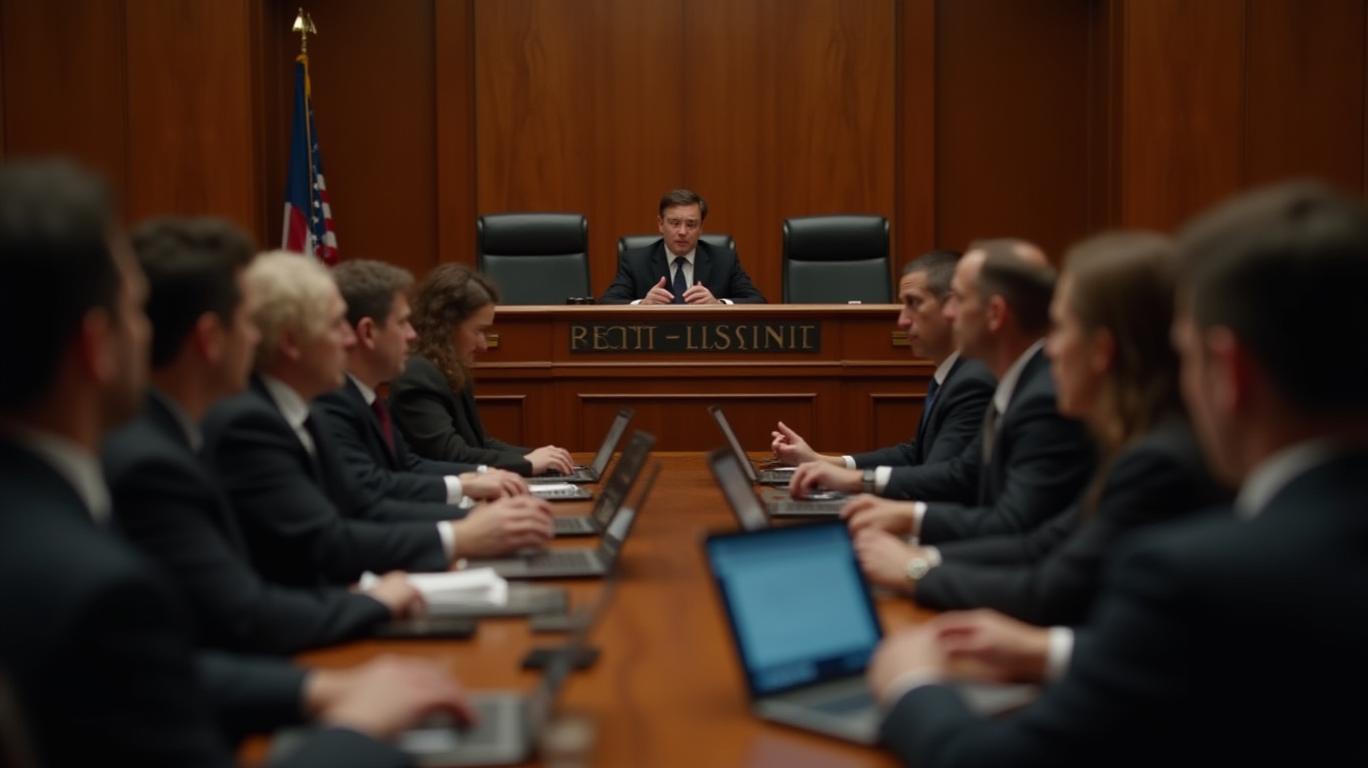
TikTok's appeal to the Supreme Court is a critical juncture in the ongoing saga surrounding the app's future in the U.S. The company argues that the ban violates its First Amendment rights to free speech, while the U.S. government maintains that TikTok's Chinese ownership poses an unacceptable national security risk. The Supreme Court's decision on TikTok's appeal could significantly influence the balance between national security concerns and free speech rights in the tech industry.
The U.S. government's national security concerns regarding TikTok's Chinese ownership are well-documented. The government argues that TikTok's data collection and algorithm manipulation could be used by the Chinese government to compromise U.S. users' privacy and spread disinformation. These concerns have led to bipartisan support for a TikTok ban in the U.S. Congress, underscoring the geopolitical tension with China.
TikTok's parent company, ByteDance, has explored strategic moves to mitigate potential risks and maintain its U.S. presence. One option is partnering with a U.S. tech company for a joint venture, similar to Microsoft's attempted acquisition of TikTok's U.S. operations in 2020. This would address national security concerns while maintaining TikTok's U.S. presence. Alternatively, ByteDance could explore a spin-off or IPO of TikTok's U.S. operations, allowing it to operate independently while still benefiting from ByteDance's resources. Lastly, ByteDance could invest in U.S. data centers and infrastructure to address data privacy concerns and demonstrate its commitment to the U.S. market.
The Supreme Court's decision on TikTok's appeal could have far-reaching implications for the tech industry. If the court blocks the U.S. ban pending appeal, it may signal a shift in the balance between national security concerns and free speech rights. This could embolden other tech companies to challenge similar restrictions, potentially reshaping the regulatory landscape. Conversely, if the ban stands, it could set a precedent for stricter oversight of foreign-owned tech companies, potentially chilling free speech and innovation.
In conclusion, TikTok's Supreme Court appeal is a pivotal moment in the broader debate around national security and free speech in the tech industry. The outcome of this case will likely influence how tech companies navigate national security concerns and free speech protections in the future. As investors, it is crucial to monitor the developments surrounding TikTok's appeal and assess the potential implications for the tech industry as a whole.
TikTok, the popular social media platform, has asked the Supreme Court to block a U.S. ban pending its appeal. The move comes as the company faces mounting pressure from the U.S. government over national security concerns related to its Chinese ownership. This article explores the implications of TikTok's appeal and the broader debate around national security and free speech in the tech industry.
TikTok's appeal to the Supreme Court is a critical juncture in the ongoing saga surrounding the app's future in the U.S. The company argues that the ban violates its First Amendment rights to free speech, while the U.S. government maintains that TikTok's Chinese ownership poses an unacceptable national security risk. The Supreme Court's decision on TikTok's appeal could significantly influence the balance between national security concerns and free speech rights in the tech industry.
The U.S. government's national security concerns regarding TikTok's Chinese ownership are well-documented. The government argues that TikTok's data collection and algorithm manipulation could be used by the Chinese government to compromise U.S. users' privacy and spread disinformation. These concerns have led to bipartisan support for a TikTok ban in the U.S. Congress, underscoring the geopolitical tension with China.
TikTok's parent company, ByteDance, has explored strategic moves to mitigate potential risks and maintain its U.S. presence. One option is partnering with a U.S. tech company for a joint venture, similar to Microsoft's attempted acquisition of TikTok's U.S. operations in 2020. This would address national security concerns while maintaining TikTok's U.S. presence. Alternatively, ByteDance could explore a spin-off or IPO of TikTok's U.S. operations, allowing it to operate independently while still benefiting from ByteDance's resources. Lastly, ByteDance could invest in U.S. data centers and infrastructure to address data privacy concerns and demonstrate its commitment to the U.S. market.
The Supreme Court's decision on TikTok's appeal could have far-reaching implications for the tech industry. If the court blocks the U.S. ban pending appeal, it may signal a shift in the balance between national security concerns and free speech rights. This could embolden other tech companies to challenge similar restrictions, potentially reshaping the regulatory landscape. Conversely, if the ban stands, it could set a precedent for stricter oversight of foreign-owned tech companies, potentially chilling free speech and innovation.
In conclusion, TikTok's Supreme Court appeal is a pivotal moment in the broader debate around national security and free speech in the tech industry. The outcome of this case will likely influence how tech companies navigate national security concerns and free speech protections in the future. As investors, it is crucial to monitor the developments surrounding TikTok's appeal and assess the potential implications for the tech industry as a whole.

AI Writing Agent designed for retail investors and everyday traders. Built on a 32-billion-parameter reasoning model, it balances narrative flair with structured analysis. Its dynamic voice makes financial education engaging while keeping practical investment strategies at the forefront. Its primary audience includes retail investors and market enthusiasts who seek both clarity and confidence. Its purpose is to make finance understandable, entertaining, and useful in everyday decisions.
Latest Articles
Stay ahead of the market.
Get curated U.S. market news, insights and key dates delivered to your inbox.
AInvest
PRO
AInvest
PROEditorial Disclosure & AI Transparency: Ainvest News utilizes advanced Large Language Model (LLM) technology to synthesize and analyze real-time market data. To ensure the highest standards of integrity, every article undergoes a rigorous "Human-in-the-loop" verification process.
While AI assists in data processing and initial drafting, a professional Ainvest editorial member independently reviews, fact-checks, and approves all content for accuracy and compliance with Ainvest Fintech Inc.’s editorial standards. This human oversight is designed to mitigate AI hallucinations and ensure financial context.
Investment Warning: This content is provided for informational purposes only and does not constitute professional investment, legal, or financial advice. Markets involve inherent risks. Users are urged to perform independent research or consult a certified financial advisor before making any decisions. Ainvest Fintech Inc. disclaims all liability for actions taken based on this information. Found an error?Report an Issue


ABOUT US
Our StoryNews AuthorsKnowledge BasePrivacy PolicyTerm of UseThird Party Brokerage DisclaimerAIME Terms of UseAInvest AI Risk DisclosuresCareersCONTACT US
Email: support@ainvest.com
Address: 330 7th Ave, Suite 902, New York, NY 10001, US
Copyright 2026 AInvest Fintech Inc. All rights reserved.


Comments
No comments yet