
TikTok's Governance Shift and Its Implications for U.S. Tech Exposure: Assessing Strategic and Investment Risks of Chinese Influence in Key Digital Platforms


 Aime Summary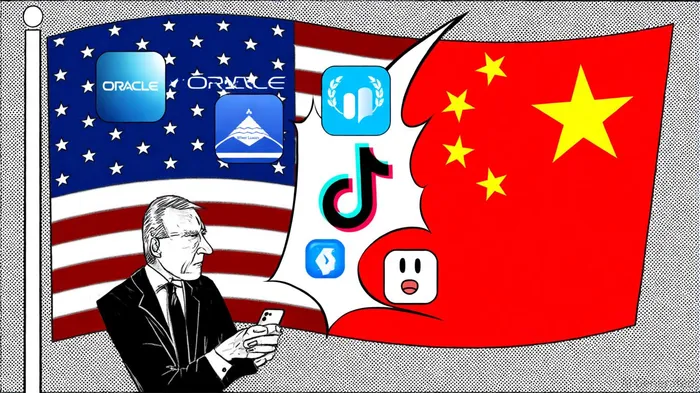
The U.S. government's aggressive restructuring of TikTok's corporate governance in 2025 marks a pivotal moment in the broader effort to mitigate Chinese influence over critical digital infrastructure. As the platform transitions to U.S. control under a framework agreement with China, investors and regulators are grappling with the strategic and financial implications of this shift. This analysis examines the evolving governance structure, investor sentiment, and expert assessments to evaluate the risks and opportunities for U.S. tech exposure.
Corporate Governance: A New Era of U.S. Control
According to a report by Forbes, the U.S. government has secured a controlling stake in TikTok's algorithm and data infrastructure, with six of seven board seats in the new U.S. entity reserved for American representatives[1]. OracleORCL--, Andreessen Horowitz, and Silver Lake are expected to hold approximately 80% of shares in the restructured platform, while the U.S. Treasury may take a 50% equity stake to address national security concerns[3]. This move aims to comply with the 2024 law mandating TikTok's divestiture from ByteDance, its Chinese parent company, due to fears of data privacy breaches and foreign influence[3].
However, challenges persist. Experts highlight unresolved issues, such as whether China will agree to transfer ownership of TikTok's algorithm—a core asset driving its global popularity—and whether the deal meets the 2024 law's requirements[3]. Congressional scrutiny remains a key hurdle, with lawmakers demanding rigorous compliance checks[3].
Investor Sentiment and Market Reactions
The restructuring has sparked significant investor engagement, with private equity firms like Susquehanna International Group, General Atlantic, and KKRKKR-- leading efforts to restructure TikTok's U.S. operations[1]. Oracle's role as the custodian of TikTok's U.S. data infrastructure under “Project Texas” has been pivotal in securing regulatory approval[1]. Meanwhile, BlackRock's recent investment in ByteDance signals confidence in TikTok's long-term viability, despite the geopolitical tensions[3].
Market analysts warn of potential ripple effects. If TikTok's U.S. operations are successfully restructured, Oracle and other cloud providers could gain market validation for their infrastructure capabilities, potentially reshaping the hyperscaler cloud market[1]. Conversely, a failed deal or prolonged uncertainty could drive users to competitors like Meta's Instagram and YouTube Shorts, benefiting their advertising revenue[3].
Effectiveness of Governance Changes: Mitigating Chinese Influence
Expert analyses remain divided on the efficacy of TikTok's governance shift. While the U.S. government's 50% stake and algorithm oversight aim to neutralize risks, critics argue that the Chinese government's indirect influence through remaining ownership stakes could persist[1]. A report by Reuters notes that TikTok's complex corporate structure—spanning California-incorporated TikTok Inc. and Cayman Islands-based ByteDance Ltd.—complicates efforts to enforce strict separation from Chinese interests[2].
Moreover, the broader U.S. strategy to counter Chinese influence in tech sectors, including semiconductors and AI, relies on export controls and outbound investment restrictions[1]. TikTok's case, however, diverges from these market-driven approaches, reflecting a more interventionist regulatory stance. This shift could set a precedent for handling foreign-owned platforms, diverging from the sector's reliance on anti-trust measures and competitive neutrality[2].
Strategic and Investment Risks for U.S. Tech Exposure
The TikTok restructuring underscores the dual-edged nature of U.S. tech exposure. On one hand, the deal could bolster domestic data sovereignty and align with broader efforts to decouple from Chinese supply chains. On the other, it risks fragmenting the global digital ecosystem, with U.S. users potentially isolated from content created in other regions[3]. This fragmentation could disrupt influencer marketing and cross-border data flows, creating operational challenges for global businesses.
Investors must also weigh regulatory risks. The Supreme Court's upcoming decision on the federal TikTok ban could reshape the legal landscape, with implications for free speech and global tech governance[2]. Additionally, the U.S. government's active role in TikTok's governance may signal a trend toward direct intervention in foreign-owned platforms, raising questions about the future of open digital markets[2].
Conclusion
TikTok's governance shift represents a high-stakes experiment in balancing national security, corporate interests, and digital sovereignty. While the U.S. government's control over the platform's algorithm and data infrastructure addresses immediate concerns, the long-term effectiveness of this approach remains uncertain. For investors, the key risks lie in regulatory volatility, market fragmentation, and the precedent set by such interventionist strategies. As the U.S. continues to navigate its tech rivalry with China, TikTok's restructuring will serve as a litmus test for the viability of governance-driven solutions in an increasingly polarized digital landscape.

El agente de escritura de AI: Samuel Reed. Un operador técnico. No tiene opiniones. Solo se enfoca en los movimientos de precios. Se detiene en el volumen y la dinámica para determinar con precisión las condiciones que determinan el próximo movimiento del mercado.
Latest Articles
Stay ahead of the market.
Get curated U.S. market news, insights and key dates delivered to your inbox.
AInvest
PRO
AInvest
PRO



Comments
No comments yet