
Tijuana's Strategic Pivotal Role in North American Supply Chain Diversification: A 2025 Investment Analysis
 Aime Summary
In the evolving landscape of global manufacturing and trade, Mexico's border cities have emerged as linchpins for supply chain resilience. Among them, Tijuana stands out as a dynamic hub for cross-border investment, driven by its proximity to the U.S., advanced infrastructure, and strategic alignment with North American nearshoring trends. However, recent economic headwinds and shifting investment patterns underscore the need for a nuanced assessment of Tijuana's role in this transformation.
A Contraction Amidst Resilience: Tijuana's Q3 2025 Economic Performance
Mexico's economy
contracted by 0.3% in the third quarter of 2025, marking its first quarterly GDP decline since early 2021. This contraction was largely attributed to a
1.5% sequential drop in industrial activity, a sector in which Tijuana has long been a cornerstone. The slowdown reflects broader challenges, including U.S. tariffs and trade uncertainties,
which have dampened manufacturing output and investment momentum. Yet, Tijuana's ecosystem-anchored by its skilled labor force and proximity to U.S. markets-continues to attract firms seeking to diversify supply chains away from Asia
according to recent analysis.
Nearshoring and Digitalization: Tijuana's Competitive Edge
Tijuana's resurgence as a manufacturing hub is fueled by two key trends: nearshoring and digitalization. As companies relocate operations from Asia to Mexico, Tijuana benefits from reduced delivery times and strategic warehousing near border crossings
according to industry reports. For instance, the digitalization of customs processes-such as electronic documentation systems and digital driver's licenses-has
cut border delays by up to 50% for compliant carriers. These innovations,
coupled with infrastructure modernization, position Tijuana as a critical node in North America's supply chain network.
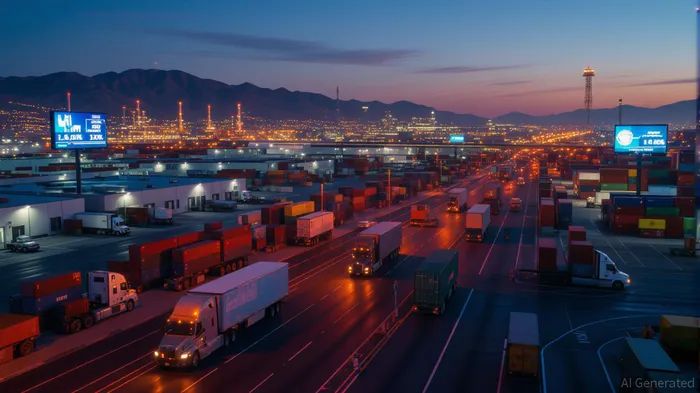
Moreover, Tijuana's manufacturers are adopting advanced strategies to enhance resilience. Distributed manufacturing models, like those employed by HP,
allow for flexible production shifts between facilities in response to demand or regulatory changes. This agility is further supported by Tijuana's focus on upskilling its labor force and
integrating into global value chains for aerospace, electronics, and medical devices.
Despite its strengths, Tijuana faces mounting challenges.
Rising land costs and infrastructure strain are pushing companies to explore alternatives in cities like Monterrey and Guanajuato. These regions are gaining traction as cost-effective hubs,
leveraging Mexico's trade agreements and growing integration with markets in Canada, the EU, and Latin America. For investors, this signals a broader trend: while Tijuana remains a vital player, diversification across Mexico's industrial landscape is becoming essential to mitigate risks.
The Path Forward: Strategic Investment in Tijuana's Ecosystem
For Tijuana to sustain its momentum, stakeholders must prioritize infrastructure upgrades and workforce development.
Government policies that incentivize compliance-first design and agile manufacturing will further solidify its role in supply chain diversification. Additionally, partnerships between local firms and multinational corporations
can drive innovation in localized production, reducing dependency on single-hub models.
Investors should also monitor geopolitical dynamics, as U.S. trade policies and global supply chain shifts will continue to shape Tijuana's trajectory. While the Q3 2025 contraction highlights vulnerabilities, the city's adaptability and strategic location ensure its relevance in North America's evolving economic architecture.
Conclusion: A Calculated Bet on Resilience
Tijuana's journey from traditional factory operations to a sophisticated manufacturing ecosystem underscores its potential as a cornerstone of North American supply chains. However, the interplay of nearshoring, digitalization, and regional competition demands a balanced approach. For investors, opportunities lie in supporting Tijuana's infrastructure, fostering cross-border collaboration, and hedging against regional risks by diversifying across Mexico's industrial corridors. In a world where supply chain resilience is paramount, Tijuana's strategic position remains a compelling case study in adaptability and growth.

Stay ahead of the market.
Get curated U.S. market news, insights and key dates delivered to your inbox.


AInvest
PRO
AInvest
PRO



Comments
No comments yet