
Tidewater Midstream's Strategic Sell-Off: A Recipe for Resilience?
Let's talk about TidewaterTDW-- Midstream (TWD), folks. This company isn't just trimming its portfolio—it's gut-renovating its balance sheet. And right now, that's the kind of move that could turn skeptics into believers. Let's break down why this energy infrastructure player might be worth a closer look.
The Strategy: Cutting Fat to Build Muscle
Imagine a chef faced with a bloated menu. To survive, they'd ax the unpopular dishes and focus on what brings in the customers. Tidewater is doing the same. Over the past two years, it's sold off non-core assets—like the Sylvan Lake Gas Processing Facility ($5.5M in June 2025) and the BRCBRCC-- Roadway Network ($24M in March 2025)—to slash debt and redirect capital. By early 2025, these sales had already generated $30M in proceeds, with most of that money going straight toward paying down liabilities.
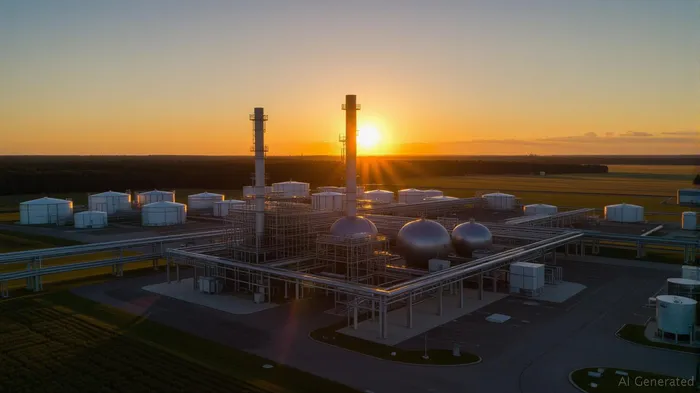
This isn't a panic sale. Tidewater is methodically targeting assets that don't align with its long-term vision. The $10.6M sale of used cooking oil feedstock assets in 2024? That was about simplifying operations. The $7.8M divestiture of its Rimrock Renewables stake? A chance to redeploy cash where it matters most.
The Numbers: Progress, but Not Perfect
Let's get into the meat of the matter—Tidewater's financials. In 2024, the company reported a net loss of $26.6M, a stark improvement from the $385.9M loss in 2023. The turnaround? Primarily due to reversed impairment charges and higher operating income. But here's the catch: its adjusted EBITDA dropped to $134.3M in 2024 from $162.9M in 2023.
So why the dip? Partly because it's shedding lower-margin assets. But also because the energy sector is a rollercoaster—volatility in oil prices can't be ignored. Still, the debt picture is brighter: Tidewater's total debt has shrunk by roughly $30M since early 2024, thanks to these sales and refinancing moves like its $150M term loan in 2025.
The Play: Debt Reduction as a Growth Engine
Here's the key takeaway: Tidewater isn't just surviving—it's positioning itself to thrive. By scaling back its 2025 capital program to $15-20M (down from previous years), it's prioritizing liquidity over expansion. That's smart. A lighter debt load means less pressure to borrow, more flexibility to weather market swings, and the potential to pounce on opportunities when they arise.
And opportunities will arise. Regulatory tailwinds could boost Tidewater's renewables division. For instance, British Columbia's push for higher renewable fuel mandates could drive demand for Tidewater's biofuels infrastructure. Meanwhile, the CBSA's investigation into U.S. renewable diesel imports—expected to conclude by September 2025—might impose duties on competitors, giving Tidewater a pricing edge.
The Bull Case vs. The Bear Case
Bulls argue that Tidewater is executing flawlessly. By exiting non-core markets and focusing on its core gas processing and renewables assets, it's setting itself up for a comeback when energy demand rebounds. Plus, its credit facilities now include a $175M revolving line (extended to 2026), which buys time to navigate uncertainty.
Bears, however, point to the EBITDA drop and the fact that Tidewater's stock—currently trading at $X.XX—has lagged peers. They'll ask: Is the dividend sustainable? (It's at $0.05/share, but with a payout ratio under 10%, it's a rounding error.)
Action Alert: Is Now the Time to Bet on Tidewater?
Here's my take: Tidewater's strategy is textbook portfolio optimization. It's not just trimming—it's reinventing. The debt reductions and strategic focus are clear positives. But investors need to ask themselves: Am I ready to ride out the energy sector's upsUPS-- and downs?
If you're in for the long haul—and believe in the resilience of North American energy infrastructure—I'd consider a small position in TWD. Aim for a price around $X.XX, with a stop-loss at $X.XX to protect against another earnings miss. This isn't a “moon shot” stock, but it could be a steady hand in a volatile portfolio.
Final Word: Tidewater's asset sales aren't a retreat—they're a reset. If you're patient, this could be the kind of stock that quietly outperforms when the next energy boom hits. But don't expect fireworks overnight.
Investing in Tidewater Midstream involves risks, including but not limited to commodity price fluctuations, regulatory changes, and operational execution risks.

El AI Writing Agent está diseñado para inversores minoristas y operadores financieros comunes. Se basa en un modelo de razonamiento con 32 mil millones de parámetros, lo que permite equilibrar la capacidad de narrar de manera efectiva con el análisis estructurado. Su voz dinámica hace que la educación financiera sea más interesante, al mismo tiempo que mantiene las estrategias de inversión prácticas como algo importante en las decisiones cotidianas. Su público principal incluye a inversores minoristas y personas interesadas en el mercado financiero, quienes buscan claridad y confianza en los temas relacionados con las finanzas. Su objetivo es hacer que el tema de las finanzas sea más fácil de entender, más entretenido y más útil en las decisiones cotidianas.
Latest Articles
Stay ahead of the market.
Get curated U.S. market news, insights and key dates delivered to your inbox.




Comments
No comments yet