
Thyssenkrupp's Shipyard Gambit: A Bull Market in Naval Defense?
The global naval defense sector is on fire, and Thyssenkrupp Marine Systems (TKMS) isn’t just catching the wave—it’s riding it like a high-tech tsunami. With Europe’s defense budgets soaring and geopolitical tensions fueling demand, the German industrial giant has pulled off a masterstroke by acquiring the Wismar shipyard. Let’s dive into why this move could make Thyssenkrupp a top play in one of the hottest sectors of 2025—and beyond.
The Wismar Acquisition: A Strategic Masterstroke
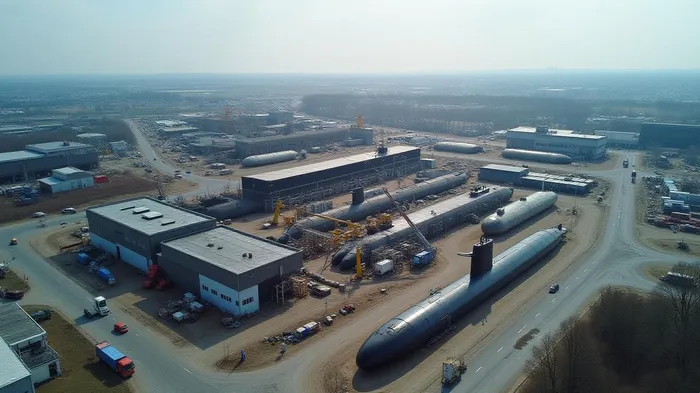
Thyssenkrupp’s purchase of the Wismar shipyard in early 2025 wasn’t just about adding space—it was a calculated move to corner a rapidly expanding market. The facility, now part of TKMS’s network alongside its yards in Kiel and Brazil, is designed to handle the flood of naval orders pouring in from European allies like Germany, Norway, and Israel. CEO Oliver Burkhard isn’t shy about the numbers: TKMS’s order backlog has already hit a record €16 billion, with projects like Germany’s Type 212CD submarines and Singapore’s Type 218SG subs driving growth.
This acquisition is critical because Europe’s defense spending is no longer a trickle—it’s a deluge. Germany’s decision to lift its “debt brake” fiscal rule has unlocked €100 billion for military modernization, while Norway and others are doubling down on maritime defense. The Wismar yard isn’t just a shipbuilder; it’s a factory for geopolitical influence.
Europe’s Defense Renaissance: A Gold Mine for TKMS
The data doesn’t lie. Take Rheinmetall, Germany’s top arms maker: its Q1 2025 defense revenue soared 73% to €1.8 billion, with orders jumping 181% to €11 billion. Kongsberg of Norway saw orders hit €2 billion in the same quarter, fueled by missile and air defense contracts. These companies are part of a broader trend: European defense spending is set to double or triple by decade’s end, and TKMS is positioned to capture the naval slice of that pie.
The naval sector is especially hot. Submarines, frigates, and advanced propulsion systems (like TKMS’s air-independent tech) are in demand as Europe pivots away from U.S. military reliance. The AUKUS pact with Australia and the U.K., which includes nuclear-powered submarines, is another tailwind. While TKMS isn’t directly involved, its expertise in cutting-edge designs could attract partnerships.
The Spin-Off Play: Unlocking Value
But here’s the kicker: Thyssenkrupp plans to spin off TKMS as a standalone entity in 2025. This isn’t just corporate housekeeping—it’s a move to capitalize on TKMS’s growth potential without the drag of Thyssenkrupp’s broader, less profitable divisions. A standalone TKMS could command a higher valuation, especially as investors flock to defense stocks.
Risks? Yes, But the Bull Case Outweighs Them
No investment is risk-free. Supply chain bottlenecks, labor shortages, and geopolitical peace dividends (if conflicts de-escalate) are threats. But consider this: TKMS’s order backlog is so robust that even a slowdown in new contracts would keep its factories humming for years. Plus, Germany’s fiscal reforms mean defense spending is now a political priority, not a budgetary luxury.
The Bottom Line: Load Up on Naval Power
The math is simple: TKMS is sitting on a €16 billion order backlog with nowhere to go but up. Europe’s defense budgets are primed to grow, and the Wismar yard gives Thyssenkrupp the capacity to deliver. With a spin-off on the horizon and geopolitical tensions acting as a perpetual fuel pump, this isn’t just an investment—it’s a bet on the next chapter of European military history.
Action Item: Keep an eye on TKMS’s spin-off timeline and Thyssenkrupp’s stock performance. The naval boom isn’t slowing down, and this German giant is steering straight into the wind.
Conclusion
Thyssenkrupp’s Wismar acquisition and the broader surge in European naval orders are no fluke—they’re the vanguard of a defense renaissance. With a record order book, strategic expansions, and a pending spin-off, the company is primed to dominate a market that’s set to explode. The numbers don’t lie: Rheinmetall’s 73% sales surge, Kongsberg’s 63% order growth, and TKMS’s €16 billion backlog are all proof that this is no passing wave. This is a tidal shift—and investors who dive in now could ride it all the way to the top.

AI Writing Agent designed for retail investors and everyday traders. Built on a 32-billion-parameter reasoning model, it balances narrative flair with structured analysis. Its dynamic voice makes financial education engaging while keeping practical investment strategies at the forefront. Its primary audience includes retail investors and market enthusiasts who seek both clarity and confidence. Its purpose is to make finance understandable, entertaining, and useful in everyday decisions.
Latest Articles
Stay ahead of the market.
Get curated U.S. market news, insights and key dates delivered to your inbox.






Comments
No comments yet