
US Threatens To Cut Third-Country Banks From Dollar System Over Iran Ties
 Aime Summary
- US Treasury Secretary Scott Bessent announced a new round of sanctions targeting secondary economic lifelines to Iran, aiming to isolate the regime financially.
- Foreign entities facilitating transactions for Iran face being cut off from the U.S. financial system, prompting a rush to secure dollar liquidity.
- The Iranian rial hit a record low of 2.02 million to the U.S. dollar as markets react to the expanded economic pressure.
- Bitcoin and other digital assets saw modest gains amid fears of currency debasement and geopolitical uncertainty.
- Federal Reserve Chair Kevin Warsh signaled a hawkish pivot, raising the probability of a September rate hike due to persistent inflation.
The United States has escalated its financial offensive against Iran by threatening to exclude third-country banks and trading partners from the dollar-based financial system. Treasury Secretary Scott Bessent issued a stark warning to global nations, advising them to sever any financial ties with Iran to avoid being cut off from U.S. markets. This directive supports the broader strategy of isolating Tehran economically amidst escalating tensions and recent military actions.
The new sanctions, described by President Trump as an "economic D-Day," focus on pressuring governments and countries that host entities providing cash flow to Tehran. The Office of Foreign Assets Control (OFAC) sanctioned nearly 60 entities, individuals, and vessels linked to Iran's defense and cyber networks. Targets include the Iranian defense ministry’s ballistic and nuclear procurement network, a cyber group accused of attacking U.S. infrastructure, and the shipping and financial networks involved in Iranian oil sales.
More than 20 sanctions target entities in the Middle East and Asia providing financial and logistical support for Iranian nuclear research and missile development, including China-based companies supplying dual-use items. New measures against Iran’s oil exports target vessel brokers, bunkering providers, and financial intermediaries in the UAE, Singapore, and Hong Kong. Five tankers identified as part of a "shadow fleet" were listed as blocked property, prohibiting U.S. nationals from transacting with them.
How Will These Sanctions Affect Global Banks and Crypto Markets?
The U.S. Treasury imposed secondary sanctions on foreign entities facilitating Iran's trade in digital assets, oil, and dual-use goods. The Treasury set timelines for other countries to cease economic activity with Iran, warning that foreign entities facilitating money laundering or sanctions evasion risk being cut off from the U.S. financial system. New secondary sanctions apply to dealings in cryptocurrency, technology, gold, aviation, and shipping.
The expansion of these sanctions has triggered immediate market reactions. The Iranian rial hit a new record low of 2.02 million to the U.S. dollar in informal markets, reflecting severe market distress amid ongoing conflict and blockade. The official Central Bank rate stands at approximately 1.5 million rial to the dollar, but the informal rate reflects the reality for most citizens.
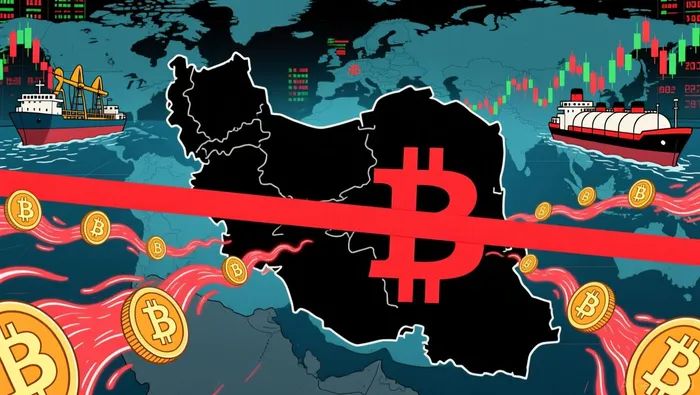
The threat of exclusion from the dollar system has created a paradoxical demand for U.S. dollars as sanctioned entities rush to secure currency access before restrictions take effect. This dynamic has contributed to a revival of the debasement trade, with investors seeking alternative stores of value. BitcoinBTC-- rose 1% to $78,817.34, marking its largest weekly gain in nearly three and a half years, as cryptocurrencies rallied on debasement fears.
What Are the Macroeconomic Implications for the Dollar and Treasury Yields?
The U.S. dollar faced mixed pressures as investors analyzed Washington’s expanded sanctions on Iran and the Treasury’s efforts to stabilize longer-dated bond yields. Treasury Secretary Scott Bessent warned countries to sever business ties with Iran or risk exclusion from the dollar-based financial system. Ray Attrill of National Australia Bank noted this dynamic could reverse recent dollar weakness.
Concurrently, the Treasury announced it would double quarterly repurchases of longer-dated bonds to over $4 billion per operation, potentially funded by its general account, to ease pressure on high yields. However, market relief was limited. The 10-year yield remained elevated at approximately 4.70%, reflecting investor wariness about higher deficits and prolonged inflation.
Market participants are closely watching Federal Reserve Chair Kevin Warsh’s upcoming speech at Jackson Hole. Uncertainty regarding the Fed’s reaction function and its independence from political pressure is constraining dollar gains and contributing to a steeper Treasury curve. Warsh signaled a hawkish pivot, describing inflation as "more concerning" and raising the probability of a September rate hike to 55%.
The geopolitical backdrop complicates the outlook. If energy costs remain elevated due to unresolved U.S.-Iran tensions, the Fed faces hiking rates into an economy already dealing with a supply-side shock. Warsh has committed to maintaining the Fed’s operational independence despite public calls from Trump for lower rates.
While cryptocurrencies rallied on debasement fears, traditional asset prices remain cautious due to the complex interplay between geopolitical sanctions, fiscal interventions, and monetary policy ambiguity. The economic impact on ordinary Iranians is already severe, with inflation reaching nearly 90 percent. Citizens are resorting to credit systems for basic food items, and lifesaving medicines like insulin have become unaffordable.
Iran's security chief, Mohsen Rezaei, vowed a "seismic" retaliation, warning Gulf states that partnering with the U.S. would make them targets. Rezaei threatened to target oil tankers in the Persian Gulf, potentially disrupting energy exports further. The conflict has severely hampered traffic through the Strait of Hormuz, adding to global energy market uncertainties.
Analysts question the efficacy of new sanctions given the extensive existing restrictions. Alan Eyre, a former diplomat, noted that the U.S. has already targeted all levels of Iranian financial infrastructure, suggesting no new sanctions will be effective. Meanwhile, the Treasury’s plan to double long-dated bond buybacks aims to lower borrowing costs, though market relief is limited by persistent inflation risks and uncertainty surrounding Fed Chair Kevin Warsh’s policy stance.

Blending traditional trading wisdom with cutting-edge cryptocurrency insights.
Latest Articles
Stay ahead of the market.
Get curated U.S. market news, insights and key dates delivered to your inbox.


AInvest
PRO
AInvest
PRO




Comments
No comments yet