
Thomas Lee's Strategic Insights: Shaping Investor Sentiment and Sector Performance in 2025


 Aime Summary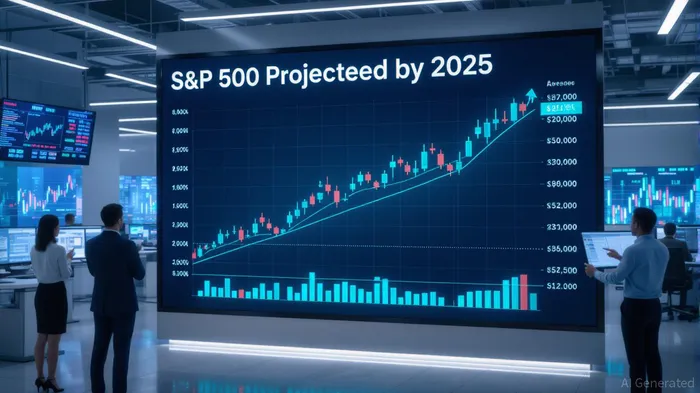
Thomas Lee, the influential managing partner at Fundstrat Global Advisors, has long been a pivotal voice in shaping market narratives. His 2025 forecasts—ranging from a 10% rally in the S&P 500 to strategic sector rotations—have not only reflected macroeconomic realities but also actively influenced investor behavior. By dissecting his recent predictions and their market implications, investors can better position themselves ahead of major trends.
The S&P 500 and the Power of Diversification
Lee's bullish stance on the S&P 500 is underpinned by a mix of corporate earnings strength and trade policy clarity. As of early 2025, 78% of S&P 500 companies reported positive earnings-per-share surprises, while 64% exceeded revenue expectations. This performance has fueled optimism, with Lee targeting a 6,600 level by year-end. However, his advice extends beyond mere index tracking. He emphasizes a “barbell strategy,” balancing high-growth tech stocks with undervalued industrials and energy plays. This approach has driven capital into sectors like semiconductors and AI while also redirecting funds toward energy giants such as TeslaTSLA-- (TSLA) and EatonETN-- (ETN).
Tesla, for instance, has seen a 12% year-over-year revenue surge in Q3 2025, driven by electric vehicle demand and energy storage solutions. Lee's advocacy for such cyclical plays has amplified investor confidence, particularly as the Federal Reserve's dovish pivot looms. Yet, his warnings about tariff risks—particularly under a potential Trump administration—have tempered enthusiasm, prompting hedging strategies like protective puts and collars.
Small-Cap Rotation: A New Frontier
Lee's recent focus on small-cap equities has reshaped the Russell 2000's trajectory. With the index up 15% year-to-date, investors are reallocating from overvalued tech stocks to smaller, resilient firms. This shift is partly driven by Lee's assertion that small-cap stocks could gain 40% by summer 2025, fueled by underinvestment and a potential pro-business regulatory environment. However, he cautions against overexposure, noting vulnerabilities in the commercial real estate sector.
The Russell 2000's outperformance highlights Lee's influence. Investors are adopting a “barbell” approach, pairing high-growth small-cap ETFs with defensive large-cap equities. This strategy mitigates volatility while capitalizing on long-term industrial and energy sector rebounds.
Energy Sector: Cyclical Rebounds and Policy Tailwinds
Energy stocks have emerged as a key beneficiary of Lee's strategic pivot. Companies like Eaton and Tesla are positioned to thrive in a low-interest-rate environment, with improved manufacturing data and dovish Fed policy acting as tailwinds. Lee's advocacy for inflation-linked ETFs, such as the Atlas America Fund (USAF), further underscores the sector's role as a hedge against macroeconomic uncertainties.
The energy sector's resilience is evident in its 18% year-to-date gain, driven by both cyclical rebounds and structural demand for clean energy. Lee's emphasis on diversification has led to increased allocations in energy and industrial stocks, balancing portfolios against tech-driven corrections.
Investor Behavior: Risk Management and Tactical Flexibility
Lee's bearish elements—such as sticky inflation and tariff uncertainty—have prompted a shift toward defensive positioning. Investors are rotating into utilities and healthcare sectors, which offer stable cash flows. Fixed income allocations, particularly in TIPS and high-yield corporate bonds, have also surged.
The 10-year Treasury yield climbing to 3.8% reflects heightened demand for duration in a low-growth environment. Lee's recommendations to stress-test portfolios against scenarios like a hard landing or fiscal contractions have become standard practice, ensuring investors remain agile.
Conclusion: Positioning for 2025's Volatility
Thomas Lee's insights underscore the importance of adaptability in a fragmented market. For investors, the key takeaway is to balance growth opportunities with downside protection. Overweighting energy and industrials while maintaining exposure to AI-driven tech stocks can create a resilient portfolio. As the Fed's policy trajectory and trade dynamics evolve, Lee's strategies offer a framework to navigate uncertainty.
Investment Advice:
- Tech Sector: Rebalance overvalued positions in the “Magnificent 7” with smaller, high-conviction AI and cybersecurity plays.
- Small-Cap: Allocate to the Russell 2000 via ETFs like IWMIWM--, but pair with defensive large-cap equities.
- Energy: Increase exposure to Tesla and Eaton, while hedging with inflation-linked ETFs.
- Fixed Income: Diversify with TIPS and short-duration bonds to manage liquidity risk.
By aligning with Lee's strategic insights, investors can navigate 2025's challenges while capitalizing on emerging opportunities.

La combinación de la sabiduría tradicional en el comercio con las perspectivas más actuales sobre las criptomonedas.
Latest Articles
Stay ahead of the market.
Get curated U.S. market news, insights and key dates delivered to your inbox.
AInvest
PRO
AInvest
PRO



Comments
No comments yet