
Thomas Lee and the Reflection Effect: How Behavioral Economics Shapes Corporate Strategy and Investor Behavior


 Aime Summary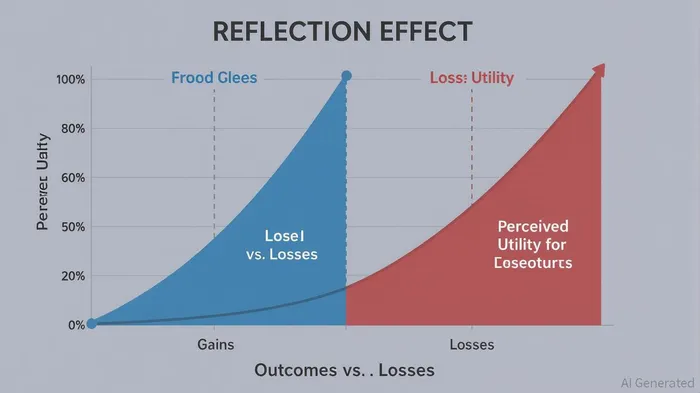
In the ever-evolving landscape of finance, the intersection of behavioral economics and corporate strategy has become a critical lens for understanding investor behavior and risk management. Thomas Lee, a Wall Street strategist with over 25 years of experience and a deep academic foundation in economics, has long championed the integration of behavioral insights into investment decision-making. His work at Fundstrat Global Advisors and his academic ties to Nobel laureates like Daniel Kahneman and Harry Markowitz position him as a thought leader in applying behavioral economics to real-world markets.
The Reflection Effect: A Behavioral Framework for Risk and Reward
The reflection effect, a cornerstone of Prospect Theory, reveals how individuals' risk preferences invert depending on whether they perceive a situation as a gain or a loss. In the domain of gains, people tend to be risk-averse, preferring a certain outcome over a probabilistic one. Conversely, in the domain of losses, they become risk-seeking, often gambling to avoid a sure loss. This duality has profound implications for corporate strategy and investor behavior.
For example, consider a company facing declining profits. Traditional economic models might predict a rational cost-cutting response. However, behavioral economics, as Lee emphasizes, suggests that corporate leaders might instead take on high-risk bets—such as aggressive M&A or speculative investments—to avoid the "pain" of a certain loss. This mirrors the reflection effect, where the fear of losses drives irrational risk-taking. Lee's research underscores the need for corporate leaders to recognize these biases and institutionalize safeguards, such as diversified capital allocation and scenario planning, to mitigate the emotional pull of the reflection effect.
Investor Behavior: From Herd Mentality to Strategic Discipline
Lee's insights into investor behavior highlight how the reflection effect manifests in market cycles. During bull markets, investors often exhibit risk-averse tendencies, locking in gains prematurely due to overconfidence. Conversely, during downturns, panic-driven selling amplifies losses as investors chase risky "recovery" plays. This pattern, Lee argues, is a direct consequence of the reflection effect and cognitive biases like loss aversion.
To counteract this, Lee advocates for systematic investing and disciplined portfolio rebalancing. For instance, his flagship ETF, the Granny Shots US Large Cap ETF (GRNY), is designed to mitigate emotional decision-making by focusing on long-term growth sectors like AI and cybersecurity. By automating exposure to these themes, investors can avoid the pitfalls of the reflection effect. Lee also emphasizes the importance of defining clear financial goals and time horizons, which anchor decisions to objective criteria rather than fleeting market sentiment.
Risk Management: Balancing Emotion and Logic
In risk management, the reflection effect poses a unique challenge. Traditional models assume rational actors, but Lee's work demonstrates that real-world investors and corporations often act irrationally. For example, during the 2020 market crash, Lee advised a "buy" strategy, recognizing that panic-driven selling had created undervalued opportunities. This approach aligns with the reflection effect's risk-seeking behavior in losses, where investors are more willing to take on risk to offset perceived losses.
Lee's strategies for risk management include:
1. Diversification: Spreading investments across asset classes (e.g., stocks, bonds, alternatives) to reduce the emotional impact of volatility.
2. Regular Portfolio Reviews: Using objective metrics to adjust allocations, rather than reacting to market noise.
3. Behavioral Training: Educating investors to recognize biases like overconfidence and loss aversion.
A case in point is TeslaTSLA-- (TSLA), whose stock has experienced extreme volatility. Investors who sold during dips (driven by loss aversion) missed subsequent gains, while those who held or bought systematically benefited from compounding. Lee's approach would encourage investors to view such volatility through the lens of the reflection effect, using it as an opportunity to rebalance rather than react.
Actionable Insights for Portfolio Optimization
For investors seeking to apply Lee's principles, the following steps can optimize portfolios and align with behavioral economics:
1. Define Clear Goals: Align investments with specific financial objectives (e.g., retirement, education) to reduce emotional decision-making.
2. Adopt a Time Horizon: Short-term horizons demand conservative allocations, while long-term goals can tolerate higher risk.
3. Leverage Thematic ETFs: ETFs like GRNY or the Russell 2000 (IWM) offer exposure to growth sectors while mitigating individual stock risk.
4. Embrace Systematic Investing: Dollar-cost averaging or regular rebalancing can counteract the reflection effect's influence.
Lee's bullish stance on BitcoinBTC--, for instance, reflects his understanding of how the reflection effect shapes investor psychology. During downturns, risk-seeking behavior drives speculative bets on digital assets, while in bull markets, investors may overlook their potential. By integrating Bitcoin into a diversified portfolio, investors can hedge against both inflation and behavioral biases.
Strategic Foresight: The Future of Behavioral Economics in Finance
As markets grow more complex, the role of behavioral economics in corporate strategy and investor behavior will only expand. Lee's work highlights the need for institutions to adopt behavioral risk management frameworks that account for the reflection effect. For example, companies can design incentive structures that reward long-term value creation over short-term gains, countering the risk-seeking tendencies of leaders facing losses.
For individual investors, the key takeaway is to recognize that emotions and cognitive biases are inevitable. By institutionalizing strategies that mitigate these biases—such as automated rebalancing, diversification, and goal-based investing—investors can navigate markets with greater resilience.
In conclusion, Thomas Lee's application of the reflection effect offers a roadmap for aligning corporate strategy, investor behavior, and risk management with the realities of human psychology. By embracing behavioral economics, investors and corporations alike can transform irrational tendencies into disciplined, data-driven decisions.

Blending traditional trading wisdom with cutting-edge cryptocurrency insights.
Latest Articles
Stay ahead of the market.
Get curated U.S. market news, insights and key dates delivered to your inbox.






Comments
No comments yet