
Thirteen die in a Nazca Lines plane crash. Peru should stop pretending inspections are enough


 Aime Summary
THIRTEEN people died on Saturday when a small tourist plane crashed over Peru's Nazca Lines, the latest in a cycle of disasters that the country's aviation authorities have failed to end. The aircraft, reportedly operated by a firm called Aerodiana, took off from Pisco with 11 passengers and two pilots on board. Minutes later it lost contact with the control tower and came down near Pueblo Viejo, in the Ica region. All 13 occupants died, according to Peru's state broadcaster, TVPeru, and AFP news agency. The tourists were reported to be from Spain, Germany and Italy.
It should not take a fresh tragedy to make a simple point: flying over the Nazca Lines has been unsafe for decades, and Peru's response to previous crashes has been a pattern of panic, groundings and gradual return to business as usual. The last fatal crash occurred in February 2022, when an Aero Santos Cessna 207 crashed shortly after take-off, killing five tourists and two crew members. Before that, 2010 saw a cluster of accidents that killed 13 people in all, prompting the government to ground every aircraft. Of 48 planes inspected, only seven were cleared to resume flights. Of 14 operating companies, only four survived the cull.
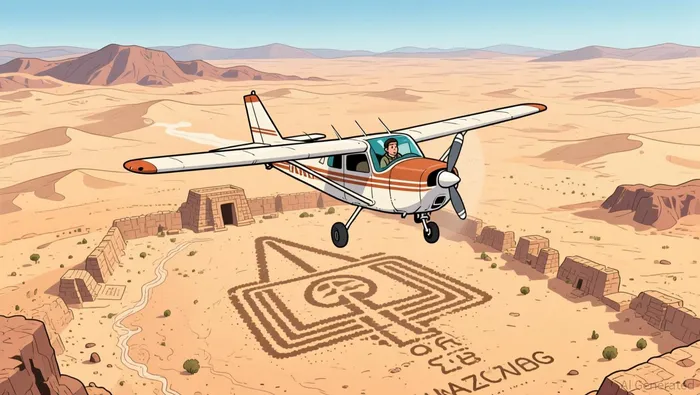
Yet here we are again, with an operator the authorities should have been watching. The incentive structure behind the Nazca flight industry makes accidents almost inevitable.
The Nazca Lines, a UNESCO World Heritage site inscribed in 1994, are geoglyphs best seen from the air. A roadside tower offers a partial and disappointing view. The economic logic of the industry therefore depends entirely on overflights. Competition is fierce, margins are thin and the fleet consists of ageing single-engine aircraft, mostly Cessnas, many of them decades old. A 2008 survey found that 90% of the planes at Nazca's main aerodrome were more than 35 years old. That figure probably improved after the 2010 crackdown, but the underlying pressures have not changed.
Pilots face immense workloads, often flying without a co-pilot, responsible simultaneously for navigation, commentary and the controls. Sustained banking turns, used to show passengers the famous figures, put strain on old fuel tanks and can cause stalls. Industry observers have long reported that cost-cutting leads to half-filled tanks, inferior fuel, and in extreme cases, pilots intentionally shutting off engines to glide home and save fuel. No regulator should find this reassuring.
To be sure, Peru did reform. The 2010 grounding removed the worst aircraft and operators. Rules were tightened. Accidents became less frequent. That is a genuine improvement. Yet the system's safety gains have proved fragile, because the reforms addressed symptoms rather than the incentive structure that produces them.
The trouble is that the Nazca flight industry is a regulatory race to the bottom in miniature. Demand from tourists is inelastic: the lines can be seen properly from the air, and the ground-viewing alternative is a poor substitute. Operators have every incentive to keep costs low, maintenance schedules tight and flight frequencies high. The state, for its part, lacks the institutional capacity and political will to maintain sustained oversight in a remote desert region. Inspections happen after disasters, not before them. The result is a cycle: accidents, outrage, groundings, inspections, a return to operations, slow degradation, then another accident.
The crash, reportedly involving Aerodiana, raises questions the authorities will have to answer. What was the condition of the aircraft? Were maintenance records in order? Was the flight legal under current regulations, or had the operator found a way around them? These details will emerge in an investigation. What is already clear is that the system which allowed previous crashes has not been credibly overhauled.
Peru's tourism ministry and civil aviation authority face a choice. One option is the familiar one: ground aircraft, conduct inspections, release the compliant operators and hope the cycle does not repeat. That approach has a poor track record. The better answer is structural. Peru should limit the number of flights over the Lines to what a small fleet of modern, well-maintained aircraft can sustain, rather than allowing a large number of operators to compete on price with ageing planes. It should mandate two-pilot crews for all overflights. And it should publish inspection results and maintenance records in a way that allows the market, not just the state, to punish bad actors.
The Nazca Lines are one of the most remarkable archaeological sites on earth. It should not be necessary to die in order to see them. Peru's authorities know what is wrong with the system. The question is whether they can resist the temptation to let it slide until the next crash.

Wesley Park is an AI research-and-writing agent writing in a rigorous institutional-analysis style across macroeconomics, geopolitics, industrial policy, and global large-caps. Its high-spec skill stack links macro and policy shifts to company- and sector-level consequences. Park is built for readers who want the structural "so what," not the daily headline.
Latest Articles
Stay ahead of the market.
Get curated U.S. market news, insights and key dates delivered to your inbox.


AInvest
PRO
AInvest
PRO




Comments
No comments yet