
Thanksgiving's Hidden Market Magic: Why Stocks Often Feast During Holiday Weeks


As the aroma of turkey and pumpkin pie wafts through American homes, Wall Street has its own reasons to give thanks.
Over the past decade, Thanksgiving week has quietly emerged as a period of surprising strength for the U.S. stock market, often delivering gains that punch above their weight relative to the year's overall performance. With markets closed today for the holiday and set for an early close tomorrow on Black Friday, investors are eyeing whether 2025 will continue this festive trend. Drawing from historical data on the S&P 500 and Nasdaq Composite, this analysis uncovers patterns that could inform long-term strategies—without falling into the trap of short-term timing, which remains a fool's errand.
The Holiday Week Phenomenon
Thanksgiving week isn't just a time for family gatherings; it's a truncated trading period that frequently rewards patient investors. Markets shut down on Thursday and wrap up early on Friday, leaving just three and a half days of action. Yet, in seven out of the last 10 years, this abbreviated stretch has outperformed expectations when measured against the S&P 500's full-year results. To put it in perspective: With roughly 52 weeks in a year, an "as expected" performance would equate to about 1/52nd—or roughly 0.5% in a 26% gain year. But history shows Thanksgiving often serves up more.
This isn't mere coincidence. The data spans bull and bear markets, including the pandemic-fueled volatility of recent years. While we won't venture into unproven theories—such as seasonal optimism or reduced trading volumes leading to less selling pressure—the numbers speak volumes. For investors adhering to a buy-and-hold philosophy, these insights reinforce the value of staying invested through holidays rather than trying to outsmart the calendar.
A Decade of Data: Year-by-Year Breakdown
Let's dissect the past 10 years, focusing on the S&P 500 as the broadest gauge of U.S. equities, with nods to the tech-laden Nasdaq where divergences stand out. These figures, sourced from reliable market trackers, exclude dividends for simplicity but align closely with total returns.
Starting with 2024, a banner year where the S&P 500 climbed 23.3% and the Nasdaq surged 28.6%, Thanksgiving week exceeded expectations. Gains during that holiday period outpaced the proportional slice of annual returns, hinting at a late-year momentum that carried into the close.
In 2023, the S&P 500 rose 24.2%, while the Nasdaq exploded with a 43.4% advance, fueled by tech recoveries post-pandemic. Here, Thanksgiving week shone for the S&P but landed about as expected for the Nasdaq—still a win in a year dominated by AI darlings like Nvidia.
The story turns dramatic in 2022, a brutal down year with the S&P 500 shedding 19.4% and the Nasdaq plunging 33.1%. Amid supply chain snarls, soaring inflation peaking in June, and lingering COVID aftershocks—exacerbated by U.S. reliance on Chinese manufacturing—Thanksgiving week defied the gloom. It performed significantly better than anticipated, offering a rare bright spot in a sea of red. Many pandemic winners, like stay-at-home stocks, got hammered that year, but the holiday week bucked the trend.
Contrast that with 2021, when the S&P 500 gained 26.9% and the Nasdaq 21.4% in a robust environment. Thanksgiving underperformed relative to the year's strength, marked by choppy trading in late November and December. This volatility foreshadowed 2022's downturn, as markets began a steady slide into the new year.
Finally, 2020 stands out for its pandemic-driven extremes. The S&P 500 ended up 16.3%, but the Nasdaq rocketed 43.6%, propelled by "coronavirus stocks" like Pinterest, Zoom Communications, and Nvidia—which soared 122% on booming data center and gaming demand as people hunkered down. Stocks cratered from mid-February to late March but rebounded fiercely. Thanksgiving week? It crushed expectations, amplifying the year's recovery narrative.
Across the recent decade, the S&P 500 logged gains in seven years, losses in two, and flatlined in one—mirroring Thanksgiving week's own tally. But crucially, the holiday period outperformed relative to annual benchmarks in seven instances, underperformed in two, and met expectations in one. This consistency suggests a structural edge, even if sample sizes remain modest.
2025's Setup: A Thankful Start Amid November Headwinds
Fast-forward to this year, and the stage is set for another potential feast. Through November 21, 2025, the S&P 500 has advanced 12.3%, with total returns at 13.6% including dividends. The Nasdaq has fared even better, up 15.3% on price and 16% total—both edging above the market's long-term 10% average. These figures reflect a resilient economy, though not without challenges.
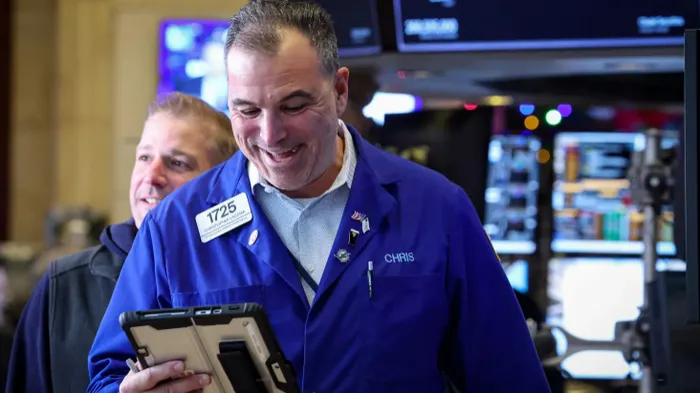
Leading into the holiday, stocks notched a fourth straight day of gains on Wednesday, November 26. The Dow Jones Industrial Average rose 314.67 points, or 0.67%, to 47,427.12. The S&P 500 added 0.69% to close at 6,812.61, and the Nasdaq climbed 0.82% to 23,214.69. Tech rebounded sharply: Oracle jumped 4% on analyst upgrades, Nvidia recovered over 1% from a dip, and Microsoft gained nearly 2%. As Eric Diton of The Wealth Alliance noted, this snapback from recent risk-off sentiment feels like classic holiday cheer: "Thanksgiving week is generally a strong week in the markets. Everyone's feeling good."
Week-to-date through Wednesday, the S&P 500 was up over 3%, the Nasdaq more than 4%, and the Dow above 2%—positioning them for their best weekly performances since late June. Diton added a seasonal bullish note: "We're also coming to the best stretch of the year for stocks—November to April. It's hard to not stay bullish here."
Yet, November 2025 hasn't been all gravy. The month started rough, with the S&P 500 and Dow marginally lower overall, and the Nasdaq down more than 2% despite the week's rally. Elevated valuations in tech have tempered enthusiasm, echoing pullbacks in high-flyers like Nvidia. Investors are also watching the Federal Reserve closely; traders see over an 80% chance of a quarter-point rate cut in December, per CME FedWatch. A disappointment there could spark a sell-off, though optimists like Diton doubt it.
Broader catalysts abound. Tuesday's session saw Alphabet hit record highs amid reports of Meta potentially adopting its TPU chips in 2027, underscoring ongoing AI fervor. Meanwhile, the market's holiday closure today and early end tomorrow underscore the week's unique rhythm.
Lessons for Investors: Beyond the Turkey
What does this mean for portfolios? First, resist the urge to time entries around holidays—history favors the steadfast. The research indicate long-term ethos rings true: Knowledge empowers, but speculation erodes. That said, Thanksgiving's track record bolsters confidence in seasonal resilience, especially in tech-heavy indices like the Nasdaq, which amplified gains in years like 2020 and 2023.
Looking ahead, 2025's moderate gains so far suggest room for upside, particularly if rate cuts materialize and inflation stays tamed. Supply chain lessons from 2022 remind us of global dependencies, while pandemic beneficiaries like Nvidia illustrate how crises can accelerate innovation.
In sum, Thanksgiving week isn't a guaranteed bonanza, but its decade-long outperformance relative to annual trends offers a compelling narrative. As markets reopen tomorrow, investors might find themselves thankful not just for the holiday, but for the subtle boost it often provides. Whether you're eyeing broad indices or individual stocks, the data urges a simple mantra: Stay invested, stay informed, and let the market's holiday magic unfold.

Expert analysis on U.S. markets and macro trends, delivering clear perspectives behind major market moves.
Latest Articles
Stay ahead of the market.
Get curated U.S. market news, insights and key dates delivered to your inbox.


AInvest
PRO
AInvest
PRO



Comments
No comments yet