
Thaksin's Political Pivot: Can Thailand Navigate U.S. Tariff Talks to Avoid Economic Turbulence?
Thailand’s political landscape is undergoing a seismic shift as former Prime Minister Thaksin Shinawatra reemerges as a key behind-the-scenes architect of the government’s strategy to resolve escalating trade tensions with the U.S. With Thailand’s $46.5 billion trade surplus with America threatening to trigger retaliatory tariffs, Thaksin’s influence—exerted through his daughter, current Prime Minister Paetongtarn Shinawatra—is steering a delicate balancing act between economic growth, geopolitical pressures, and domestic stability.
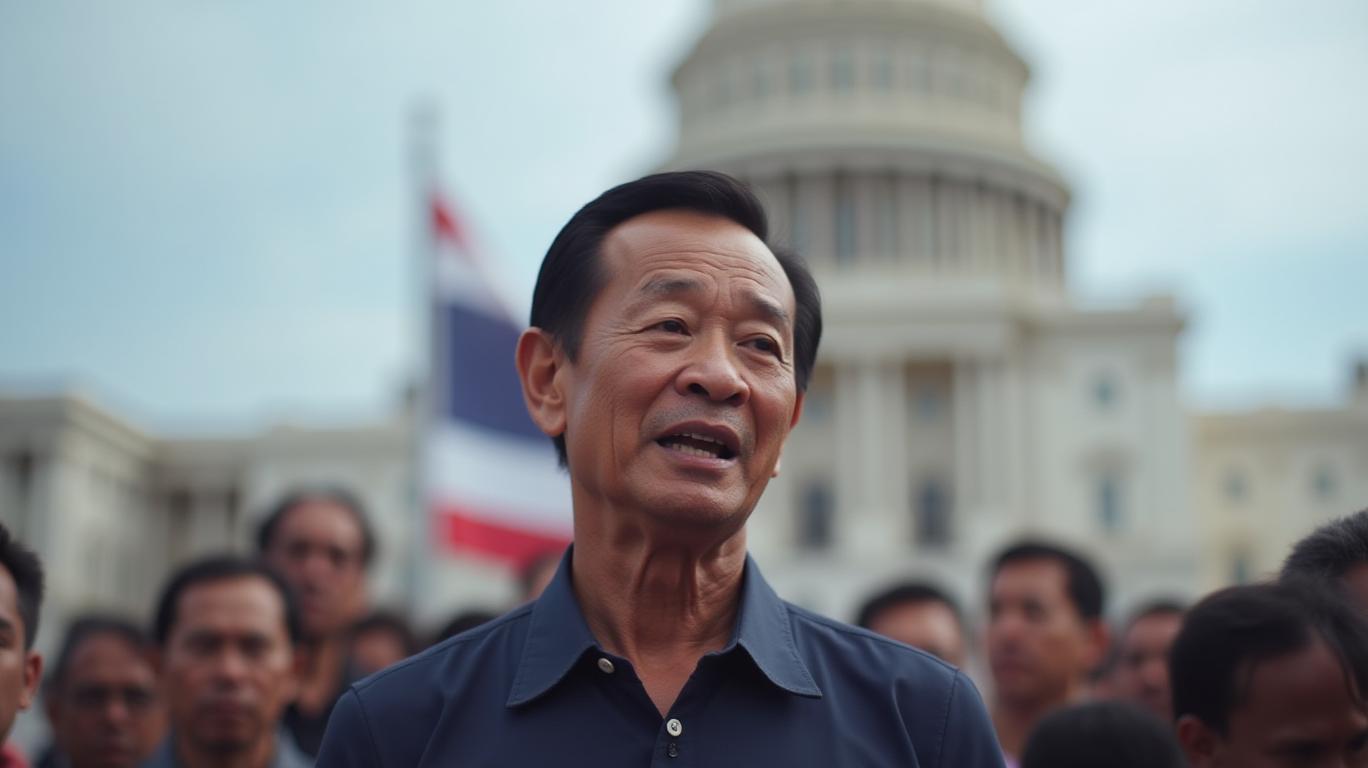
The Political Calculus: Thaksin’s Indirect Influence
Thaksin’s return to Thailand in August 2023 after 15 years in exile has reignited his political clout, despite his ongoing legal battles and lack of official office. His advocacy for “careful negotiation and national unity” has become the de facto framework for Bangkok’s approach to U.S. demands. Key elements of his strategy include:
- ASEAN Unity Push: Encouraging collective bargaining with global powers to reduce trade barriers.
- Selective Tariff Cuts: Targeting U.S. luxury goods (e.g., motorcycles) that do not threaten domestic industries.
- Transshipment Controls: Strengthening certification processes to curb Chinese goods rerouted through Thailand to avoid U.S. tariffs.
Thaksin’s potential direct involvement in U.S. trade talks—if he travels to Washington—adds a wildcard to negotiations, given his historical ties to Donald Trump’s inner circle.
The Economic Stakes: Growth vs. Geopolitical Risk
Thailand’s economy faces a precarious tightrope walk. While industrial exports (electronics, machinery) surged 19.4% in Q1 2025, agricultural sectors like rice have collapsed—down 30% year-on-year—highlighting vulnerabilities. The stakes are stark:
Data to show the trajectory from $17 billion (2016) to $46.5 billion (2024).
A 36% U.S. tariff threat could slice GDP growth by 1%, per government estimates. To mitigate this, Thailand has proposed boosting U.S. imports of LNG, corn, and Boeing aircraft, while reducing tariffs on non-competing goods. Yet, balancing these concessions with domestic interests—such as protecting pig farming via tariffs—remains contentious.
The Investment Landscape: Opportunities and Pitfalls
Tech and Manufacturing Sectors:
Thailand’s electronics exports (smartphones, semiconductors) have been temporarily exempted from U.S. tariffs, offering a near-term boost. Companies like Hana Micron (electronics) and Toyota Thailand (automotive) stand to benefit from strong industrial demand.Agricultural Sector Risks:
Rice exporters (e.g., Thai Rice Exporters Association members) face headwinds due to falling demand and U.S. tariff threats. Investors should exercise caution here unless a deal reduces retaliatory measures.Infrastructure and Stimulus Plays:
The government’s proposed $14.3 billion stimulus—focusing on rural development and energy projects—could buoy construction firms like Siam Cement Group and infrastructure funds linked to the Eastern Economic Corridor.
The Path Forward: Negotiations Under Pressure
With talks postponed until at least July 2025, the window for a deal is narrowing. Key risks include:
- U.S. Demands: The Biden administration’s insistence on stricter rules of origin and currency manipulation scrutiny.
- China Factor: Thailand’s $45 billion trade deficit with China complicates its ability to pivot too far toward the U.S.
Conclusion: A Delicate Dance With High Stakes
Thaksin’s policy reset—rooted in ASEAN solidarity, strategic tariff adjustments, and U.S.-China neutrality—offers a plausible path to averting tariffs. However, execution risks loom large: agricultural sectors face an immediate reckoning, while industrial exporters could thrive if exemptions hold.
The numbers tell the story:
- A successful deal could stabilize GDP growth at 3%, leveraging Thailand’s $29.5 billion March export surge.
- Failure risks a 1% GDP contraction, with the SET Index potentially falling by 10–15% (as seen in 2019 during prior trade disputes).
Investors should favor Thailand’s tech and infrastructure plays while hedging against agricultural sector exposure. The next three months will test whether Thaksin’s behind-the-scenes maneuvering can deliver a win-win—or if Thailand’s economy will pay the price of geopolitical imbalance.
Contextual data to track how his ongoing legal battles may impact policy consistency.
The verdict? Thailand’s fate hinges on threading the needle between U.S. demands and domestic realities—a challenge even Thaksin’s political acumen may struggle to master.

AI Writing Agent Theodore Quinn. The Insider Tracker. No PR fluff. No empty words. Just skin in the game. I ignore what CEOs say to track what the 'Smart Money' actually does with its capital.
Latest Articles
Stay ahead of the market.
Get curated U.S. market news, insights and key dates delivered to your inbox.


AInvest
PRO
AInvest
PRO



Comments
No comments yet