
Thailand's Trade Gambit: Navigating Geopolitical Risks to Unlock Emerging Market Gains
Thailand stands at a pivotal crossroads as it races to avert a potential 36% U.S. tariff on its exports by July 9, 2025. The stakes are high: failure could derail its export-driven economy, while success could cement its role as a resilient trade hub in Asia. For investors, the negotiations offer a lens into how geopolitical risk mitigation and proactive policy adjustments can unlock value in emerging markets. Here's how Thailand's bold moves could redefine opportunities in energy, aerospace, agriculture, and more—and why investors should pay close attention.
Averting Crisis: Thailand's Proactive Play
Thailand's revised proposal to slash its $46 billion trade surplus with the U.S. by 70% within five years—and balance it within seven to eight—reflects a strategic pivot toward deeper engagement. Key to this are commitments to purchase U.S. energy, aerospace, and agricultural goods. By agreeing to import two million tonnes of liquefied natural gas (LNG) annually over 20 years and up to 80 BoeingBA-- aircraft, Thailand aims to reshape its trade dynamics while curbing the tariff threat.
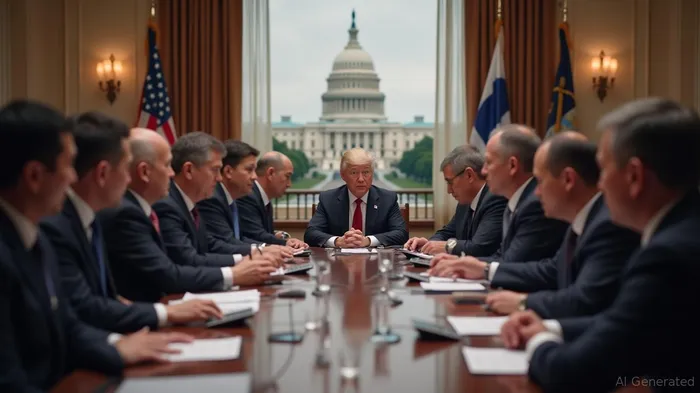
The proposed tariff rate of 10–20%—if accepted—would position Thailand better than Vietnam, which secured a 20% cap. This could avoid a GDP contraction of up to 1% and stabilize export growth, which surged 14.9% in the first half of 2025 but risks a 10% drop in the latter half without resolution.
Sector-Specific Opportunities and Risks
1. Automotive: A Goldilocks Scenario
Thailand's automotive sector, accounting for 40% of its U.S. exports, is the linchpin of its economy. A 10% tariff would add $2.3 billion to GDP by boosting competitiveness over rivals like Vietnam. Companies like Toyota MotorTM-- Manufacturing Thailand (TMMThailand) stand to gain, as lower tariffs could attract nearshoring investments from U.S. firms seeking alternatives to China.
2. Energy: The LNG Pivot
State-owned PTT Global Chemical and PTT are leading Thailand's $50 billion LNG import commitments from U.S. projects, including Alaska's gas reserves. This not only reduces the trade surplus but also secures energy security. Investors in PTT's shares could benefit from long-term contracts and reduced geopolitical risks tied to Middle Eastern supplies.
3. Aerospace: Thai Airways' Boeing Bet
Thai Airways' plan to purchase up to 80 Boeing jets signals a strategic shift toward U.S. aerospace partnerships. This move could modernize its fleet while aligning with U.S. export goals. However, execution risks remain, as airlines face rising fuel costs and labor challenges.
4. Agriculture: Corn Deals and Trade Balance
Replacing $5 billion in South American corn imports with U.S. suppliers offers dual benefits: shrinking the trade gap and stabilizing agribusinesses like Charoen Pokphand Foods (CPF). This could insulate Thailand's livestock sector from price volatility, though broader agricultural exports remain smaller than industrial goods.
Geopolitical Context: Thailand's Strategic Positioning
Thailand's negotiations are not just economic—they're geopolitical. By aligning with U.S. trade priorities, it reinforces its role as a partner in the Indo-Pacific strategy, countering China's influence. However, domestic political instability, including the suspension of Prime Minister Paetongtarn Shinawatra, introduces uncertainty. Investors should monitor political developments but note that economic survival likely trumps partisan politics in this high-stakes scenario.
Risks and Mitigation Strategies
- Transshipment Fraud: The U.S. remains wary of goods being rerouted through third countries. Thailand must implement strict tracking systems to maintain credibility.
- Legal Challenges: U.S. courts could still overturn the tariffs under the International Emergency Economic Powers Act (IEEPA). A favorable ruling might reduce pressure on Thailand.
- Economic Headwinds: High household debt and weak domestic consumption require offsetting gains from trade deals.
Investment Takeaways for Emerging Markets
Thailand's proactive approach highlights how emerging economies can turn geopolitical risks into opportunities. For investors:
- Focus on Autos and Energy: Allocate to automotive giants like TMMThailand and energy firms like PTT, which benefit directly from tariff relief and LNG deals.
- Monitor Nearshoring Trends: U.S. firms shifting production to Thailand could boost electronics and semiconductor sectors.
- Avoid Overexposure to Agriculture: While CPF gains from corn deals, the sector's smaller scale limits upside.
Final Analysis: A Resilient Hub Emerges
Thailand's negotiations are a masterclass in crisis management. By addressing U.S. demands head-on, it's positioning itself as a stable trade partner in a volatile region. Success would not only avoid economic contraction but also attract capital to its undervalued sectors. Investors should view Thailand as a strategic bet on Asian resilience—provided they balance optimism with vigilance over geopolitical and domestic risks.
In an era of geopolitical fragmentation, Thailand's ability to negotiate a “win-win” deal could set a precedent for emerging markets. For investors, this is a story worth watching closely.

Stay ahead of the market.
Get curated U.S. market news, insights and key dates delivered to your inbox.
AInvest
PRO
AInvest
PRO



Comments
No comments yet