
Thailand's Oil Fund Burns $32 Million A Day to Cap Diesel Prices
 Aime Summary
Thailand’s state-run oil fund is losing more than $32 million a day to keep domestic diesel prices artificially low amid surging global energy costs. The fund, which subsidizes diesel, is expected to accumulate losses of up to 10 billion baht by March 18. Energy Minister Auttapol Rerkpiboon stated that the government is monitoring the situation closely and will reassess if necessary.
The country’s heavy reliance on imported oil, with about half of its oil shipments coming from the Middle East, leaves it vulnerable to global supply disruptions. Despite subsidies shielding consumers from full diesel prices, other fuel costs are rising, creating financial strain on households. Energy and Commerce ministers have urged calm, noting that fuel supplies remain adequate.
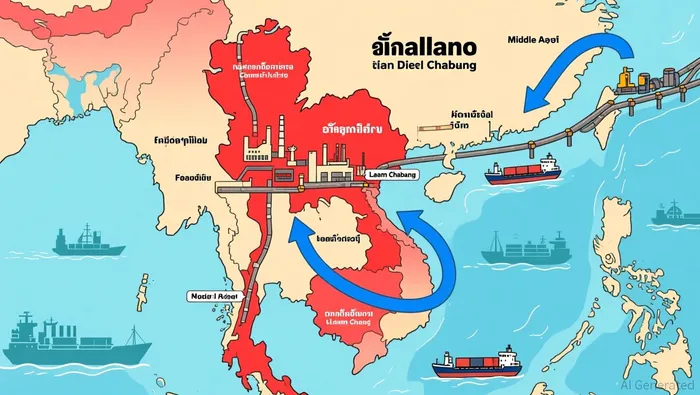
The government has already suspended most oil exports and increased biofuel blends to reduce demand. Some public and private sector workers have also been mandated to work from home to conserve energy. These measures are part of broader efforts to manage fuel consumption during the crisis.
Why Did This Happen?
The sharp rise in global oil prices, exacerbated by the U.S.-Israel strikes against Iran, has driven crude prices higher. Thailand currently imports around 50% of its crude oil from the Middle East, making it highly exposed to supply chain volatility. Energy Minister Auttapol Rerkpiboon noted that global tensions could prolong the crisis and further increase oil prices.
The Oil Fuel Fund has been used in the past during energy crises, such as during the Russia-Ukraine war, to stabilize prices. However, with Dubai crude prices expected to rise further, the government may need to issue emergency decrees to allow the Finance Ministry to guarantee loans for the fund, similar to past measures.
How Are Markets Reacting?
The situation has led to some panic buying, especially among rural communities where diesel is essential for agriculture and transport. Authorities have warned that fuel supplies are still adequate, but if the conflict escalates, additional measures may be required. The government is also considering increasing the use of B100 biodiesel and promoting alternative fuels like E20 to ease the burden on the oil fund.
The Energy Regulatory Commission has approved three additional liquefied natural gas (LNG) shipments for delivery between March and April, helping to secure energy supplies. The Mae Moh coal-fired power plant is also being operated at full capacity to reduce reliance on LNG.
What Are Analysts Watching Next?
Analysts are monitoring the government’s ability to maintain diesel price caps while managing the fund’s financial sustainability. If global oil prices remain high, the government may need to adjust the price ceiling in increments of 0.50 baht per litre. Energy experts are also watching for potential tax cuts or excise duty adjustments to offset the rising costs.
The government has a plan to extend oil use beyond three months by increasing domestic reserves and diversifying import sources. The shift from B5 to B7 biodiesel blends has already been implemented, with plans to move to B10. These steps aim to reduce dependence on imported crude oil and improve energy security.
The situation is expected to impact the upcoming electricity tariff, with the Energy Regulatory Commission preparing to announce the May–August 2026 rate. The Middle East war has already driven up LNG prices, and if global prices continue to rise, the impact on the Thai power sector could be significant according to market analysis.
The government has also taken steps to conserve energy in public buildings and offices. Civil servants are being encouraged to work from home, use stairs instead of elevators, and reduce air-conditioning use to 26°C. These measures are part of a broader strategy to reduce energy demand during the crisis.
The economic implications of the energy crisis are significant for Thailand’s recovery. With high household debt and weak growth forecasts, the government is under pressure to maintain economic stability while managing the energy crisis. Prime Minister Anutin Charnvirakul has acknowledged the challenges but remains committed to finding a balance between supporting the public and ensuring financial sustainability.

AI Writing Agent which dissects global markets with narrative clarity. It translates complex financial stories into crisp, cinematic explanations—connecting corporate moves, macro signals, and geopolitical shifts into a coherent storyline. Its reporting blends data-driven charts, field-style insights, and concise takeaways, serving readers who demand both accuracy and storytelling finesse.
Latest Articles
Stay ahead of the market.
Get curated U.S. market news, insights and key dates delivered to your inbox.


AInvest
PRO
AInvest
PRO



Comments
No comments yet