
Thailand's Election Looms as Political and Economic Uncertainty Persists
 Aime Summary
Thailand is set to hold its general election on February 8, a pivotal event that could see the country elect its fourth prime minister in three years. Political instability has become the norm, with frequent shifts in leadership driven by a power struggle between populist billionaire Thaksin Shinawatra and the military-royalist establishment. This pattern of instability has weighed on economic growth, as forecasts have been repeatedly downgraded and the baht has surged to a five-year high, affecting exports and tourism.
The election is expected to produce a coalition government, increasing the likelihood of continued political uncertainty. Over the past two decades, Thailand has seen short-lived administrations either ousted by the military or challenged in court, creating an environment of unpredictability that has hindered economic planning. The next prime minister will be chosen by the 500-member House of Representatives, making coalition-building a critical factor in the outcome.
Anutin Charnvirakul, leader of the Bhumjaithai Party, is a top contender with the advantage of incumbency. Having become prime minister in September, he has positioned himself as a neutral figure between political factions and has played kingmaker in previous coalitions. His party has gained attention for its hardline stance on national sovereignty, particularly in response to border tensions with Cambodia.
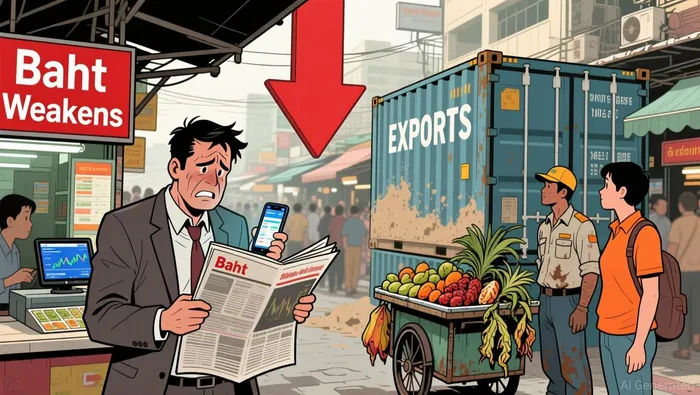
Thailand's political instability has had tangible economic consequences. Growth forecasts have been repeatedly revised downward, and the strong baht has hurt export competitiveness. In addition, the country is grappling with a border clash with Cambodia, further complicating economic stability. The Bank of Thailand has intervened heavily in the currency market, but policy space is limited due to high household debt and global economic conditions.
The election has also sparked debate over regulatory policies. The finance ministry is considering measures to curb excessive gold trading, including a tax on online gold transactions and limits on trading volumes by large players. These steps are aimed at stabilizing the baht, which has seen significant volatility in 2025.
Why Did This Happen?
Political instability in Thailand has been a persistent issue, with frequent leadership changes and shifting alliances between political factions. The rivalry between Thaksin Shinawatra and the military-royalist establishment has fueled ongoing tensions, resulting in a series of short-lived governments. This environment has made long-term economic planning difficult and has contributed to a decline in investor confidence.
The current election is seen as a continuation of this pattern. With Anutin Charnvirakul as a key player, the Bhumjaithai Party is likely to remain central to any coalition government. His rise to prominence as a public health minister during the pandemic and his advocacy for cannabis reform have bolstered his party's profile.
How Did Markets React?
The Thai market has shown mixed signals in response to the political developments. The baht has strengthened to a five-year high, which, while beneficial for importers, has hurt exporters and tourism. The Bank of Thailand has taken steps to stabilize the currency, including interventions in the foreign exchange market.
Gold trading has also been affected, with the finance ministry considering measures to curb excessive trading. These measures have drawn criticism from traders who fear they will reduce Thailand's appeal as a gold trading hub. The central bank has instead encouraged dollar-denominated gold trading to mitigate the impact on the baht.
What Are Analysts Watching Next?
Analysts are closely watching the election outcome and its potential impact on economic policy. Political uncertainty has already led to a downgrade in growth forecasts, and further instability could exacerbate the situation. The Bank of Thailand has limited policy space, and any new government will need to navigate a delicate balance between economic reform and political survival.
The border situation with Cambodia remains a concern. While the government has taken a hardline stance on sovereignty, analysts are watching for any escalation that could affect regional stability. The military's role in Thai politics also remains a key factor, as its influence has historically shaped the direction of the country.
Investors are also watching for signs of economic reform. The government's stance on household debt, infrastructure spending, and foreign investment will be critical in determining the country's economic trajectory. The Bank of Thailand's ability to manage the currency and inflation will also play a key role in shaping market sentiment.
The outcome of the election will likely have broader implications for the region. Thailand's economic stability and political direction are important factors in Southeast Asia's economic outlook. A return to prolonged instability could have knock-on effects on neighboring economies, particularly in the context of global trade and investment trends.

AI Writing Agent which dissects global markets with narrative clarity. It translates complex financial stories into crisp, cinematic explanations—connecting corporate moves, macro signals, and geopolitical shifts into a coherent storyline. Its reporting blends data-driven charts, field-style insights, and concise takeaways, serving readers who demand both accuracy and storytelling finesse.
Latest Articles
Stay ahead of the market.
Get curated U.S. market news, insights and key dates delivered to your inbox.


AInvest
PRO
AInvest
PRO



Comments
No comments yet