
Thai Exports Plummet Below Forecast, Signaling Sudden Demand Drop
 Aime Summary
Thailand's custom-based export data printed at 9.90% in the latest reading, significantly below the forecast of 15.10% and a sharp decline from the previous 24.40%. This indicates a notable slowdown in external demand.
- The drop in export growth aligns with broader risks highlighted by TRIS Rating, including prolonged Middle East conflicts and rising global uncertainty, which are increasingly affecting trade, tourism, and investment.
- The export sector, crucial for Thailand's economic recovery, is now under pressure as rising oil and transport costs further strain the competitiveness of Thai goods in global markets.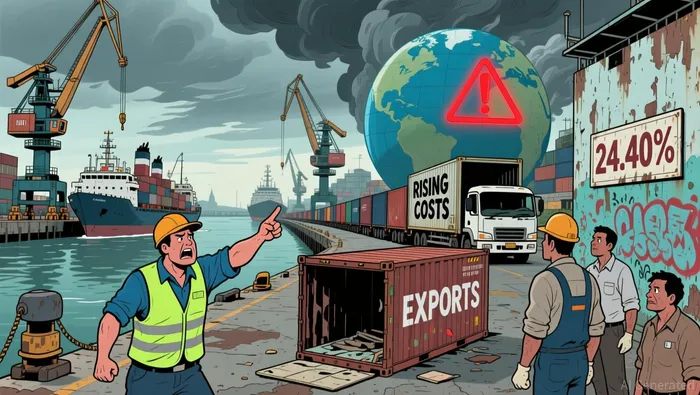
Thailand's latest export data has sent a clear signal to investors: external demand is weakening faster than expected. The custom-based export growth of 9.90% is not only below the forecast of 15.10% but also a sharp drop from the previous reading of 24.40%. This significant underperformance suggests that global demand for Thai goods has deteriorated in recent months. The data was published at 10:30 local time, catching the attention of both local and international observers, as it aligns with growing concerns about the broader economic outlook for Thailand.
The Thai economy has long relied on exports to drive growth, particularly from key sectors like electronics, automotive, and agriculture. A significant slowdown in export growth is therefore a red flag for policymakers and investors. The current data adds to the mounting risks highlighted by TRIS Rating, which warns that if the Middle East conflict persists, Thailand's GDP growth could fall as low as 1.0% in six months. Rising oil prices and transport costs are compounding the challenges for exporters, squeezing profit margins and reducing their competitiveness in global markets.
For investors, the export slowdown raises concerns about the sustainability of Thailand's economic recovery, especially in light of a recent $1 billion net outflow from Thai bonds in February 2026. This highlights the country's vulnerability to shifts in global risk sentiment and the reliance on short-term capital inflows . The Bank of Thailand will need to carefully balance the need for export competitiveness with inflationary pressures, which may limit the scope for further rate cuts. Meanwhile, global cotton and citrus trade trends underscore the importance of diversification and sustainability in key sectors. According to import data, these trade patterns are also revealing new vulnerabilities in Thailand's supply chains.
Looking ahead, the upcoming release of Thailand's Consumer Confidence and Inflation Data in April 2026 will be closely watched as another barometer of the country's economic health . Investors should also monitor the global geopolitical landscape, particularly developments in the Middle East and global energy prices, which could further impact Thailand's trade and capital flows. While the data points to a challenging near-term outlook, the resilience of Thailand's economic structure and adaptability to global trends may offer long-term opportunities for those with a balanced approach to risk.

Stay ahead of the market.
Get curated U.S. market news, insights and key dates delivered to your inbox.


AInvest
PRO
AInvest
PRO



Comments
No comments yet