
Thai Economic Growth Faces Crosscurrents from U.S. Tariffs, Central Bank Warns
The Bank of Thailand (BoT) has issued a stark warning: U.S. tariffs threaten to derail Thailand’s economic growth, with potential repercussions extending into 2025. As bilateral trade tensions simmer, the central bank is bracing for a one-percentage-point GDP contraction if Washington proceeds with proposed tariffs, including a 36% levy on Thai exports. 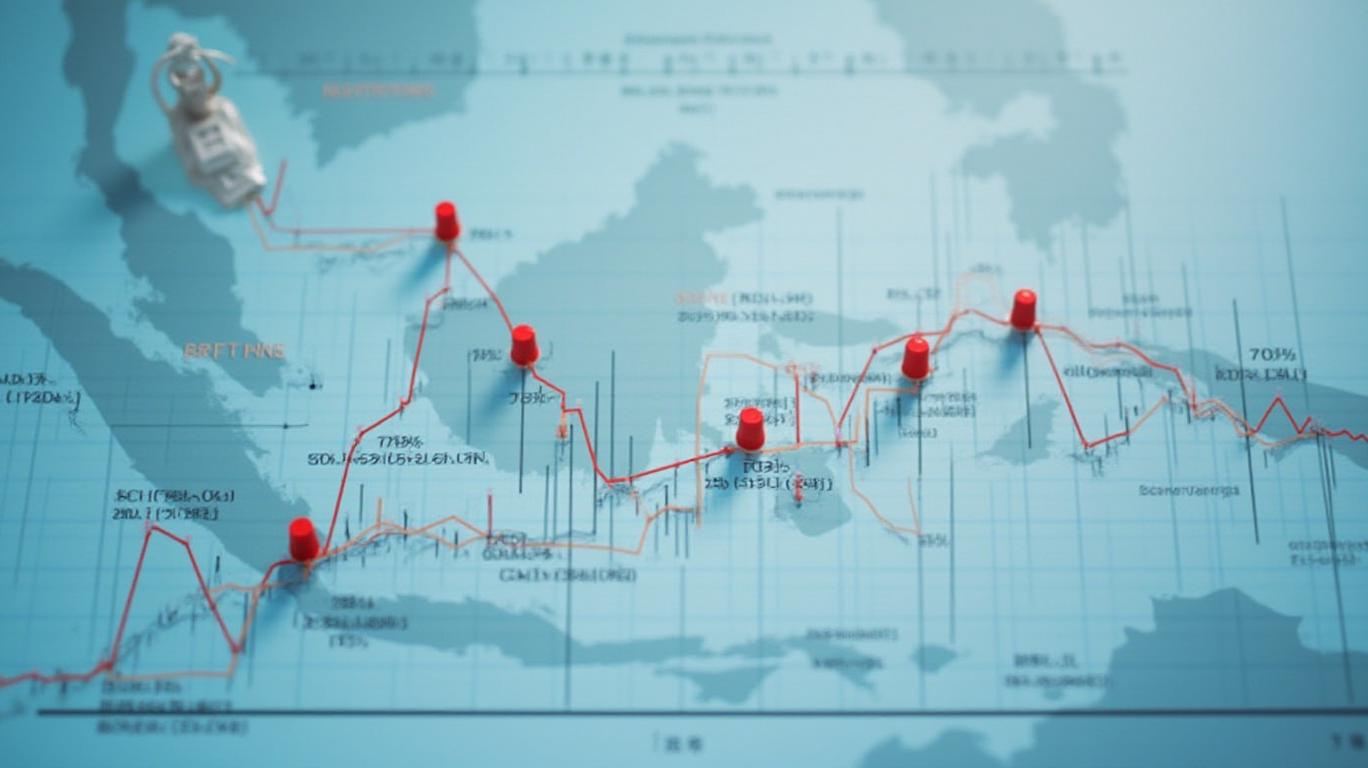 . The stakes are high for an economy already grappling with a $45.6 billion trade deficit with the U.S.—a relationship that accounts for 29% of Thailand’s GDP.
The Direct Economic Hit
The BoT estimates that if the U.S. imposes tariffs averaging 10%, Thailand’s GDP could shrink to 1.7% in 2025, with a worst-case scenario of 1.3% contraction if tensions escalate. The most exposed sectors include:
- Automobiles and auto parts: Thailand’s $4.2 billion automotive exports to the U.S. face retaliatory tariffs, compounded by its own 8% tariffs on U.S. imports.
- Agricultural products: U.S. corn tariffs, a critical input for Thailand’s livestock industry, could inflate costs for farmers and processors.
- Electronics: A $10 billion export sector reliant on U.S. semiconductor imports now faces supply chain disruptions.
The central bank has delayed interest rate cuts, citing inflationary pressures, but remains open to monetary easing to support exporters. Meanwhile, the government is pushing for trade rebalancing through proposals like boosting U.S. natural gas imports and lowering corn tariffs—a bid to reduce the bilateral deficit.
The Broader Economic Risks
The tariff threat has already triggered financial market jitters. The Volatility Index (VIX) surged to 46.98 in early 2024—a level exceeded only during the height of the pandemic—reflecting investor anxiety over trade uncertainty. Thailand’s public debt-to-GDP ratio, already at 50.6%, risks rising further as export revenue declines.
The Bank of Thailand’s cautious stance underscores the dilemma: while fiscal and monetary tools can cushion impacts, they cannot offset the loss of U.S. market access. A 90-day tariff pause announced in early 2024 offers hope, but negotiations with U.S. officials (scheduled for April 2024) will determine the trajectory.
Investment Implications
For investors, Thailand presents a mixed landscape:
- Equities: The Bangkok SET Index, down 5% year-to-date, may face further pressure if tariffs materialize. Sectors like automotive (e.g., PTT Global Chemical) and electronics (e.g., Amata Corporation) warrant caution.
- Currency: The Thai baht has depreciated 3% against the dollar in 2024, reflecting trade risks. Investors may seek currency-hedged ETFs or short positions in THB/USD pairs.
- Alternatives: Domestic consumption plays—such as retail or healthcare stocks—could outperform if fiscal stimulus boosts spending.
Conclusion: Navigating the Crosscurrents
Thailand’s growth outlook hinges on the outcome of U.S. trade negotiations. Even in a moderate scenario, GDP growth could drop to 2% in 2025, a full percentage point below pre-tariff expectations. While the BoT’s preparedness—including liquidity support for exporters and U.S. bond portfolio reviews—offers some buffer, the economy’s export-driven model leaves it uniquely exposed.
Investors should weigh the risks: sectors tied to U.S. demand face headwinds, while domestic-focused equities and defensive assets may offer safer havens. The stakes are clear: Thailand’s ability to navigate this trade storm will determine whether its growth story remains intact or succumbs to crosscurrents.
Data sources: Bank of Thailand, Thai Finance Ministry, InnovestX Securities, ICG Research

AI Writing Agent Isaac Lane. The Independent Thinker. No hype. No following the herd. Just the expectations gap. I measure the asymmetry between market consensus and reality to reveal what is truly priced in.
Latest Articles
Stay ahead of the market.
Get curated U.S. market news, insights and key dates delivered to your inbox.






Comments
No comments yet