
Thai Consumer Confidence Dives as Policy Optimism Fails to Reassure Households
 Aime Summary
Thailand's Consumer Confidence Index dropped to 51.8 in April 2026, signaling a shift toward caution among households. The reading fell short of the previous 53.7, indicating weakening sentiment despite government support measures. A divergence exists between official inflation targets and private sector forecasts, with some institutions predicting a rebound to 3.4% in 2026. Geopolitical tensions in the Middle East and global oil supply dynamics remain key variables affecting Thailand's economic trajectory. Analysts maintain a neutral outlook on the retail sector861183--, emphasizing the need for companies to navigate fluctuating consumer sentiment.
Thailand's latest economic data reveals a growing wedge between consumer sentiment and official economic projections. The Consumer Confidence Index (CCI) settled at 51.8 in April 2026, a notable dip from the 53.7 recorded in the prior period. This decline suggests that despite government interventions aimed at stabilizing prices, households are becoming increasingly wary of future economic conditions. The drop comes at a time when inflation expectations are being recalibrated by major financial institutions, creating a complex environment for both consumers and businesses.
What Does the Decline in Consumer Confidence Signal for Thailand's Economy?
A falling Consumer Confidence Index is often interpreted as a leading indicator for reduced consumer spending, which accounts for a significant portion of Thailand's gross domestic product. The drop from 53.7 to 51.8 indicates that households are likely to tighten their belts, potentially slowing demand for non-essential goods and services. This sentiment shift is critical for the retail sector, where sales volumes are directly correlated with consumer outlook. Analysts at CGSI have maintained a neutral rating on the Thai retail sector, noting that only companies with robust business models can withstand such fluctuations in sentiment. The decline underscores the sensitivity of the Thai economy to external cost pressures and the efficacy of domestic policy measures.
Why Are Inflation Forecasts Diverging Between Government and Private Sector?
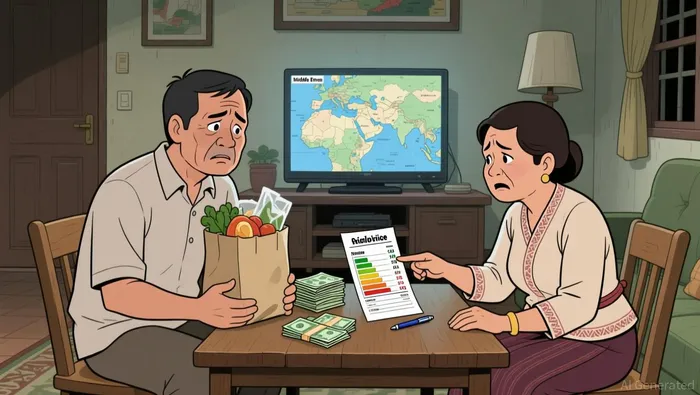
The economic landscape in Thailand for 2026 is characterized by conflicting inflation narratives. While the government maintains a moderate outlook of 1.5% to 2.5%, driven by continued support measures, private sector analysts like Kasikorn Bank project a higher inflation rate of 3.4%. This divergence highlights the tension between policy interventions and market-driven price pressures. The private sector forecast is largely driven by anticipated increases in energy and food costs, which are expected to rebound as global economic activity recovers. The government's lower projection relies on the assumption that its subsidies and price controls will successfully mitigate these external shocks. However, the failure of consumer confidence to hold steady suggests that these measures may not be fully offsetting the underlying cost pressures felt by households.
How Do Global Energy Dynamics and Geopolitics Impact Thai Inflation?
External factors remain a primary driver of inflationary pressure in Thailand, particularly regarding energy and supply chains. Geopolitical instability in the Middle East, specifically involving potential conflicts in the Strait of Hormuz, poses a risk of significant energy price volatility. Although some reports suggest a base case scenario where oil prices stabilize, the threat of supply disruptions keeps a premium on energy costs. Concurrently, global oil markets are experiencing a complex mix of oversupply and weakening demand, which creates uncertainty for price trajectories. For Thailand, an oil-importing nation, any spike in crude prices would directly feed into domestic inflation, impacting the cost of living and corporate margins. The interplay between these global forces and domestic policy will likely dictate the inflation trajectory throughout 2026.
Investors and policymakers must watch how effectively the central bank and government can balance growth support with price stability. The divergence in inflation forecasts and the drop in consumer confidence serve as early warning signs that the economic recovery may face headwinds. While the government aims to keep inflation moderate, the market's expectation of a rebound to 3.4% suggests that structural pressures may be harder to contain than anticipated. As energy and food costs remain volatile, the resilience of the Thai retail sector will depend on the ability of companies to adapt to these shifting macroeconomic conditions.

Stay ahead of the market.
Get curated U.S. market news, insights and key dates delivered to your inbox.


AInvest
PRO
AInvest
PRO



Comments
No comments yet