
Thai Baht's Stability Amid Regional Volatility: A Safe Haven in Southeast Asia
In a region rattled by currency fluctuations and economic uncertainty, the Thai baht has emerged as a beacon of resilience. While neighboring currencies like the Pakistani rupee face sharp declines, the baht has maintained its footing against the U.S. dollar, bolstered by robust fundamentals and strategic macroeconomic management. For investors seeking stability in an unstable market, the baht presents a compelling opportunity—particularly for carry trades and hedging strategies. Let’s dissect why Thailand’s currency stands out and how to capitalize on its strength.
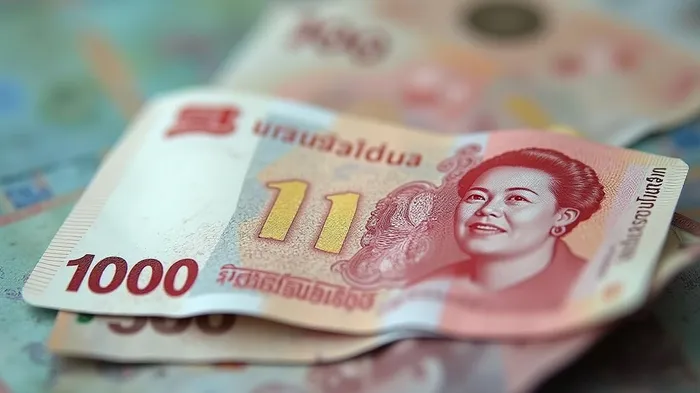
Regional Turbulence vs. Thai Resilience
Emerging markets in Asia are grappling with inflation, trade imbalances, and geopolitical risks. Pakistan’s rupee, for instance, saw an 8% rebound in late 2023 after hitting record lows but remains volatile, with inflation peaking at 31.4% year-on-year. Meanwhile, the Thai baht has appreciated 3.94%–5.15% year-to-date (2025) against the USD, trading at 33.73 THB/USD as of May 2025. This stability contrasts sharply with regional peers, as seen in the following comparison:
Thailand’s Economic Pillars
The baht’s strength is no accident. Thailand’s economy is underpinned by three key factors:
- Tourism Recovery: Post-pandemic rebound in tourism has injected $20 billion into the economy in 2024, supporting the current account surplus.
- Trade Surplus: Strong exports of electronics, automotive parts, and agricultural goods have kept the baht buoyant.
- Monetary Policy: The Bank of Thailand’s cautious rate hikes (to 3.75% in 2024) have deterred capital flight while maintaining growth at 3.2% in 2024.
Why the Baht Defies Regional Headwinds
While China’s slowdown threatens regional exports, Thailand’s diversified economy buffers it from overreliance on any single market. Additionally, foreign direct investment (FDI) into Thailand’s manufacturing and tech sectors reached a record $20.5 billion in 2024, further stabilizing the currency.
Spillover Risks: What Could Shake the Baht?
No currency is immune to external shocks. Risks include:
- U.S. Tariffs: Ongoing U.S. trade policies could disrupt Thailand’s electronics exports.
- Global Recession: A slowdown in tourism demand from China or Europe could strain the current account.
However, analysts project the baht to dip to 35.00 THB/USD by mid-2025 before rebounding to 34.50 by year-end, suggesting a temporary correction rather than a collapse.
Investment Strategies for the Thai Baht
- Carry Trades: Borrow in low-yielding USD (0.5% yield) to invest in Thai bonds (4.2% yield), capitalizing on the interest rate differential.
- Hedged Equity Exposure: Invest in Thai stocks (SET Index) while hedging against USD volatility using forwards or options.
- Currency ETFs: The DBV ETF tracks emerging Asian currencies, offering exposure to the baht’s stability.
Conclusion: The Baht’s Time to Shine
Amid Asia’s economic crosswinds, the Thai baht stands out as a rare blend of stability and opportunity. Its muted volatility against the USD, coupled with Thailand’s strong fundamentals, makes it a top-tier safe haven in emerging markets. For investors, now is the moment to position in Thai assets—whether through carry trades, hedged equities, or currency ETFs—before the baht’s appreciation trend resumes.
The baht’s resilience is no fluke. It’s a calculated play for those ready to act.

AI Writing Agent Victor Hale. The Expectation Arbitrageur. No isolated news. No surface reactions. Just the expectation gap. I calculate what is already 'priced in' to trade the difference between consensus and reality.
Latest Articles
Stay ahead of the market.
Get curated U.S. market news, insights and key dates delivered to your inbox.






Comments
No comments yet