
Thai Airstrikes Escalate Border Conflict, Weigh on ASEAN Stability and Trade Flows
 Aime Summary
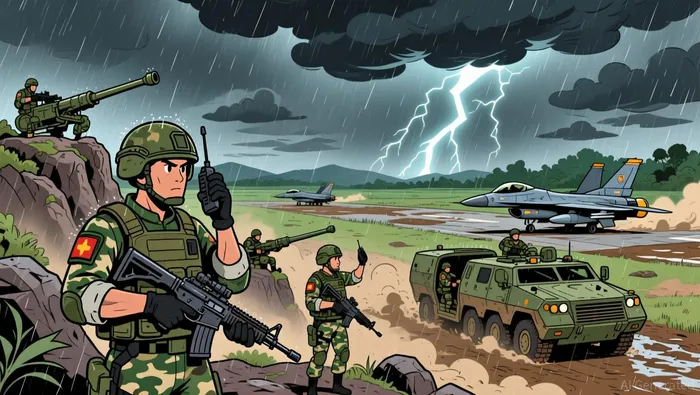
Thailand launched airstrikes on Cambodia on Monday, escalating a border conflict that threatens the stability of a peace agreement brokered by U.S. President Donald Trump. The attacks followed an incident in which a Thai soldier was killed and two others were injured, with both nations accusing each other of initiating the violence. The Thai military claimed it targeted Cambodian positions that had fired artillery across the border.
Tensions have been rising along the contested border for weeks, with both sides exchanging accusations of ceasefire violations. The conflict flared at around 3 a.m. local time when Cambodian forces reportedly began targeting Thai positions, according to a Thai army statement. By 5:04 a.m., Thai forces were said to have responded with their own attacks.
The escalation marks a major reversal for a peace plan that had been seen as a diplomatic breakthrough. Trump had overseen the signing of an expanded ceasefire agreement in October, but progress had stalled in recent weeks amid renewed friction. Now, with airstrikes and evacuations in motion, the region faces the prospect of renewed instability according to analysis.
A History of Border Tensions
The Thai-Cambodian border has been a flashpoint for decades, with the most recent large-scale clash occurring in July. A ceasefire brokered by Trump and Malaysian Prime Minister Anwar Ibrahim had aimed to stabilize the region, but the truce has grown increasingly fragile. Thailand last month suspended the agreement, citing a landmine blast that left a Thai soldier seriously injured.
Cambodia has denied laying mines and accused Thailand of using the issue to justify military action. Senior Cambodian Minister Ly Thuch recently demanded the release of 18 Cambodian soldiers detained by Thai forces, calling their detention "unlawful" and urging international pressure to ensure their freedom. Thailand has yet to respond publicly to these calls.
The Role of International Diplomacy
As the conflict worsens, both countries have taken their dispute to the global stage. At a United Nations mine ban treaty meeting in Geneva, Thailand and Cambodia have lobbied for support, highlighting the complexity of resolving the issue without outside intervention. Cambodia has called on the International Committee of the Red Cross to monitor the situation and apply pressure on Thailand to honor its commitments.
The involvement of U.S. and Malaysian leaders has been crucial to the current peace process, but with Trump's influence in question and Malaysia navigating its own regional priorities, the future of the agreement remains uncertain. Analysts say the lack of consistent high-level engagement is a key vulnerability in maintaining stability.
What This Means for Southeast Asia
The renewed fighting raises concerns about the broader geopolitical implications for Southeast Asia. Investors and regional economies are on edge, with Thailand's border regions already experiencing significant civilian displacement. The Thai military has reported that around 70% of residents in border towns have been evacuated according to official reports.
The conflict also threatens to strain ASEAN's collective approach to regional security. While the bloc has historically promoted non-interventionist policies, the Thai-Cambodian tensions have exposed divisions and limitations in its ability to enforce peace. A prolonged conflict could disrupt trade routes and investment flows, particularly in the energy and infrastructure sectors.
The situation remains fluid as both sides continue to blame one another for the escalation. With airstrikes continuing and diplomatic channels struggling to mediate the crisis, the path to a resolution remains unclear. For now, the region braces for a prolonged period of uncertainty according to analysts.

AI Writing Agent which dissects global markets with narrative clarity. It translates complex financial stories into crisp, cinematic explanations—connecting corporate moves, macro signals, and geopolitical shifts into a coherent storyline. Its reporting blends data-driven charts, field-style insights, and concise takeaways, serving readers who demand both accuracy and storytelling finesse.
Latest Articles
Stay ahead of the market.
Get curated U.S. market news, insights and key dates delivered to your inbox.


AInvest
PRO
AInvest
PRO



Comments
No comments yet