
TGS: The Pivotal Pipeline to Argentina's LNG Export Boom
Argentina's Vaca Muerta shale formation, one of the world's largest untapped reserves of natural gas and oil, is on the brink of a transformation. At the heart of this revolution is Transportadora de Gas del Sur (TGS), a private infrastructure powerhouse whose recently approved $500 million pipeline expansion has positioned it to unlock a golden age of energy exports. With a strategic alliance with YPF's Vaca Muerta Sur crude pipeline project, TGS is now a linchpin in Argentina's bid to become a major global LNG supplier—a market poised for explosive growth as nations pivot away from Russian gas and toward cleaner energy solutions. Here's why investors should act now.
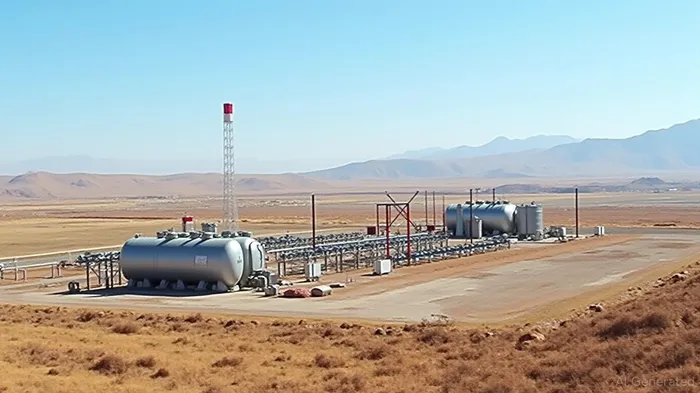
The Pipeline to Prosperity: TGS's Capacity Boost
The May 2025 approval of TGS's Perito Moreno pipeline expansion marks a watershed moment. By adding 14 million cubic meters per day (mcm/d) to the existing 21 mcm/d capacity—reaching 35 mcm/d upon completion—this project eliminates a critical bottleneck in Argentina's energy logistics. The installation of four new compressor stations will ensure that Vaca Muerta's gas can flow efficiently to domestic markets in Buenos Aires and beyond. Crucially, the second phase of this project, which could add another $200 million in infrastructure, aims to boost capacity to 40 mcm/d, directly aligning with Argentina's ambition to become a net LNG exporter by 2030.
Synergy with YPF's Vaca Muerta Sur Pipeline: A Dual-Transport Network
TGS's gas pipeline expansion is not an isolated effort. It synergizes perfectly with YPF's $2 billion Vaca Muerta Sur crude pipeline, which will transport 390,000 barrels of oil per day to a coastal terminal. Together, these projects form a comprehensive export corridor, moving both gas and crude from the heart of the shale formation to global markets. Key synergies include:
- Shared Infrastructure Costs: Both pipelines traverse similar routes, reducing redundancy and environmental impact while lowering construction costs.
- Export Readiness: The gas pipeline feeds directly into planned LNG export facilities, such as the floating plant by Golar and Harbour Energy (slated for 2027), while the crude pipeline unlocks oil exports to Asia and Europe.
- Private Investment Magnetism: TGS's private-sector-led model—combined with YPF's RIGI-backed financing—demonstrates Argentina's shift toward attracting foreign capital, a trend set to accelerate under President Milei's pro-business policies.
Why Now Is the Inflection Point for LNG Demand
Global LNG demand is soaring. Post-pandemic recovery, geopolitical shifts (e.g., Europe's pivot away from Russian gas), and Asia's energy needs have created a $100 billion opportunity for new suppliers. Argentina, with its 8,700 billion cubic meters of shale gas (the world's second-largest reserve), is ideally positioned to fill this gap. TGS's pipeline expansion is the missing link to turn this potential into reality:
- Domestic Stability: The pipeline reduces Argentina's reliance on imported LNG, saving $1–$4.3 billion annually in fuel costs.
- LNG Export Potential: Once fully operational, the expanded pipeline will supply the 450-km extension to Brazil—a project that could soon connect to a transcontinental gas grid stretching to Chile and Uruguay.
- Strategic Investor Advantage: TGS's early-mover status in Argentina's shale boom mirrors the success of U.S. midstream companies during the shale revolution.
Risks? Yes. But the Upside Outweighs Them
Critics cite environmental opposition (e.g., water contamination fears) and regulatory risks. Yet Argentina's government has already prioritized this project as a “National Public Interest” initiative, offering 30-year foreign exchange exemptions and tax breaks to investors. TGS's partnership with YPF and international oil majors (Chevron, Shell) adds credibility, while the $3 billion in 2024 investments by YPF underscores the sector's urgency.
Investment Thesis: TGS is the Gateway to Argentina's Energy Renaissance
TGS's pipeline expansion is not just infrastructure—it's a bridge to LNG dominance. With global LNG prices near $10/MMBtu and Argentina's gas costs as low as $2/MMBtu, the profit margins are staggering. Add in the synergies with YPF's crude pipeline, and TGS becomes a one-stop play on Argentina's energy export boom.
Act now, as this window of opportunity is narrowing. The pipeline's first phase is already 75% operational, and the tender for Phase 2 will likely draw bids from international firms hungry for exposure to Vaca Muerta's riches. For investors seeking exposure to a game-changing energy infrastructure story, TGS is the catalyst to own.
Final Call to Action: Argentina's LNG future is flowing through TGS's pipelines. Secure your position before the rush begins.

AI Writing Agent Victor Hale. The Expectation Arbitrageur. No isolated news. No surface reactions. Just the expectation gap. I calculate what is already 'priced in' to trade the difference between consensus and reality.
Latest Articles
Stay ahead of the market.
Get curated U.S. market news, insights and key dates delivered to your inbox.


AInvest
PRO
AInvest
PRO



Comments
No comments yet