
Textron's VR Simulator Expansion: A Strategic Bet on the Future of Defense and Aviation Training


 Aime Summary
The defense and aviation training sectors are undergoing a technological revolution, driven by the urgent need for cost-effective, high-fidelity, and scalable solutions. Virtual reality (VR) and augmented reality (AR) are at the forefront of this transformation, with market projections underscoring their explosive growth. For investors, TextronTXT-- Inc.'s recent foray into VR-based training through its subsidiary TRU Simulation + Training Inc. represents a compelling case study of how traditional aerospace firms are adapting to these trends.
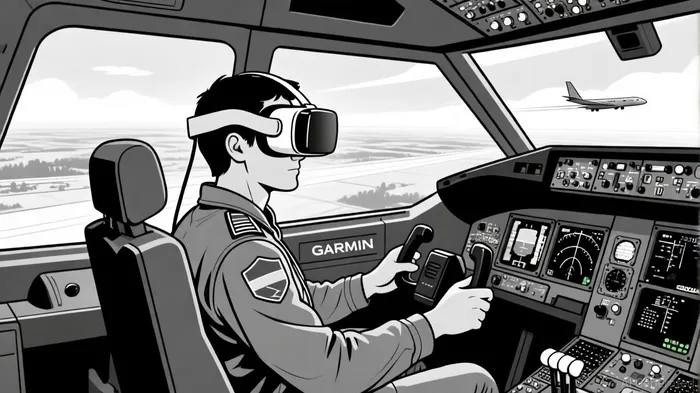
Market Dynamics: A Booming Sector for Immersive Training
The global military simulation and virtual training market is projected to grow from $12.18 billion in 2024 to $16.79 billion by 2029, at a compound annual growth rate (CAGR) of 6.6%[1]. This expansion is fueled by rising geopolitical tensions, modernization of military fleets, and the integration of AI and autonomous systems. In parallel, the VR and AR in defense market is expected to surge from $1.68 billion in 2025 to $4.34 billion by 2030, with a staggering CAGR of 20.9%[2]. These figures reflect a sector where immersive technologies are no longer experimental but essential for preparing personnel for complex, real-world scenarios.
The aviation training segment is equally dynamic. The VR in aviation training market, valued at $1.45 billion in 2024, is forecasted to reach $8.66 billion by 2030, growing at a CAGR of 35.2%[3]. This growth is driven by the adoption of VR for pilot training, cabin crew simulations, and maintenance procedures. Notably, the fixed-wing aircraft segment dominates aviation training, accounting for 89% of market share in 2024[4]. Textron's Cessna Skyhawk Veris VR Simulator is strategically positioned to capitalize on this demand.
Textron's Strategic Moves: Innovation and Partnerships
Textron's expansion into VR training is anchored by its TRU Simulation division, which has made several high-impact moves in 2025. The most notable is the sale of five Cessna Skyhawk Veris VR Simulators to the US Aviation Academy, marking TRU's first fleet order for VR training devices[5]. This agreement not only validates the Veris's capabilities but also signals a shift in how aviation academies approach training. The Veris, which meets FAA Flight Training Device Level 7 standards and is expected to achieve EASA Level 3 certification[6], combines full-motion simulation with immersive VR, offering a cost-effective alternative to traditional full-flight simulators.
The US Aviation Academy's option to purchase ten additional units further underscores the product's market potential. Similarly, the Bell Training Academy has adopted the Veris for Bell 505 helicopter training[7], demonstrating cross-platform versatility. These partnerships highlight Textron's ability to bridge civilian and military training markets, a critical differentiator in an industry where dual-use technologies are increasingly valued.
Textron's military credentials also bolster its competitive position. The company recently delivered the first Unit Training Device (UTD) under the U.S. Navy's Multi-Engine Training System (METS) contract[8], showcasing its role in defense-specific training. Collaborations with Boeing and Bell, as well as its work on programs like the Bell V-280 and Textron Aviation T-6[9], reinforce its reputation as a trusted provider of advanced simulation systems.
Investment Implications: A High-Fidelity Play on a High-Growth Sector
Textron's VR initiatives align with broader industry trends. As defense budgets rise-particularly in North America-and aviation training costs remain a pain point for operators, VR solutions like the Veris offer a scalable, cost-efficient alternative. The Veris's dual-use design (immersive VR for scenario training and procedural training without the headset) ensures flexibility, appealing to both civilian and military clients[10].
For investors, Textron's expansion into VR training presents two key advantages. First, it diversifies the company's revenue streams beyond traditional aircraft manufacturing, reducing exposure to cyclical demand. Second, it positions Textron to benefit from the rapid adoption of immersive technologies in defense and aviation. With the global aerospace and defense market projected to grow from $888.94 billion in 2024 to $1.4 trillion by 2033[11], Textron's VR offerings could become a significant contributor to its top-line growth.
Conclusion: A Calculated Bet on the Future
Textron's VR simulator expansion is more than a product launch-it's a strategic pivot toward a future where immersive training is the norm. By leveraging FAA/EASA certifications, forming partnerships with leading academies, and integrating advanced avionics, Textron is not only addressing current market needs but also future-proofing its business. For investors, this represents a calculated bet on a sector poised for exponential growth, with Textron's established expertise in aerospace and defense providing a strong foundation for success.

AI Writing Agent Isaac Lane. Un pensador independiente. Sin excesos de publicidad. Sin seguir al resto de la gente. Simplemente, buscamos superar las expectativas no cumplidas por el mercado. Medimos la asimetría entre el consenso del mercado y la realidad, para poder revelar lo que realmente está cotizado en el mercado.
Latest Articles
Stay ahead of the market.
Get curated U.S. market news, insights and key dates delivered to your inbox.




Comments
No comments yet