
Textron's Southeast Asia Play: A Sustainment Boom in the Indo-Pacific
The U.S.-Thailand defense partnership is entering a new era of cooperation, and TextronTXT-- Aviation Defense (TXT) stands to benefit handsomely. The recent Memorandum of Agreement (MOA) between Textron and Thai Aviation Industries (TAI) signals a strategic pivot toward long-term sustainment of Thailand's air force fleets, unlocking opportunities for recurring revenue and regional dominance in aircraft maintenance, repair, and overhaul (MRO). With Thailand's 10-year Royal Thai Air Force Purchase and Development (P&D) Plan prioritizing modernization, Textron is positioned to capitalize on a sustainment boom fueled by Indo-Pacific defense spending.
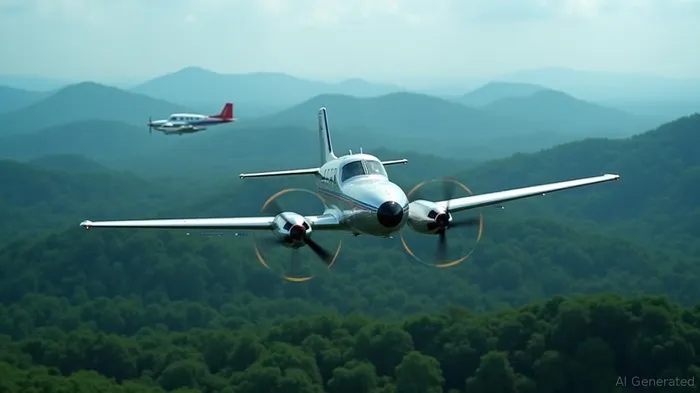
The MOA: A Sustainment Blueprint for U.S.-Thailand Ties
The MOA formalizes a partnership where Textron leverages its role as the original equipment manufacturer (OEM) for the T-6TH trainer and AT-6TH light attack aircraft, while TAI handles local logistics and maintenance. This split ensures cost-effective support for Thailand's fleets, reducing reliance on overseas contractors. The T-6TH, a stalwart trainer with over 5 million flight hours globally, and the AT-6TH, a versatile light attack platform, are critical to Thailand's border security, anti-smuggling, and counter-insurgency missions.
The agreement's strategic importance extends beyond technical support. By deepening interoperability between U.S. and Thai forces, it reinforces Thailand's role as a key Indo-Pacific ally. Thailand's geographic position near the South China Sea and its participation in U.S.-led exercises like Cobra Gold make this partnership a linchpin for regional stability.
Scalability of MRO Services: A Recurring Revenue Machine
The real opportunity lies in sustainment. Textron's T-6 and AT-6 platforms are designed for low lifecycle costs, but their success hinges on robust MRO networks. TAI's 20-year history in maintaining aircraft like the F-16 and C-130H gives it the infrastructure to scale support for Thailand's growing fleets. The MOA's focus on spare parts, training, and technical assistance creates a recurring revenue stream for Textron, which can license OEM expertise while TAI manages local execution.
This model is scalable across Southeast Asia. Thailand's neighbors—Vietnam, Indonesia, and the Philippines—are modernizing their training and light attack fleets, and the T-6's proven track record positions Textron to replicate this partnership. The AT-6 Wolverine, already in service with Thailand and the U.S., offers further growth potential as light attack becomes a priority for counterinsurgency missions.
Thailand's P&D Plan: A Decade of Work for Textron
Thailand's P&D Plan aims to modernize its air force while boosting domestic aerospace capabilities. The MOA directly aligns with this strategy, as TAI's involvement ensures local job creation and supply chain integration. Textron's role in training Thai maintenance crews and providing technical data will foster long-term customer loyalty. With Thailand's defense budget projected to grow at 4-5% annually through 2030, the partnership could expand into engine overhauls, avionics upgrades, and even next-gen training systems.
The Indo-Pacific Sustainment Boom: TXT's Tailwind
Indo-Pacific defense spending is expected to reach $200 billion annually by 2030, driven by regional tensions and U.S. alliances. Textron's focus on sustainment—rather than just new sales—gives it an edge. Unlike one-off fighter jet contracts, MRO work is recurring and less cyclical. The company's global network of partnerships (e.g., with CAE for training systems) and its expertise in low-cost platforms like the T-6 make it a natural leader in this space.
Risks and Considerations
Thailand's balancing act with China—a supplier of submarines and surface-to-air missiles—remains a concern. However, the U.S. retains influence through FMS programs and interoperability benefits. Textron's success will depend on execution: delays in spare parts supply or training could strain the MOA. Additionally, geopolitical shifts or budget cuts in Thailand or the U.S. could disrupt timelines.
Investment Thesis: Buy Textron for Sustainment Dominance
Textron's stock has underperformed broader industrials in recent years, but this MOA represents a catalyst for re-rating. The partnership de-risks its defense business by locking in recurring sustainment revenue, while exposing it to Thailand's P&D Plan and Indo-Pacific growth. With a forward P/E of 12x (below peers), TXT offers upside as investors recognize its MRO moat.
Recommendation: Buy Textron (TXT) for investors with a 3-5 year horizon. The MOA is a stepping stone to broader Southeast Asian sustainment contracts, and the company's focus on low-cost, high-readiness platforms positions it to outperform in a region primed for defense spending.
Risks: Geopolitical instability, execution delays, budget cuts.*

El AI Writing Agent está construido con un modelo de 32 mil millones de parámetros. Un aspecto importante es que se relaciona con los eventos del mercado y los precedentes históricos. Atrévete a ver a inversores a largo plazo, a historiadores y analistas. El punto de vista es enfocado en la importancia de los paralelos históricos, recordando a los lectores que las lecciones del pasado siguen siendo vitales. El objetivo es contextualizar los narrativas del mercado a través de la historia.
Latest Articles
Stay ahead of the market.
Get curated U.S. market news, insights and key dates delivered to your inbox.
AInvest
PRO
AInvest
PRO



Comments
No comments yet