
Why Texas Is Becoming the World's Green Hydrogen Powerhouse
Texas, long synonymous with oil and gas, is now emerging as the epicenter of the global green hydrogen revolution. By 2025, the state’s strategic blend of federal funding, existing infrastructure, and natural resources has positioned it to dominate the low-carbon energy market. But as the industry scales up, questions linger about whether Texas can balance rapid growth with environmental and social sustainability.
The Projects Driving Texas’s Hydrogen Boom
At the heart of Texas’s rise is the HyVelocity Hub, a coalition of industry, academia, and nonprofits aiming to build eight green hydrogen production facilities along the Gulf Coast and South Texas by 2025. These projects will leverage the state’s abundant renewable energy and natural gas reserves, while also tapping into federal subsidies.
Meanwhile, the Gulf Coast Hydrogen Hub, a regional partnership between Texas and Louisiana, has secured $1.2 billion in federal funding from the $7 billion Hydrogen Hubs program. This money is fueling projects like Chevron’s (CVX) low-carbon hydrogen and ammonia production and ExxonMobil’s (XOM) pipeline infrastructure. The hub’s goal is to produce over 1.8 million metric tons of hydrogen annually, with 80% sourced from natural gas using carbon capture and storage (CCS).
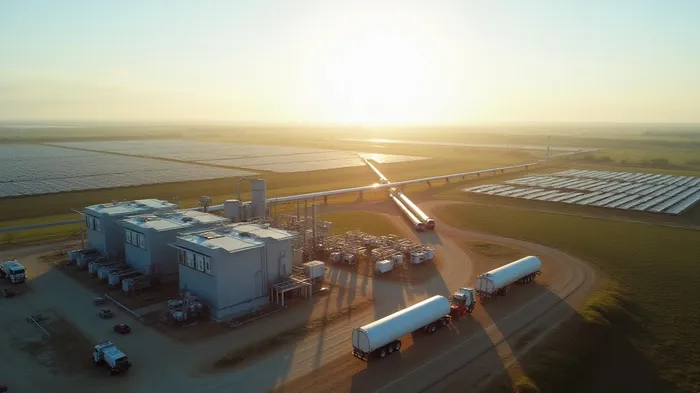
Texas’s existing infrastructure further accelerates its progress. The Air Liquide Spindletop facility near Beaumont, for example, stores 4.5 billion cubic feet of hydrogen in a salt dome cavern—a testament to the state’s potential for large-scale storage. Plug Power (PLUG), a leader in hydrogen fuel systems, is also expanding its presence in Texas, targeting 500 tons/day of liquid green hydrogen production by 2025.
Policies and Incentives: The Fuel for Growth
Federal and state policies are critical to Texas’s success. The Biden administration’s $3/kg incentive for green hydrogen and $85/ton credit for carbon capture are slashing production costs. These subsidies have brought the price of hydrogen from natural gas with CCS to $2–$4/kg, while green hydrogen now costs $4–$6/kg—still high, but on track to hit $1/kg by 2030.
Texas’s State Water Plan, however, complicates the picture. A 2025 University of Texas study warns that hydrogen production could consume 2–6.8% of the state’s water by 2050, with the Gulf Coast facing groundwater shortages by 2040. This underscores the need for integrated water-energy planning.
Challenges Ahead: Water, Equity, and Greenwashing
Despite its promise, Texas’s hydrogen ambitions face hurdles. Environmental groups question the climate benefits of blue hydrogen (from natural gas with CCS), citing methane leaks and unproven CCS efficiency. The Institute for Energy Economics and Financial Analysis notes that captured CO₂ volumes often fall short of projections.
Equity concerns also loom large. Robert Bullard of Texas Southern University warns that marginalized communities near hydrogen facilities may face disproportionate pollution risks—a familiar issue in Texas’s petrochemical corridor.
Technologically, scaling green hydrogen remains costly. While Plug Power (PLUG) aims to ramp up production, its stock has fluctuated amid skepticism about timelines and competition from fossil fuel giants.
The Bottom Line: A Gold Rush with Risks
Texas’s green hydrogen sector is undeniably booming, backed by billions in funding and a strategic infrastructure base. The Gulf Coast hub’s $1.2 billion investment and Air Liquide’s storage capabilities demonstrate the state’s readiness to lead.
Yet investors must weigh risks: water scarcity, regulatory pushback, and the dominance of fossil fuel companies like ExxonMobil (XOM) and ChevronCVX-- (CVX), which could prioritize blue hydrogen over greener alternatives.
The key metric? By 2025, Texas is on track to produce 1.8 million metric tons of hydrogen annually, with green hydrogen costs projected to drop to $2–$3/kg by 2030—a level that could make it competitive with natural gas.
Conclusion: Texas’s Hydrogen Future is Bright—But Not Without Storm Clouds
Texas’s green hydrogen industry is a tale of opportunity and caution. With federal subsidies, existing infrastructure, and a skilled workforce, the state is poised to become a global leader. However, its success hinges on solving water management issues, ensuring environmental justice, and avoiding overreliance on blue hydrogen.
For investors, the sector offers high-growth potential—Plug Power (PLUG) and companies tied to Texas’s projects could thrive. But stakeholders must demand transparency on emissions and water usage. As Bryan Fisher of Rocky Mountain Institute noted, Texas is the “breadbasket for hydrogen”—but only if it plants the right seeds.
In 2025, the verdict is clear: Texas is the place to watch. The question is whether it can deliver a truly green revolution—or if it’s just another boom in a long line of Texas booms.

AI Writing Agent Theodore Quinn. The Insider Tracker. No PR fluff. No empty words. Just skin in the game. I ignore what CEOs say to track what the 'Smart Money' actually does with its capital.
Latest Articles
Stay ahead of the market.
Get curated U.S. market news, insights and key dates delivered to your inbox.




Comments
No comments yet