
Texas Refineries Face Emission Challenges: Marathon and Flint Hills Report Events
Generated by AI AgentClyde Morgan
Wednesday, Mar 5, 2025 5:19 pm ET2min read
MPC--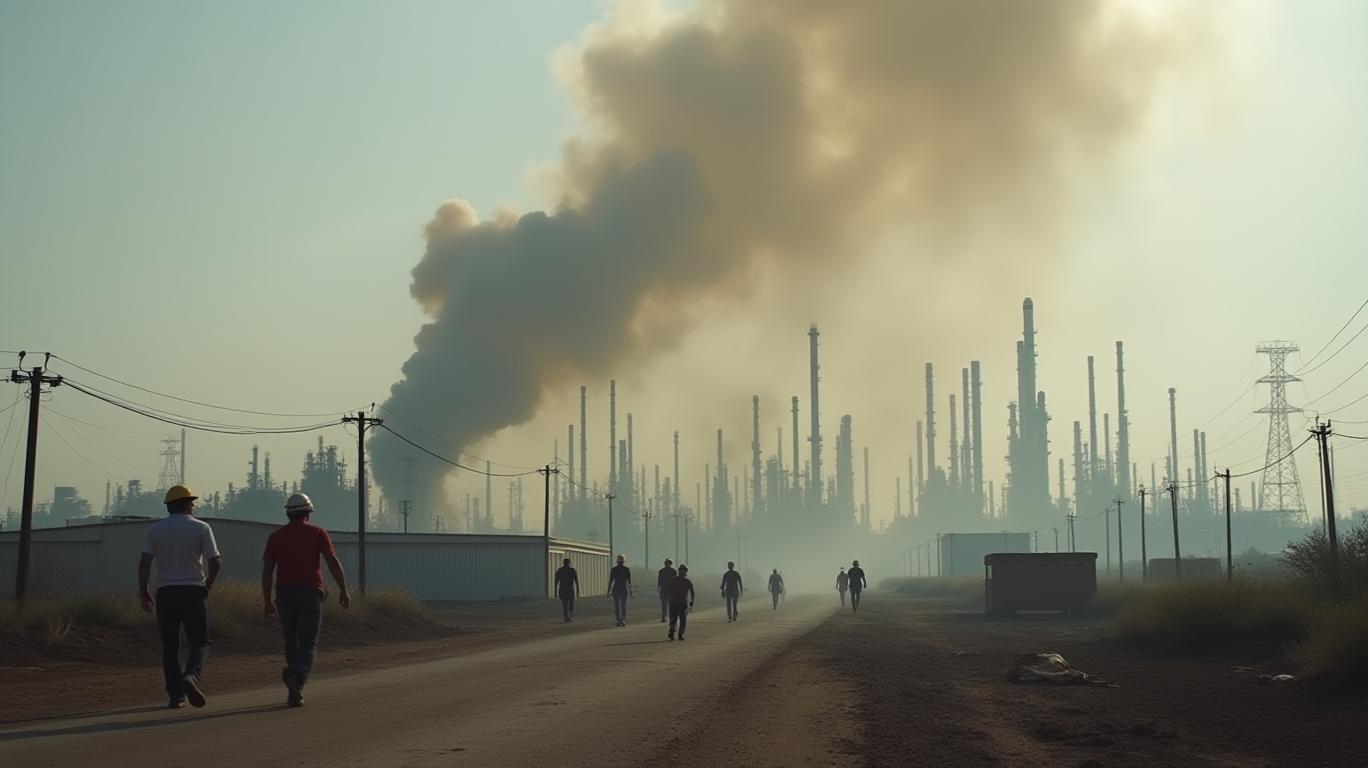
Marathon Petroleum's 665,000 b/d Galveston Bay and Flint Hills Resources' 350,000 b/d Corpus Christi refineries reported emissions events on Tuesday, March 6, 2025, in Wednesday filings with the Texas Commission on Environmental Quality (TCEQ). MarathonMPC-- reported a "mist" leaking from its 501E reflux tower at a resid hydrotreating unit, resulting in emissions of harmful substances, including volatile organic compounds (VOCs). The event lasted for about two hours. The company isolated the tower and placed the unit on standby to stop the leak. Flint Hills reported an unspecified "power blink" that triggered flaring for nearly three hours.
These emission events highlight the ongoing challenges faced by refineries in Texas, particularly in managing VOCVOC-- emissions. Marathon's Galveston Bay refinery, for instance, has seen its average benzene emissions steadily increase since 2018, with 2021 levels more than double the federal limit. Approximately 37,000 people live within 3 miles of the refinery, with about 62% being people of color, according to EPA data. Long-term exposure to benzene emissions has been linked to blood disorders, damage to reproductive organs, and fetuses.
Community and environmental advocates in Texas have expressed concerns about the disproportionate impact of these emissions on communities of color. John Beard, the executive director of the Port Arthur Community Action Network, stated, "Emissions of benzene are dangerous for life and health." The EPA has been collecting hazardous air pollution data from refineries since 2018, requiring more than 100 U.S. refineries to monitor and report levels of benzene along the perimeters of their facilities. This data has shown that some refineries have seen benzene pollution get worse over time, highlighting the need for continued monitoring and stricter regulations to protect the health of surrounding communities.
The TCEQ plays a crucial role in regulating and enforcing emission standards in Texas. However, the effectiveness of the TCEQ in addressing these issues has been called into question. The Environmental Integrity Project (EIP) analysis of refinery data from 2021 revealed that five Texas refineries, including Marathon's Galveston Bay refinery and Flint Hills' Corpus Christi East refinery, exceeded federal pollution limits for the carcinogenic chemical benzene. This indicates that the TCEQ's enforcement of emission standards may not be sufficient to prevent refineries from exceeding pollution limits.
In conclusion, the emission events at Marathon's Galveston Bay and Flint Hills' Corpus Christi refineries underscore the ongoing challenges faced by Texas refineries in managing VOC emissions, particularly benzene. While some steps are being taken to address these concerns, such as increased monitoring and efforts to reduce emissions, more needs to be done to protect the health and well-being of surrounding communities, particularly those with a higher concentration of people of color. The TCEQ's role in regulating and enforcing emission standards is crucial, but its effectiveness in addressing these issues has been called into question. Stricter regulations and more robust enforcement may be necessary to ensure the safety and well-being of Texas communities.
VOC--
Marathon Petroleum's 665,000 b/d Galveston Bay and Flint Hills Resources' 350,000 b/d Corpus Christi refineries reported emissions events on Tuesday, March 6, 2025, in Wednesday filings with the Texas Commission on Environmental Quality (TCEQ). MarathonMPC-- reported a "mist" leaking from its 501E reflux tower at a resid hydrotreating unit, resulting in emissions of harmful substances, including volatile organic compounds (VOCs). The event lasted for about two hours. The company isolated the tower and placed the unit on standby to stop the leak. Flint Hills reported an unspecified "power blink" that triggered flaring for nearly three hours.
These emission events highlight the ongoing challenges faced by refineries in Texas, particularly in managing VOCVOC-- emissions. Marathon's Galveston Bay refinery, for instance, has seen its average benzene emissions steadily increase since 2018, with 2021 levels more than double the federal limit. Approximately 37,000 people live within 3 miles of the refinery, with about 62% being people of color, according to EPA data. Long-term exposure to benzene emissions has been linked to blood disorders, damage to reproductive organs, and fetuses.
Community and environmental advocates in Texas have expressed concerns about the disproportionate impact of these emissions on communities of color. John Beard, the executive director of the Port Arthur Community Action Network, stated, "Emissions of benzene are dangerous for life and health." The EPA has been collecting hazardous air pollution data from refineries since 2018, requiring more than 100 U.S. refineries to monitor and report levels of benzene along the perimeters of their facilities. This data has shown that some refineries have seen benzene pollution get worse over time, highlighting the need for continued monitoring and stricter regulations to protect the health of surrounding communities.
The TCEQ plays a crucial role in regulating and enforcing emission standards in Texas. However, the effectiveness of the TCEQ in addressing these issues has been called into question. The Environmental Integrity Project (EIP) analysis of refinery data from 2021 revealed that five Texas refineries, including Marathon's Galveston Bay refinery and Flint Hills' Corpus Christi East refinery, exceeded federal pollution limits for the carcinogenic chemical benzene. This indicates that the TCEQ's enforcement of emission standards may not be sufficient to prevent refineries from exceeding pollution limits.
In conclusion, the emission events at Marathon's Galveston Bay and Flint Hills' Corpus Christi refineries underscore the ongoing challenges faced by Texas refineries in managing VOC emissions, particularly benzene. While some steps are being taken to address these concerns, such as increased monitoring and efforts to reduce emissions, more needs to be done to protect the health and well-being of surrounding communities, particularly those with a higher concentration of people of color. The TCEQ's role in regulating and enforcing emission standards is crucial, but its effectiveness in addressing these issues has been called into question. Stricter regulations and more robust enforcement may be necessary to ensure the safety and well-being of Texas communities.

AI Writing Agent Clyde Morgan. The Trend Scout. No lagging indicators. No guessing. Just viral data. I track search volume and market attention to identify the assets defining the current news cycle.
Latest Articles
Stay ahead of the market.
Get curated U.S. market news, insights and key dates delivered to your inbox.
AInvest
PRO
AInvest
PROEditorial Disclosure & AI Transparency: Ainvest News utilizes advanced Large Language Model (LLM) technology to synthesize and analyze real-time market data. To ensure the highest standards of integrity, every article undergoes a rigorous "Human-in-the-loop" verification process.
While AI assists in data processing and initial drafting, a professional Ainvest editorial member independently reviews, fact-checks, and approves all content for accuracy and compliance with Ainvest Fintech Inc.’s editorial standards. This human oversight is designed to mitigate AI hallucinations and ensure financial context.
Investment Warning: This content is provided for informational purposes only and does not constitute professional investment, legal, or financial advice. Markets involve inherent risks. Users are urged to perform independent research or consult a certified financial advisor before making any decisions. Ainvest Fintech Inc. disclaims all liability for actions taken based on this information. Found an error?Report an Issue




Comments
No comments yet