
Texas Hasn't Elected a Democrat Since 1994 — Polymarket Just Priced the Senate Seat at 50/50
 Aime Summary
On Polymarket's Texas Senate Election Winner market, the race is trading as a literal coin flip: the Democrat at 50.5¢, the Republican at 49.5¢ as of Sept. 14. Read that flatness in stake terms and it stops being a percentage and starts being money — $505 buys roughly 1,000 "Talarico wins" shares that pay about $1,000, a near-$495 profit, if he holds the seat, or zero if he does not.
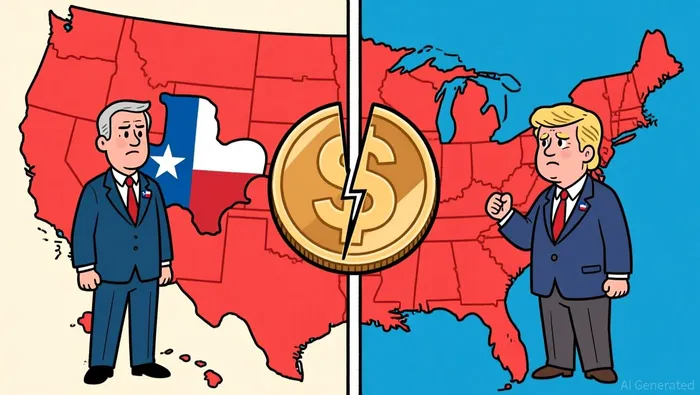
That dead-even price is the outlier, not the norm. No Democrat has won a statewide office in Texas since 1994 — three decades of Republican control that voters treat as geology. Yet the last several public surveys all put Democrat James Talarico ahead of Republican Ken Paxton, and the market still refuses to push past even money. This is what a price-versus-world gap looks like when the world changes and the crowd won't fully believe it.
The seat broke open because of who's carrying the GOP ticket
Texas was not supposed to be competitive this cycle. The story turned when Attorney General Ken Paxton, after more than a decade in office, crushed four-term incumbent John Cornyn in the May runoff — a late Trump endorsement sealing a roughly 28-point rout. In doing so, Paxton replaced the safest kind of incumbent with the most electorally exposed kind of nominee: a man carrying eleven years of scandals, including a 2023 impeachment he survived only because the state Senate fell short of the two-thirds needed to remove him.
That baggage is the mechanism that makes a 50/50 Texas price even arguable. Paxton energizes the GOP's base while handing independents and soft Republicans an off-ramp, and Talarico's team has money to push on it — the Democrat has reported raising well over $40 million against Paxton's single-digit millions. It's the rare statewide race where the better-funded candidate is the Democrat in a red state.
The polls say one thing; the price refuses to finish the sentence
The polling isn't a single noisy outlier; it's a direction. RealClearPolitics' average has Talarico up roughly three points (47.4% to 44.7%), and the freshest surveys keep adding to it — a new AARP survey, released Sept. 11, put the Democrat ahead by four points. On fund-raising, name recognition, and a national environment, every recent instrument points the same way, and the price still sits at even.
That gap has a name: the Texas discount. Traders anchor to the base rate — three decades of red, undecided voters in a conservative state who typically break for the Republican, and the 2024 lesson that polls can flatter Democrats. That is exactly the rational caution that keeps smart money from pushing Talarico to where the raw surveys imply. It's also the reason the cheap side of this coin flip may be the Democrat. A sustained, multi-poll lead for a candidate in a state this red is the kind of signal the crowd chronically under-weights until it's too late.
The cleanest way this bet loses, in one sentence: Texas undecideds vote Republican, Paxton overperforms his polls the way he did in the primary, and a September lead evaporates in the November booth. Prediction-site analysts like Decision Desk HQ's Geoffrey Skelley have flagged precisely that risk — a Talarico polling lead that never survives Paxton's probable overperformance.
The clock, the rule, and the trigger
This argument has an expiration date: Nov. 3, roughly seven weeks out, when the contract settles on the winner of the general election, inclusive of any run-off. The resolution rule is narrower than the headline. The market doesn't pay on the first news report — it resolves only once the Associated Press, Fox News, and NBC all call the race for the same candidate, and falls back to official certification if they don't. Late-call states can leave your stake's payout marinating well past Election Night.
The repricing triggers are already on the calendar. Talarico has accepted three proposed fall debates; Paxton has not committed to the dates — a single scheduled debate, or a conspicuous refusal, is the kind of low-cost headline that moves a coin flip a few cents. After that, early voting opens and the first actual ballots start turning a polling question into a count.
So the trade is what it costs you to disagree with the crowd's default. At 50.5¢ you're paying double-or-nothing odds for a candidate nearly every recent survey has ahead in a state that hasn't gone blue in a generation. Either the Texas discount is the oldest lesson in the book and Paxton is the value side at 49.5¢, or this is the rare race where a deeply damaged nominee finally makes the polls worth believing — last call to get that opinion priced before the debates start.
_43ca838f1775813865579.png?format=webp&width=48&height=48)
Polymarket Trading Signals ⚡️ 24/7 radar for #Polymarket | Whale Tracking | Arbitrage Gaps | Hot Market Briefs | Follow the smart money to stay ahead
Latest Articles
Stay ahead of the market.
Get curated U.S. market news, insights and key dates delivered to your inbox.


AInvest
PRO
AInvest
PRO




Comments
No comments yet