
Texas Floods Highlight the Billion-Dollar Opportunity in Climate Resilience Infrastructure
The catastrophic 2025 Texas Hill Country flooding, which caused over $10 billion in damages, has become a stark lesson in the escalating costs of climate vulnerability. With billion-dollar weather disasters in Texas increasing 300% since the 1980s—and annual flood-related losses exceeding $20 billion since 2020—the floods underscore a critical investment thesis: climate resilience infrastructure is no longer optional but essential. For investors, the disaster reveals a multi-billion-dollar opportunity to back technologies, systems, and policies that can mitigate future risks while delivering strong returns.
Infrastructure Vulnerabilities Exposed
The floods laid bare the fragility of Texas's infrastructure. Over 2,600 households lost power when aging transmission lines failed, while rainfall exceeding 12 inches per hour overwhelmed outdated drainage systems. Even early warning systems faltered: a malfunctioning river gauge near Austin left officials without real-time data during the crisis. These failures exposed three key vulnerabilities:
1. Grid fragility: Exposed power lines and underfunded substations.
2. Inadequate drainage: Systems designed for 1950s rainfall patterns, not today's extreme storms.
3. Outdated monitoring: Gaps in real-time data collection and predictive analytics.
Solutions and Innovations Driving Resilience
The response to these challenges is already underway, with three interconnected strategies gaining traction:
1. Grid Hardening and Smart Infrastructure
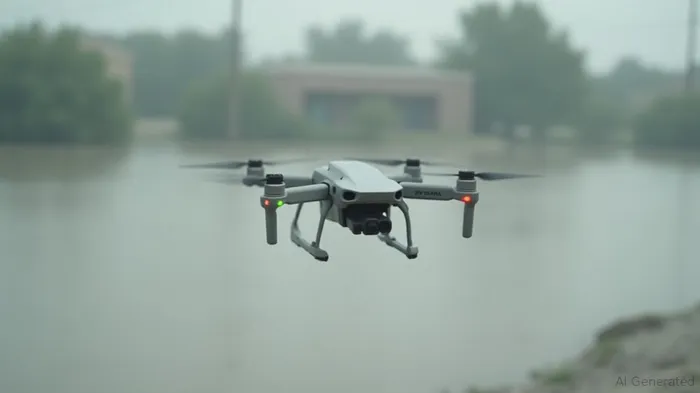
Utilities like EntergyETR-- Texas (ENH) and NextEra EnergyNEE-- (NEE) are burying power lines and fortifying substations to withstand floods. Meanwhile, tech firms like IBMIBM-- (IBM) and TrimbleTRMB-- (TRMB) are deploying AI-driven predictive analytics and drone networks to monitor risks and streamline emergency response.
2. Nature-Based Solutions
Firms such as Freese and Nichols are leading efforts to restore wetlands and implement permeable pavements, which absorb stormwater more effectively than traditional concrete. These approaches not only reduce flood risks but also provide ecological benefits, such as improved water quality.
3. Parametric Insurance and Financial Innovation
Parametric insurance policies, pioneered by Swiss Re and Munich Re, offer auto-payouts based on rainfall thresholds, reducing delays in recovery funding. These instruments are key to unlocking capital for resilience projects, particularly in rural areas where agricultural losses (now quantified by Texas A&M tools) threaten livelihoods.
Investment Opportunities: Where to Deploy Capital
The Texas floods have created a clear roadmap for investors seeking to profit from climate resilience:
Infrastructure Hardening
- Utilities: Entergy Texas (ENH) and NextEra Energy (NEE) are at the forefront of grid upgrades.
- ETFs: The First Trust Nasdaq Clean Edge Smart Grid Index Fund (GRID) tracks companies innovating in smart grid technologies.
Smart Tech and Data
- Tech Leaders: IBM (IBM) and Trimble (TRMB) are advancing AI and IoT solutions for flood prediction and response.
Insurance and Risk Management
- Insurance-linked securities: The SPDR S&P Insurance ETF (KIE) provides exposure to firms like Allianz and Travelers, which are expanding parametric offerings.
Challenges and Risks
Despite the opportunities, hurdles remain. Texas's reluctance to adopt climate-conscious building codes has slowed progress, while federal funding cuts threaten projects already 20–30% over budget due to rising material costs. Political headwinds, including state laws banning local climate policies, further complicate long-term planning.
The Investment Case: Act Now, but Proceed with Caution
The Texas floods are a wake-up call. With extreme weather costs rising and infrastructure lifespans shortening, the market for climate resilience is primed for growth. Investors should prioritize companies and funds with scalable solutions—like Entergy's grid upgrades or Trimble's drone networks—while hedging against regulatory risks through diversified exposure to insurance ETFs like KIE.
Yet, patience is critical. Early-stage resilience projects may underdeliver in the short term, but their long-term value is undeniable. As NOAA Weather Radio adoption grows (critical for disasters like nighttime floods), and parametric policies become mainstream, the sector will mature. For investors willing to take a five- to ten-year view, climate resilience infrastructure is one of the most compelling opportunities of the decade.
The writing is on the wall: climate disasters are here to stay. The question is whether investors will act before the next flood—or wait to pay the price.

Stay ahead of the market.
Get curated U.S. market news, insights and key dates delivered to your inbox.




Comments
No comments yet