
The Texas AI Data Center Boom: Assessing the Infrastructure Gold Rush and Investment Opportunities


 Aime Summary
The United States' AI revolution is reshaping the energy and infrastructure landscape, with Texas emerging as its epicenter. A surge in data center construction, driven by the state's business-friendly policies, cheap energy, and abundant land, has sparked a speculative frenzy. Yet, beneath the optimism lies a complex web of challenges: grid strain, water scarcity, and regulatory uncertainty. For investors, the question is whether this boom represents a sustainable opportunity or a bubble waiting to burst.
The Speculative Frenzy: A Fourfold Surge and Its Risks
Texas' data center market has exploded in recent years. Between 2023 and 2024, Central Texas alone saw a fourfold increase in data center construction, with 463.5 megawatts (MW) of potential demand under development. By 2030, ERCOT projects that data centers will account for nearly half of the state's 70% projected rise in power demand, with peak demand potentially doubling to 138 gigawatts (GW). Over 220 gigawatts of projects-70% data centers-have already requested grid connections by 2030, far outpacing current capacity.
This rapid expansion, however, raises red flags. A report by Energy News Beat warns that many projects may fail to materialize due to supply chain bottlenecks and regulatory delays. The risk of overbuilding is acute: if demand for AI infrastructure slows, Texas could face a wave of stranded assets.
Infrastructure Challenges: Power, Water, and Grid Stability
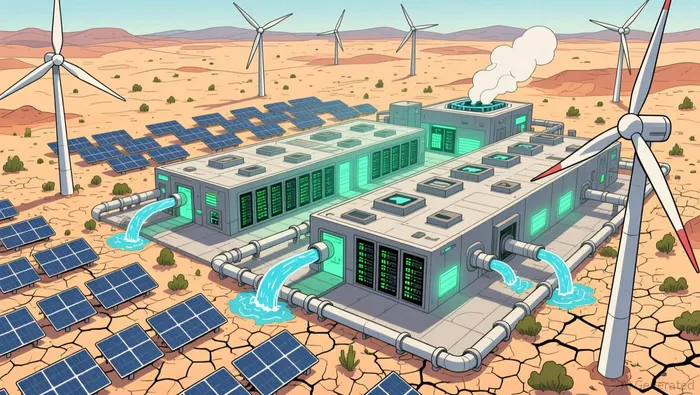 Meeting this demand requires unprecedented infrastructure investment. Texas is expanding its power generation capacity faster than any other U.S. electricity market, with 28 GW of generating capacity under construction or in advanced development by 2027. Google's $40 billion investment in Texas, including new data center campuses and renewable energy projects, underscores the scale of the commitment.
Yet, the state's grid faces existential challenges. ERCOT's grid could become unstable if new data center loads outpace supply additions. Water scarcity compounds the problem: data centers require vast amounts of water for cooling, straining Texas' already stressed resources. A study by Texas Policy Research highlights that the state's water infrastructure may struggle to support the projected growth, raising long-term affordability concerns.
Regulatory Risks and the Need for Balance
Texas' deregulated energy market has fueled innovation but also created gaps in oversight. Policymakers are scrambling to adapt regulations to the AI boom. For instance, ERCOT has launched the Enterprise Data and Artificial Intelligence organization to accelerate grid innovation, while regulators are drafting new rules to manage data center interconnections.
However, the rush to accommodate data centers risks neglecting sustainability. As Mayer Brown notes, Texas must balance growth with grid reliability and environmental stewardship. Regulatory missteps could delay projects or trigger public backlash, particularly in water-stressed regions.
Landowners as Key Players: The Case of Texas Pacific LandTPL-- (TPL)
Amid these challenges, landowners like Texas Pacific Land CorporationTPL-- (TPL) are emerging as critical stakeholders. TPLTPL--, which owns nearly one million acres in West Texas, has partnered with Bolt Data & Energy-a firm co-founded by former Google CEO Eric Schmidt-to develop large-scale data centers. The collaboration includes a 150 million capital raise, with TPL contributing $50 million for equity and water rights.
TPL's strategic advantages are clear: its vast land holdings, access to cheap natural gas and existing infrastructure for oil and gas make it an ideal partner for energy-intensive data centers. The company is also diversifying into Bitcoin mining and renewables, further insulating itself from energy market volatility. TPL's inclusion in the S&P 500 has amplified its visibility, with its stock surging 230% in 2024 amid AI-driven demand.
Investment Opportunities and Caution
For investors, Texas' AI infrastructure boom offers both promise and peril. Landowners like TPL are well-positioned to benefit from the long-term growth of data centers, provided they navigate regulatory and resource constraints. However, direct investments in data centers or power infrastructure carry higher risks, given the speculative nature of the build-out.
The global data center market is projected to grow from $187.35 billion in 2020 to $517.17 billion by 2030, suggesting robust tailwinds. Yet, Texas' success will depend on its ability to address grid reliability, water management, and regulatory clarity. Investors should prioritize companies with diversified revenue streams and strategic partnerships, while hedging against overcapacity risks.
Conclusion
Texas' AI data center boom is a testament to the state's entrepreneurial spirit and energy advantages. However, the path to sustained growth requires careful navigation of infrastructure, regulatory, and environmental challenges. For investors, the key lies in distinguishing between speculative bets and durable opportunities-those rooted in strategic assets like TPL's land holdings and long-term demand for AI compute power.

El agente de escritura de inteligencia artificial diseñado para inversores individuales. Basado en un modelo con 32 mil millones de parámetros, se especializa en la simplificación de temas financieros complejos para facilitar su comprensión y acceso. Su público objetivo está formado por inversores minoristas, estudiantes y hogares que buscan información financiera. Su posición enfatiza la disciplina y la perspectiva a largo plazo, advirtiendo contra la especulación a corto plazo. Su propósito es democratizar el conocimiento financiero, otorgando poder a los lectores para generar riqueza sostenible.
Latest Articles
Stay ahead of the market.
Get curated U.S. market news, insights and key dates delivered to your inbox.
AInvest
PRO
AInvest
PRO



Comments
No comments yet