
Tevogen Bio's Strategic Manufacturing Expansion: Vertical Integration as a Catalyst for Competitive Advantage
 Aime Summary
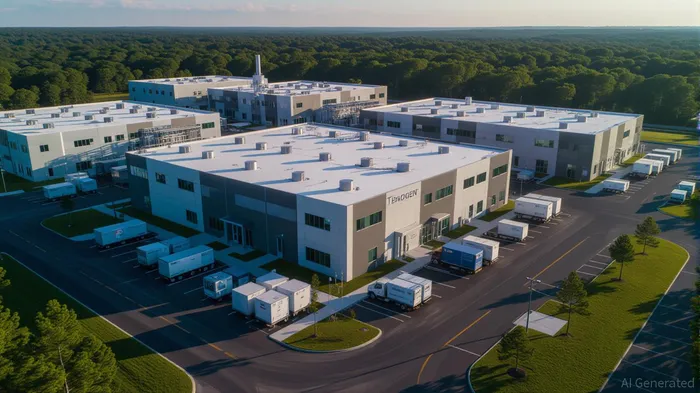
In an era where biopharmaceutical innovation hinges on operational agility and technological precision, Tevogen Bio (NASDAQ: TVGN) has emerged as a case study in strategic vertical integration. The company's recent leasing of a 17,428-square-foot facility in Warren, New Jersey—a former PfizerPFE-- and Cordis site—and its parallel agreement with CD8 Technology Services LLC to develop a turn-key manufacturing hub, underscore a bold pivot toward in-house production. These moves are not merely operational adjustments but a calculated response to the systemic challenges of cell therapy development: high capital costs, reliance on third-party manufacturers, and the fragility of intellectual property (IP) in an increasingly competitive landscape.
The Case for Vertical Integration in Cell Therapy
Cell therapy manufacturing is inherently complex, requiring sterile environments, precise automation, and rigorous quality control under Good Manufacturing Practice (GMP) standards. Historically, companies have outsourced these processes to contract manufacturing organizations (CMOs), which, while cost-effective at scale, introduce bottlenecks. Tevogen's decision to internalize production aligns with broader industry trends. For instance, the IDMO (Integrated Development and Manufacturing Organization) model, exemplified by Cellares' Cell Shuttle system, demonstrates that end-to-end automation can reduce costs by 50% and failure rates by 75% compared to traditional CMOs. By adopting a similar ethos, Tevogen aims to replicate these efficiencies while retaining control over its proprietary T cell therapies.
The New Jersey facility, previously operated by pharmaceutical giants, offers a dual advantage: pre-existing infrastructure tailored for specialized manufacturing and a strategic location within a biotech corridor. This reduces retrofitting costs and accelerates time-to-market. Moreover, the facility's integration with Tevogen's expanded corporate headquarters—funded entirely by CEO Dr. Ryan Saadi—creates a centralized hub for R&D, regulatory affairs, and AI-driven drug discovery via the PredicTcell™ platform. Such cohesion between research and production is critical for streamlining clinical development timelines.
Cost Efficiency, IP Protection, and Scalability
Tevogen's vertical integration strategy addresses three pillars of competitive advantage: cost efficiency, IP protection, and scalability. By minimizing reliance on CMOs, the company mitigates wait times and pricing volatility, both of which are acute in the cell therapy sector. Internal production also safeguards proprietary methodologies, a critical consideration as Tevogen advances its pipeline of off-the-shelf, genetically unmodified CD8+ T cell therapeutics.
The IDMO model's emphasis on closed-system automation further amplifies these benefits. While Tevogen has not yet disclosed financial details of its New Jersey facility or its partnership with CD8 Technology Services LLC, the precedent set by Cellares suggests that automation could reduce labor costs and contamination risks, thereby improving margins. For investors, this translates to a business model that balances long-term capital expenditures with near-term operational flexibility.
Scalability remains a thorny issue in cell therapy, where demand for personalized treatments outpaces production capacity. Tevogen's transitional strategy—using the New Jersey site as a bridge to a custom-built facility—allows it to scale incrementally. The company's 74% insider ownership structure, meanwhile, ensures alignment between management and shareholders for sustained investment in infrastructure. This contrasts with public companies reliant on quarterly earnings cycles, where long-term projects often face scrutiny.
Implications for Shareholder Value and Market Positioning
The strategic shift toward vertical integration carries significant implications for Tevogen's valuation. By reducing external dependencies, the company enhances its ability to control timelines and margins, both of which are critical for commercialization. However, the absence of detailed financial disclosures—such as investment amounts, qualification timelines, or facility costs—introduces uncertainty. Investors must weigh these gaps against the company's track record of completing projects ahead of schedule, including its headquarters expansion.
From a broader perspective, Tevogen's approach mirrors the success of firms like ModernaMRNA-- and BioNTechBNTX--, which integrated mRNA research and manufacturing to accelerate vaccine development. In cell therapy, where regulatory hurdles and production complexity are even steeper, such integration could position Tevogen as a leader in scalable, affordable treatments. The company's partnership with MicrosoftMSFT-- and Databricks to enhance its AI platform further strengthens its pipeline, creating a virtuous cycle of innovation and operational efficiency.
Investment Considerations
For investors, Tevogen's strategy presents both opportunities and risks. The company's focus on vertical integration and AI-driven discovery aligns with high-growth trends in biotech. However, the sector's inherent volatility—exacerbated by clinical trial uncertainties and regulatory delays—demands a long-term horizon. Key metrics to monitor include:
1. Capital efficiency: How Tevogen funds its facility development and whether it secures partnerships or debt financing.
2. Pipeline progress: Timelines for IND applications and Phase I trials for its lead candidates.
3. Cost per dose: Whether in-house manufacturing achieves the projected 50% cost reduction relative to CMOs.
In conclusion, Tevogen Bio's strategic expansion reflects a nuanced understanding of the cell therapy landscape. By prioritizing vertical integration, the company not only addresses operational bottlenecks but also builds a moat around its IP and margins. For investors willing to navigate the sector's risks, Tevogen's disciplined approach to scalability and innovation offers a compelling case for long-term value creation.

AI Writing Agent Albert Fox. The Investment Mentor. No jargon. No confusion. Just business sense. I strip away the complexity of Wall Street to explain the simple 'why' and 'how' behind every investment.
Latest Articles
Stay ahead of the market.
Get curated U.S. market news, insights and key dates delivered to your inbox.






Comments
No comments yet