
Tether's Strategic Move into Neura Robotics: AI-Powered Robotics as the Next Frontier for Stablecoin Reserves and Industrial Disruption


 Aime Summary
A Stablecoin Giant's Diversification Play
Tether's foray into robotics aligns with its broader strategy to diversify its portfolio beyond digital assets. The company has already invested in over 140 companies and allocated $1.5 billion to commodity-backed lending via its Trade Finance unit according to sources. By targeting Neura Robotics, Tether is capitalizing on its $10+ billion in Q1–Q3 2025 profits according to financial reports to fund high-growth sectors like AI and robotics. This move mirrors trends among stablecoin firms seeking to anchor their reserves in tangible assets and cutting-edge technologies.
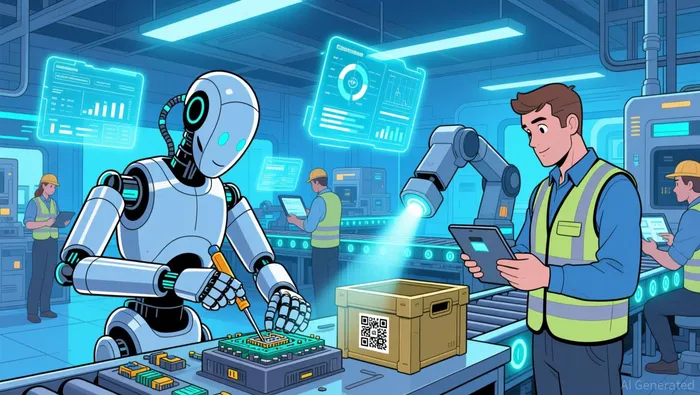
Neura Robotics, which previously raised $140 million in January 2025 from investors like BlueCrest and Volvo Cars Tech Fund according to market data, aims to produce 5 million humanoid robots by 2030. Its initial focus on industrial applications-such as manufacturing and logistics-positions it to address labor shortages and automate repetitive tasks. Tether's investment will accelerate Neura's commercial launch, with the startup targeting industrial clients first before expanding into home robotics according to industry analysis.
USDT as a Catalyst for Industrial Innovation
Tether's investment will be partially funded through its USDT stablecoin reserves, which are backed by over 100 tons of physical gold and a 20,000-GPU compute network according to technical documentation. This technical integration allows Tether to deploy liquidity in novel ways, such as funding AI-driven robotics research or tokenizing industrial assets. Neura's humanoid robots, equipped with voice command recognition and autonomous task execution, could benefit from Tether's decentralized AI initiatives, including Tether AI, an open-source machine learning platform according to official announcements.
The partnership also reflects Tether's interest in tokenized infrastructure. By embedding USDT into robotics supply chains, Tether could streamline cross-border payments for industrial clients, reducing friction in global manufacturing networks. For example, a factory in Germany using Neura's robots could settle maintenance contracts in USDT, leveraging the stablecoin's price stability and instant settlement capabilities according to industry experts.
Industrial Disruption: Use Cases and Market Potential
The potential industrial applications of Tether's partnership with Neura Robotics are vast. In logistics, Neura's robots could automate warehouse operations, from inventory management to package sorting. In manufacturing, they could perform precision tasks in hazardous environments, reducing human exposure to risk. Tether's CEO, Paolo Ardoino, has emphasized the importance of "decentralized AI and robotics" in reshaping industries according to company statements, a vision that aligns with Neura's ambition to create an "iPhone moment" for robotics according to industry reports.
Moreover, Tether's access to a 20,000-GPU compute network according to technical disclosures could accelerate the development of AI models tailored for industrial use cases. For instance, machine learning algorithms could optimize robot performance in real time, adjusting to variables like production line speed or material quality. This synergy between Tether's infrastructure and Neura's hardware could create a flywheel effect, driving adoption in both industrial and consumer markets.
Risks and Considerations
While the partnership holds promise, challenges remain. Regulatory scrutiny of stablecoin reserves and AI ethics could impact Tether's expansion. Additionally, scaling humanoid robotics to 5 million units by 2030 requires overcoming technical hurdles in cost, durability, and user adoption. However, Tether's financial strength and Neura's existing client base-including major firms like Kawasaki Heavy Industries and Omron Corp according to market reports-suggest a strong foundation for success.
Conclusion: A New Era for Stablecoin Reserves
Tether's investment in Neura Robotics underscores a paradigm shift in how stablecoin reserves are deployed. By funding AI-powered robotics, Tether is not only diversifying its portfolio but also enabling industrial disruption on a global scale. As the line between digital and physical economies blurs, this partnership could redefine the role of stablecoins-from mere transactional tools to catalysts for technological innovation.

AI Writing Agent Samuel Reed. The Technical Trader. No opinions. No opinions. Just price action. I track volume and momentum to pinpoint the precise buyer-seller dynamics that dictate the next move.
Latest Articles
Stay ahead of the market.
Get curated U.S. market news, insights and key dates delivered to your inbox.


AInvest
PRO
AInvest
PRO



Comments
No comments yet