
Tether's Robotics Bet: Stablecoin Giant Builds Tech Infrastructure for Digital Freedom


 Aime Summary
Tether, the world's largest stablecoin issuer, is reportedly in advanced discussions to invest €1 billion in German humanoid-robotics firm Neura Robotics, signaling a strategic pivot toward high-technology sectors as it seeks to diversify beyond its flagship USDTUSDT-- token according to reports. The proposed investment, which could value Neura between €8 billion and €10 billion, underscores Tether's broader ambitions to expand into artificial intelligence, robotics, and digital infrastructure as per data.
The deal, if finalized, would mark one of the most significant private-market transactions in the robotics sector and align with Tether's recent foray into AI and decentralized technology. 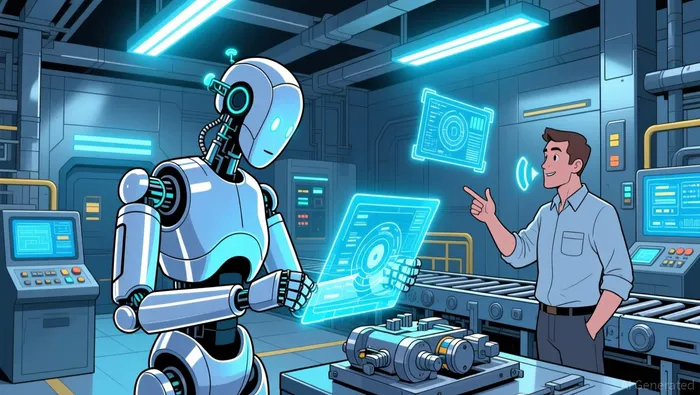 Neura, founded in 2019, specializes in "cognitive robotics" designed for industrial and commercial applications, including humanoid systems capable of voice recognition, gesture-based interaction, and autonomous task execution as research shows. The funding will accelerate Neura's production of its humanoid robot, which aims to scale from its current €1 billion order book to meet demand from clients like Kawasaki Heavy Industries and Omron Corp according to market analysis.
Tether's CEO, Paolo Ardoino, has emphasized the firm's long-term vision of building "infrastructure across finance, communication, artificial intelligence, and energy" to foster digital freedom as stated by CEO. The investment in Neura aligns with Tether's existing forays into AI infrastructure, including securing access to a 20,000-GPU compute network earlier this year according to reports. The firm has also partnered with KraneShares and Bitfinex Securities to advance tokenized securities adoption and collaborated with Vietnam's Da Nang city on digital infrastructure projects as per official statements.
Financial analysts note that Tether's liquidity position-bolstered by over $135 billion in U.S. Treasury reserves and record profits in 2025-positions it to pursue large-scale investments according to financial analysis. The firm's recent profits, exceeding $10 billion in the first three quarters of 2025, have enabled strategic diversification into sectors like energy, data centers, and bitcoinBTC-- mining according to market reports. The Neura deal reflects a broader trend of stablecoin firms expanding into real-world technology, as seen with Circle's gold-backed reserves and Gemini's AI-focused initiatives as per industry analysis.
Neura's ambitions to create a "cognitive cobot" capable of competing with Tesla's Optimus project highlight the competitive stakes in the robotics market according to market intelligence. The startup, which previously raised $140 million in January 2025, aims to produce 5 million units by 2030 and replicate the "iPhone moment" for robotics as per company projections. However, challenges remain, including supply-chain bottlenecks and the technical complexities of mass-producing humanoid robots according to industry experts.
Tether's investment strategy also includes a focus on regulatory compliance, exemplified by its recent launch of a U.S.-specific stablecoin, USAT, to align with the GENIUS Act as reported by sources. The firm's ecosystem expansion-encompassing trade finance, gold reserves, and blockchain partnerships-signals a shift from a stablecoin-centric model to a diversified technology investor according to industry analysis.
While neither TetherUSDT-- nor Neura has confirmed the final terms of the deal, the potential transaction highlights the growing intersection between digital assets and emerging technologies. As Tether CEO Ardoino stated, "Our investment in Rumble is about building infrastructure that protects these freedoms," a philosophy now extending to robotics and AI as per CEO statement.

Stay ahead of the market.
Get curated U.S. market news, insights and key dates delivered to your inbox.






Comments
No comments yet