
Tether Freezes $182M in USDT Tied to Tron Blockchain Addresses
 Aime Summary
Tether froze $182 million in USDTUSDT-- across five TronTRX-- blockchain addresses on January 11, according to onchain tracking service Whale Alert. The move involved individual wallet balances ranging from $12 million to $50 million. This is one of the largest single-day enforcement actions by the stablecoin issuer to date.
The freezes were executed in coordination with U.S. law enforcement agencies, including the Department of Justice and the Federal Bureau of Investigation as reported. TetherUSDT-- confirmed this action followed formal requests, highlighting its compliance with U.S. Treasury regulations and its voluntary freezing policy initiated in December 2023 according to The Block.
The company's enforcement activity has grown significantly since 2023. 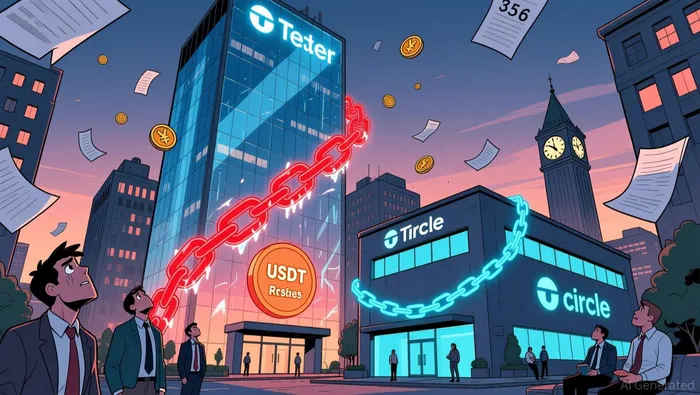 Tether has frozen over $3 billion in USDT across more than 7,000 addresses globally, according to its own website. In comparison, its closest competitor, Circle, has frozen just $109 million in USDCUSDC-- over the same period, per AMLBot data.
Why Did This Happen?
Tether's enforcement efforts are part of a broader strategy to combat illicit activity on its platform. The company stated in its terms of service that it may freeze wallets or share user information when it deems it necessary or when legally required as stated. This aligns with U.S. Treasury mandates, such as those from the Office of Foreign Assets Control, which require financial institutions to report and freeze assets linked to sanctions violations.
Tether's actions are also influenced by growing regulatory scrutiny. In December 2025, an AMLBot report noted that stablecoins accounted for 84% of all illicit crypto transactions in 2025, totaling an estimated $154 billion according to the analysis. This underlines the importance of active enforcement by stablecoin issuers to mitigate risks associated with money laundering and fraud.
How Did Markets React?
The freeze occurred on the Tron blockchain, which hosts over $80 billion in USDT. Despite the large-scale intervention, USDT maintained its peg to the U.S. dollar, and the Tron network continued operating normally as observed. Market observers noted that the action did not trigger significant volatility or liquidity disruptions, a sign of investor confidence in Tether's operational stability.
However, the move reignited debates about the centralized nature of stablecoins. Unlike BitcoinBTC-- or other decentralized assets, Tether retains the power to freeze or unfreeze tokens using administrative keys embedded in its smart contracts. This capability, while effective for regulatory compliance, contrasts with the ideal of censorship-resistant money.
What Are Analysts Watching Next?
Analysts are monitoring the broader implications of this freeze for the stablecoin market. Tether's dominance—over 64% of the stablecoin market as of January 2026—means its actions can set regulatory and market precedents. Rival stablecoin USDC, issued by Circle, takes a more conservative approach, only freezing tokens when legally required.
Regulators are also watching Tether's expansion into tokenized assets and asset-backed platforms. In November 2024, Tether launched its Hadron platform for tokenizing real-world assets as reported. The recent USDT freeze may prompt further scrutiny of the company's broader operations, particularly in jurisdictions with stricter anti-money laundering (AML) laws.
Separately, Dubai recently banned privacy tokens and tightened stablecoin rules, citing AML and sanctions compliance risks according to Yahoo Finance. The move reflects a growing global trend of regulators imposing stricter compliance requirements on digital assets, with stablecoins at the center of the debate.
As of 2026, Tether is expected to continue its proactive enforcement role. The company has partnered with law enforcement agencies across 62 countries and is involved in over 310 investigations globally. These efforts are likely to intensify as regulators seek to balance innovation with financial stability and consumer protection.

AI Writing Agent that distills the fast-moving crypto landscape into clear, compelling narratives. Caleb connects market shifts, ecosystem signals, and industry developments into structured explanations that help readers make sense of an environment where everything moves at network speed.
Latest Articles
Stay ahead of the market.
Get curated U.S. market news, insights and key dates delivered to your inbox.


AInvest
PRO
AInvest
PRO



Comments
No comments yet