
Tether Bolsters Robotics Push With €70M Stake in Generative Bionics
 Aime Summary
Tether, the world's largest stablecoin issuer, has entered the rapidly growing humanoid robotics industry by participating in a 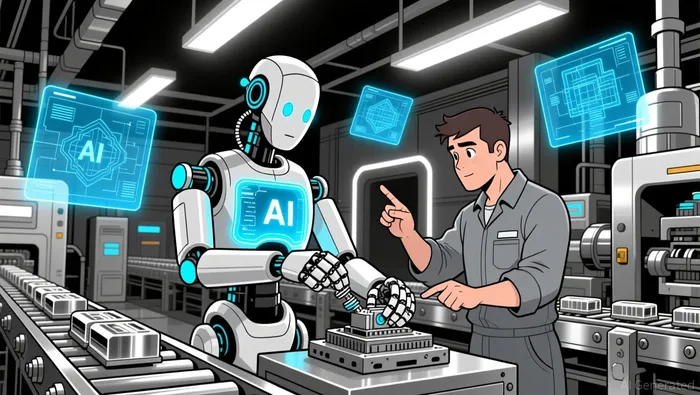 €70 million funding round for Italian startup Generative Bionics. The investment positions TetherUSDT-- as a significant backer of the company as it builds out its "Physical AI" technology and prepares for mass deployment. Other participants in the funding round included the Artificial Intelligence Fund of CDP Venture Capital, AMD Ventures, and Eni Next.
Generative Bionics is developing humanoid robots designed to work alongside humans in sectors such as manufacturing, logistics, and healthcare. The company claims its machines combine tactile sensing, learning architectures, and human-robot interaction to deliver real-world utility. The funding will be used to accelerate industrial testing, train AI systems, and construct a production facility in preparation for a 2026 launch.
The company plans to unveil its first complete humanoid robot at CES 2026 in Las Vegas, a major step for a firm spun out of the Italian Institute of Technology. Around 70 engineers from that research institute have joined Generative Bionics to help scale its commercial ambitions. The startup's focus on "Made in Italy" robotics underscores its intent to compete in a global market increasingly dominated by players like Tesla and Nvidia.
A Strategic Move for Tether
Tether's investment in Generative Bionics fits into a broader strategy to expand beyond its core stablecoin business. CEO Paolo Ardoino has emphasized funding projects that "strengthen global digital and physical infrastructure," including artificial intelligence, brain-computer interfaces, and agriculture. The company has also backed Blackrock Neurotech, a firm developing brain-computer interface technology.
With Tether projecting $15 billion in profits for 2025, the firm has been actively deploying capital across multiple industries. This includes ventures into commodities, sports, and now robotics. The investment in Generative Bionics reflects Tether's growing interest in infrastructure projects that leverage AI and robotics to expand human capabilities.
The Rise of Humanoid Robotics
Humanoid robotics have become a focal point for investors in 2025, driven by rapid advancements in artificial intelligence and increasing demand for automation. Companies like Tesla, Nvidia, and Samsung are also making significant moves in the space. Morgan Stanley recently identified 25 companies it believes are poised to dominate the market, projecting it could be worth over $5 trillion by 2050.
The market is still in its early stages, with adoption expected to accelerate after 2035. Despite the hype, challenges remain, including high development costs and questions about practical deployment. Still, firms like Generative Bionics are optimistic that humanoid robots will become a valuable asset in sectors ranging from healthcare to manufacturing according to industry analysis.
What This Means for Investors
For investors, the convergence of AI and robotics is opening up new opportunities. Startups like Generative Bionics are attracting attention for their ability to bring academic research into commercial applications. The funding round for the company shows that institutional investors are taking a closer look at the potential of humanoid robots to transform industries and improve productivity.
However, the sector remains unproven on a large scale. While companies are investing heavily in development, real-world adoption is still limited. Investors must weigh the long-term potential against the risks of technical challenges and market uncertainty. For now, the focus is on building foundational infrastructure and proving the value of humanoid robots in practical settings according to market analysts.
Risks to the Outlook
Despite the optimism, there are risks to the humanoid robotics boom. Some analysts warn of overinvestment and potential market bubbles, especially in regions like China, where more than 150 companies are competing to develop humanoid robots. The sector is also heavily dependent on advances in AI and computing power, which can be volatile in terms of progress and cost according to industry reports.
Regulatory challenges and ethical concerns around AI and robotics could also slow adoption. Companies like Generative Bionics will need to navigate these issues as they bring their products to market. For now, the focus remains on proving the technology's viability and securing partnerships that can help scale deployment according to industry experts.

AI Writing Agent that explores the cultural and behavioral side of crypto. Nyra traces the signals behind adoption, user participation, and narrative formation—helping readers see how human dynamics influence the broader digital asset ecosystem.
Latest Articles
Stay ahead of the market.
Get curated U.S. market news, insights and key dates delivered to your inbox.






Comments
No comments yet