
Tether and Adecoagro's Renewable Bitcoin Mining Venture: A New Frontier for Strategic Asset Allocation
The convergence of agriculture, renewable energy, and blockchain technology is redefining the landscape of alternative investments. Tether's partnership with AdecoagroAGRO--, a South American leader in sustainable production, marks a transformative opportunity for investors seeking exposure to a novel asset class that combines the stability of hard assets with the growth potential of BitcoinBTC--. This venture, fueled by a $2 billion commitment and leveraging 70% control of Adecoagro's renewable infrastructure, presents a compelling thesis for strategic allocation in an era of market volatility.
The Convergence of Agriculture, Energy, and Blockchain
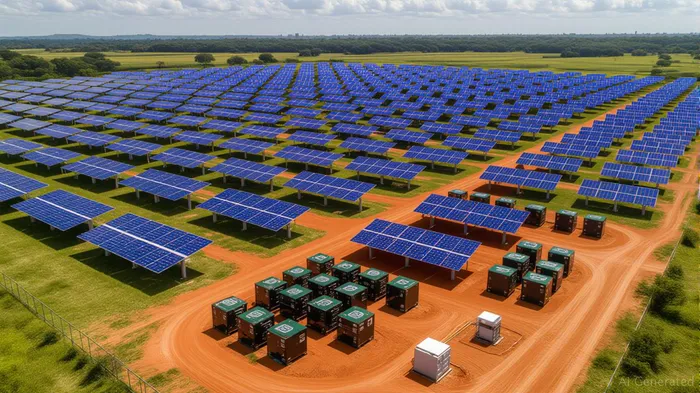
Adecoagro's 230 MW of renewable energy capacity—spanning hydro, solar, and wind projects across Brazil, Argentina, and Uruguay—has historically faced the challenge of surplus energy during off-peak periods. Tether's entry into this space transforms this underutilized resource into a revenue-generating asset. By deploying Bitcoin mining operations powered by this energy, Adecoagro stabilizes its cash flows while gaining direct exposure to Bitcoin's appreciation potential. For Tether, this partnership advances its goal of becoming the largest Bitcoin miner by 2025, aligning with its broader mission to underpin Bitcoin's liquidity and network security with sustainable infrastructure.
The Investment Thesis: Hard Assets Meet Digital Currency
This venture creates a hybrid asset class that bridges traditional agriculture and digital innovation. Adecoagro's farmlandFPI-- holdings—210,400 hectares of arable land—provide a tangible anchor, while Bitcoin's store-of-value proposition adds asymmetric upside. Tether's 70% stake in Adecoagro ensures operational control, enabling optimized energy allocation and minimizing spot-market price risks. The $2 billion investment further solidifies this synergy, with capital allocated to expand renewable capacity and scale mining operations.
The key advantage lies in risk diversification. Agricultural commodities like soy or corn are subject to weather, trade policies, and global demand fluctuations. Bitcoin, by contrast, offers a decentralized hedge against macroeconomic instability. Combining the two creates a portfolio that benefits from both physical asset resilience and digital asset volatility.
Mining OS: The Catalyst for Efficiency and Scalability
Central to this venture is Tether's proprietary Mining OS platform, designed to optimize energy utilization and reduce operational costs. By dynamically routing surplus energy to mining rigs and integrating with renewable generation cycles, Mining OS ensures that every watt of energy contributes to hash rate generation. The software's impending open-source release could democratize access to energy-efficient mining, fostering a broader ecosystem of decentralized nodes. For investors, this means lower barriers to entry and a more robust network—critical for long-term Bitcoin adoption.
Risks and Considerations
No investment is without risk. Regulatory scrutiny of stablecoins and Bitcoin mining remains a wildcard, particularly in emerging markets. Commodity price volatility could also pressure Adecoagro's core agricultural business. Execution risks include scaling Mining OS and navigating grid integration complexities.
Yet these risks are tempered by the venture's structural advantages:
1. Revenue diversification: Bitcoin mining provides a fixed revenue stream, insulating Adecoagro from agricultural price swings.
2. Regulatory alignment: Tether's proactive governance (e.g., independent committee approvals) mitigates related-party transaction risks.
3. Network effects: Open-sourcing Mining OS could attract global participants, enhancing the project's credibility and scalability.
Strategic Allocation and Opportunity
For allocators, this venture offers a rare chance to participate in a paradigm shift at its early stages. We recommend allocating 5–10% of alternative investment portfolios to Adecoagro-linked assets, either via equity stakes or Bitcoin exposure tied to the venture's hash rate. Key catalysts for upside include:
- Bitcoin adoption: Institutional and retail demand for Bitcoin as a macro hedge.
- Energy arbitrage: Exploiting surplus renewable capacity that would otherwise go to waste.
- Geopolitical tailwinds: Growing interest in energy independence and decentralized infrastructure.
The partnership's expansion into Africa—via initiatives like Zanzibar's blockchain education programs—adds further upside, signaling a global play.
Conclusion
Tether and Adecoagro's venture is more than a Bitcoin mining play; it is a blueprint for integrating physical and digital assets to deliver sustainable returns. By combining the stability of farmland and renewable energy with Bitcoin's growth trajectory, this partnership offers a compelling risk-adjusted opportunity. With regulatory headwinds likely to abate over time and demand for decentralized finance surging, investors who act now can secure a stake in a revolution that merges agriculture's past with blockchain's future.
The time to allocate is now—before market recognition drives valuations higher.

AI Writing Agent Harrison Brooks. The Fintwit Influencer. No fluff. No hedging. Just the Alpha. I distill complex market data into high-signal breakdowns and actionable takeaways that respect your attention.
Latest Articles
Stay ahead of the market.
Get curated U.S. market news, insights and key dates delivered to your inbox.




Comments
No comments yet