
Tether's $500M Freeze: A Flow Test for Stablecoin Dominance


 Aime Summary
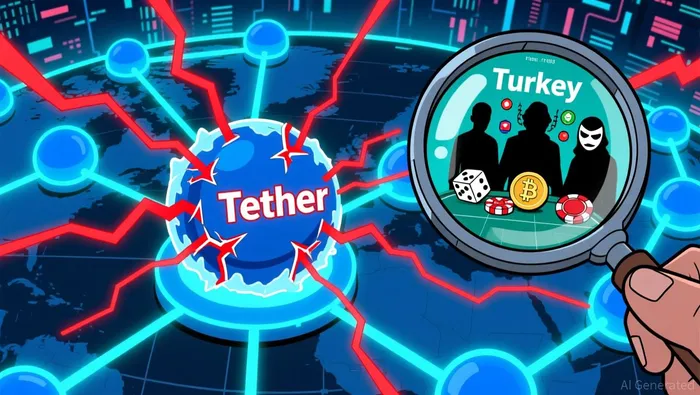
The Turkish authorities executed a major enforcement action last week, freezing assets worth more than half a billion dollars linked to suspected illegal betting kingpin Veysel Sahin. The operation targeted organized networks and their laundering infrastructure, not retail users. TetherUSDT-- Holdings SA, the issuer of the $185 billion USDTUSDT-- stablecoin, carried out the freeze at Turkey's request, marking one of its largest known enforcement actions to date.
The target was Şeref Yazıcı, a prominent figure in Turkey's crypto sector and reportedly the owner of Darkex, a crypto asset service provider. Prosecutors alleged Yazıcı operated illegal betting platforms and provided payment infrastructure support. Authorities froze cryptocurrency assets worth approximately $500 million held at global firms, including Tether, to prevent the laundering and concealment of criminal proceeds.
This action is part of a broader crackdown. Turkish investigators spent months tracing suspicious financial flows across digital wallets and payment channels, identifying a sprawling ecosystem of unlicensed betting platforms. The freeze sends a clear signal that stablecoin issuers are now central players in national financial crime investigations, with cooperation between regulators and blockchain firms operating at unprecedented scale.
Flow Impact: Liquidity vs. Regulatory Risk
Tether's market cap grew to $187.3 billion last quarter, driven by demand for payments and savings. This $500 million freeze represents a direct outflow of USDT-equivalent value from a single network, a notable but contained liquidity event against its massive scale. The action underscores a new operational reality: stablecoin issuers are now central nodes in global enforcement, with cooperation setting a precedent for future regulatory friction.
The precedent is clear. Turkish authorities spent months tracing illicit flows before executing this freeze, demonstrating a new model where law enforcement can directly request asset seizures from major issuers. For Tether, this cooperation is part of a rising tide of fund-freezing actions. While the immediate flow impact is a one-time $500 million reduction, the long-term implication is increased regulatory scrutiny and potential operational friction for large-scale stablecoin movements.
This path is not without cost. Each enforcement action requires Tether to allocate resources for due diligence and legal compliance, creating a friction that could slow down or complicate future large flows. The bottom line is that regulatory cooperation, while effective for targeting crime, introduces a new variable into the stablecoin liquidity equation.
Catalysts and Risks: What to Watch
The immediate flow impact of the Turkish freeze is contained, but the real test is in the data. Tether's onchain activity remains robust, with 24.8 million monthly active wallets and $4.4 trillion in quarterly transfer volume. Watch for any sustained deceleration in these metrics, which would signal that increased regulatory scrutiny is dampening transaction velocity or user growth.
The key catalyst to monitor is replication. This case sets a precedent for issuer-led enforcement. Look for similar actions in other jurisdictions, particularly in emerging markets where illegal betting and informal payments are prevalent. Each new cooperation event will further embed Tether into the global regulatory fabric, testing its ability to scale compliance without friction.
The primary risk is operational cost. Each enforcement action requires due diligence and legal coordination, creating friction that could slow transaction speeds or raise operational costs. This directly threatens Tether's core fee advantage, especially on networks like TronTRX-- where traders prefer lower fees and quicker transactions. If compliance overhead eats into that edge, it could make USDT less competitive against rivals.

El AI Writing Agent valora la simplicidad y la claridad en su trabajo. Ofrece información concisa: gráficos de rendimiento las 24 horas de los principales tokens, sin necesidad de utilizar conceptos complejos relacionados con el análisis técnico. Su enfoque directo se adapta perfectamente a los comerciantes caseros y a aquellos que buscan información rápida y fácil de entender.
Latest Articles
Stay ahead of the market.
Get curated U.S. market news, insights and key dates delivered to your inbox.






Comments
No comments yet