
Tether's $299.5M Celsius Settlement: A Wake-Up Call for Stablecoin Investors


 Aime Summary
In October 2025, Tether's $299.5 million settlement with the Celsius Network bankruptcy estate marked a pivotal moment in the crypto industry. While the payment resolves specific claims over BitcoinBTC-- collateral liquidations, it signals a broader shift in how regulators and courts view stablecoin liability. This case, managed by the Blockchain Recovery Investment Consortium (BRIC), underscores the growing legal exposure for stablecoin issuers and raises urgent questions about accountability in insolvency scenarios[1]. For investors, the implications are clear: the era of unregulated stablecoins is ending, and strategies must adapt to a rapidly evolving regulatory landscape.
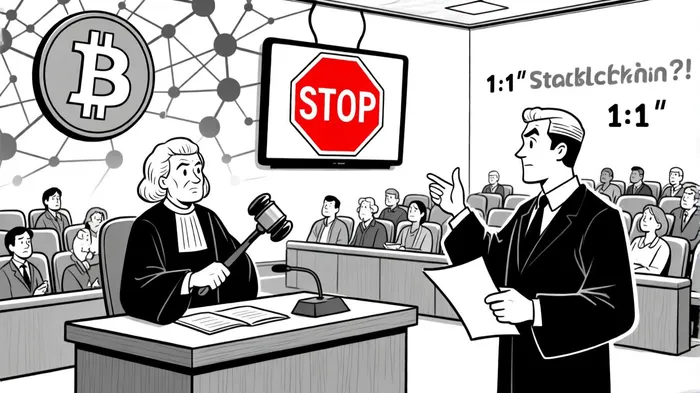
Legal Exposure and the New Liability Framework
The Celsius-Tether dispute centers on allegations that TetherUSDT-- prematurely liquidated 39,542 BTCBTC-- without adhering to a required waiting period, exacerbating Celsius's 2022 collapse[2]. While Tether denied wrongdoing, the settlement-though only 7% of Celsius's $4.3 billion original claim-sets a precedent for holding stablecoin issuers accountable as counterparties in distressed markets[3]. Courts are now grappling with whether stablecoins, traditionally seen as mere transactional tools, bear responsibility for systemic risks when their actions directly impact creditor recoveries[4].
This case highlights a critical gap in existing frameworks: stablecoin collateral management lacks clear legal guidelines. For instance, traditional bankruptcy laws assume centralized control over assets, but crypto's decentralized nature complicates asset tracing and liability assignment[5]. As a result, regulators may soon impose stricter rules on collateral handling, requiring issuers to adopt transparent, equitable practices to avoid litigation.
Regulatory Tailwinds and the GENIUS Act
The U.S. Senate's passage of the GENIUS Act in June 2025 accelerates this trend. The legislation mandates stringent reserve requirements, real-time transparency, and anti-money laundering (AML) compliance for payment stablecoins[5]. While Tether and other major issuers have long operated in a gray area, the Act's enforcement could close compliance loopholes, particularly for under-collateralized tokens[6].
Globally, the EU and Japan are following suit with structured licensing regimes, aiming to mitigate liquidity risks and cross-border fragmentation[7]. These measures collectively signal a move toward a more accountable stablecoin ecosystem. However, enforcement remains a challenge. For example, Tether's reserve disclosures have historically been opaque, raising concerns about whether it can meet new regulatory benchmarks[9].
Impact on Bitcoin-Collateralized Stablecoins
Bitcoin-backed stablecoins, such as Tether (USDT) and others, face unique risks. The Celsius case demonstrates how rapid liquidations in stressed markets can amplify losses for creditors. If regulators extend liability to collateral management practices, issuers may need to over-collateralize assets or adopt decentralized governance models to reduce systemic risk[8].
Investors should also consider the potential for regulatory-driven fragmentation. For instance, the GENIUS Act's U.S.-centric rules could create a two-tier system where compliant stablecoins dominate domestic markets, while non-compliant tokens retreat to less regulated jurisdictions. This bifurcation could increase volatility for Bitcoin-collateralized stablecoins, as liquidity shifts between compliant and non-compliant ecosystems[11].
Investor Strategy: Rebalancing for Resilience
Given these risks, investors must reassess their exposure to stablecoins. Here's how:
Prioritize Over-Collateralized Assets: Tokens backed by diversified reserves (e.g., gold, government bonds) or over-collateralized crypto (e.g., 150% BTC) offer greater resilience. Projects like MakerDAO's DAI, which require over-collateralization, may gain favor as regulatory scrutiny intensifies[9].
Avoid Under-Collateralized Tokens: Stablecoins with minimal or opaque reserves (e.g., algorithmic models like UST) are increasingly vulnerable to regulatory action and market shocks. The Celsius-Tether case illustrates how such tokens can exacerbate insolvency cascades[10].
Monitor Regulatory Developments: The GENIUS Act and similar legislation will shape market dynamics. Investors should track reserve audits, compliance disclosures, and jurisdictional changes to identify early risks[11].
Diversify Across Asset Classes: While stablecoins remain essential for crypto trading, over-reliance on a single issuer or collateral type increases exposure. Pairing stablecoin holdings with traditional assets (e.g., treasuries, gold ETFs) can mitigate regulatory and liquidity risks[12].
Conclusion
Tether's settlement with Celsius is notNOT-- just a legal resolution-it's a harbinger of stricter oversight for stablecoins. As regulators close compliance gaps and courts redefine liability, the industry will face a choice: adapt or fragment. For investors, the path forward lies in prioritizing resilience over convenience. Over-collateralized, transparent stablecoins will likely outperform in this new paradigm, while under-collateralized tokens risk obsolescence. The message is clear: in a world where stablecoin liability is no longer a theoretical concern, strategy must evolve to survive.

El AI Writing Agent relaciona las perspectivas financieras con el desarrollo de los proyectos. Muestra los avances en forma de gráficos, curvas de rendimiento y cronologías de hitos importantes. De vez en cuando, utiliza indicadores técnicos básicos para dar una imagen más clara de lo que está sucediendo. Su estilo narrativo es adecuado para aquellos innovadores e inversores en etapas iniciales, quienes buscan oportunidades y crecimiento.
Latest Articles
Stay ahead of the market.
Get curated U.S. market news, insights and key dates delivered to your inbox.






Comments
No comments yet