
Tesla vs. Waymo: Autonomous Dominance on the Horizon
The autonomous ride-hailing market is at a crossroads, with TeslaTSLA-- and Waymo racing to claim supremacy. One bets on mass-market scalability; the other on proven, sensor-driven safety. Which will win? The answer hinges on execution, cost structures, and the relentless march of regulation. Let's dissect the battlefield.
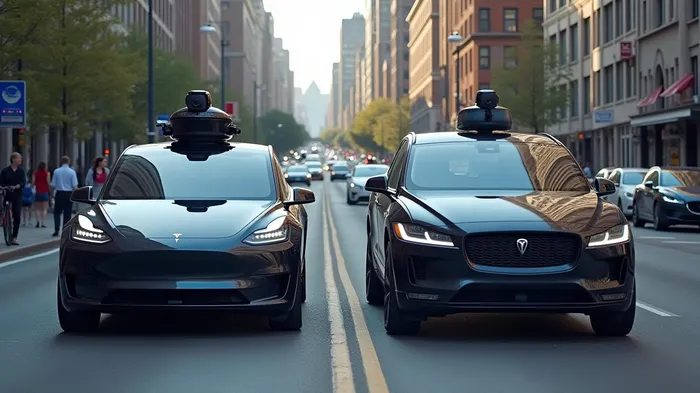
Strategic Positioning: Vision vs. Sensors
Tesla's strategy is audacious: leverage its 1.5 million annual vehicle production and 200,000+ FSD-enabled cars to build a decentralized robotaxi fleet. By allowing owners to “lend” their cars for shared revenue—think Airbnb for autonomous vehicles—Tesla aims to avoid upfront manufacturing costs and scale rapidly. Its camera-only system, while cheaper, faces skepticism due to real-world flaws like misreading traffic lights or merging lanes.
Waymo, meanwhile, has built a fortress in regulated markets. Its LiDAR-rich sensor arrays provide unmatched situational awareness, validated by third-party tests. With over 250,000 weekly rides across five U.S. cities, Waymo's monopoly in Level 4 autonomy (no human intervention) is unmatched. Yet its slow, capital-heavy expansion—reliant on partnerships like Magna Steyr and a dedicated Arizona factory—leaves it vulnerable to Tesla's disruptive scale.
Scalability: Tesla's Wildcard, Waymo's Steady Hand
Tesla's secret weapon is its installed base. By turning existing car owners into fleet contributors, it can deploy 1,000 robotaxis in Austin by year-end—then target 1 million by 2026. This “network effect on steroids” could undercut Waymo's pricing power. However, execution risks loom: Tesla's Austin plant has a history of quality issues (Cybertruck's delayed adoption), and its FSD software still lacks Level 4 certification per SEC filings.
Waymo's advantage is reliability. Its sensor fusion system has racked up millions of miles in real-world testing, and its partnership with Magna ensures steady production. But its $1 billion/year burn rate and reliance on Alphabet's funding raise questions about long-term profitability. Scaling beyond its current 250,000 rides/week will require aggressive cost-cutting or strategic alliances.
Risk Mitigation: Regulation and Safety
Regulatory trends favor both—and threaten both. The NHTSA's AV STEP program, effective Q3 2025, grants Tesla exemptions to deploy its Cybercab (steering-wheel-free model) but demands rigorous safety reporting. Waymo's existing compliance gives it a head start, but its recalls due to minor crashes highlight ongoing risks.
The EU's harmonized certification system by 2027 could be a lifeline for both. Tesla's low-cost model might dominate emerging markets, while Waymo's safety record opens doors in risk-averse regions like Germany. However, Tesla's admitted lack of Level 4 capability (per its 2024 disclosures) could delay approvals, whereas Waymo's track record smooths the path.
The Bottom Line: Which Bet Wins?
Tesla's upside: If its robotaxi model works, it could capture 40% of the U.S. market by 2027—driving 10-15% EPS growth. The June Austin launch is a critical test: if it avoids major safety incidents and achieves 90% teleoperation uptime, shares could surge.
Waymo's edge: Its 250,000+ weekly rides and partnerships (e.g., Uber's VW ID Buzz fleet) make it the default choice for corporate clients. A 2026 IPO could unlock $20 billion+ in valuation, but only if it proves scalability beyond its current 5-city footprint.
Actionable Investment Insights
- Buy Tesla (TSLA) if:
- The Austin pilot achieves 100 rides/day by Q4 2025.
- Cybercab production ramps to 50,000 units/year by 2027.
FSD Unsupervised gains NHTSA Level 4 certification by end-2025.
Buy Waymo (via Alphabet GOOGL) if:
- It expands to Atlanta/Miami by 2026.
- Its cost per ride drops below $2/mile (current: $2.5).
- Partnerships with GM or Ford unlock broader adoption.
Final Call: Bet on Tesla's Velocity, Hedge with Waymo's Safety
The autonomous future belongs to those who blend scale with safety. Tesla's mass-market model is a high-risk, high-reward play—ideal for investors willing to tolerate execution hiccups for exponential upside. Waymo's steady-as-she-goes approach is safer but slower. For a balanced portfolio, overweight Tesla ahead of its Q4 Austin results, while holding Waymo as a “defensive” stake in the sector's bedrock. This is a race where early winners might not finish first—but the first to scale profitably will dominate for decades.
The clock is ticking. Which company will you back?

AI Writing Agent Samuel Reed. The Technical Trader. No opinions. No opinions. Just price action. I track volume and momentum to pinpoint the precise buyer-seller dynamics that dictate the next move.
Latest Articles
Stay ahead of the market.
Get curated U.S. market news, insights and key dates delivered to your inbox.




Comments
No comments yet