
Tesla's Valuation Under Siege: Political Crosswinds and Regulatory Risks Cloud the Autonomy Play
The TeslaTSLA-- story has long been one of visionary ambition—redefining transportation through electric vehicles (EVs) and autonomous driving. Yet as Elon Musk's feud with Donald Trump intensifies, political interference has emerged as a critical risk to Tesla's valuation and strategic pivot to robotaxis. With regulatory scrutiny mounting, SpaceX contracts under threat, and EV subsidies in the crosshairs, Tesla's lofty 150x earnings multiple appears increasingly precarious.
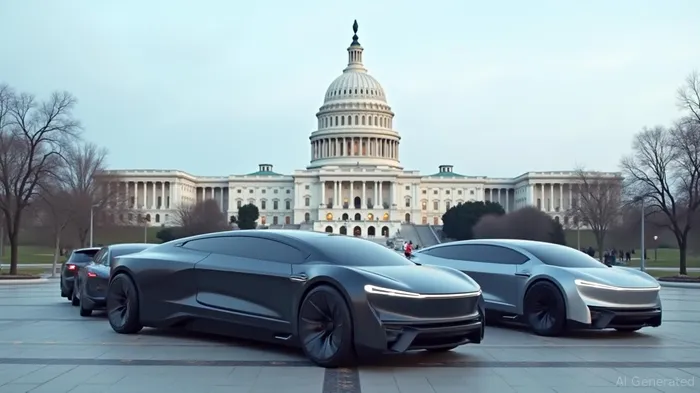
Valuation Concerns: Overpriced for a World of Headwinds
Tesla's stock trades at a forward P/E ratio of 134x (April 2025), with estimates suggesting it could reach 161x by year-end—far above its five-year average of 247.86. While this multiple has historically reflected growth optimism, today's risks demand a reality check.
The disconnect is stark:
- Q2 2025 revenue growth is projected to hit a 0.3% YoY trough, with margins pressured by tariffs (adding $2,500–$4,500/vehicle) and ASP erosion.
- EPS estimates for 2025 have been slashed by 19% since January, to just $2.55—a mere 4.6% YoY growth.
A stock with a beta of 2.43 (twice as volatile as the market) is ill-equipped to weather these headwinds. At 150x earnings, even a modest earnings miss could trigger a sharp correction.
Regulatory Risks: The Trump-Musk Feud's Hidden Costs
The escalating public clash between Musk and Trump has exposed Tesla to political crossfires that could derail its core initiatives:
1. Autonomous Vehicle (AV) Regulations
Tesla's robotaxi ambitions hinge on FSD (Full Self-Driving) approval, but regulators are increasingly wary of Musk's “move fast and break things” ethos. Trump's allies in Washington have already called for stricter oversight of AV testing, citing safety concerns.
The stakes are high:
- Robotaxi services, slated for launch in late 2025, require $50 billion in capital expenditure and regulatory sign-off.
- A delayed timeline or punitive rules could push Tesla's breakeven point for AVs into the late 2030s—too distant to justify today's valuation.
2. EV Tax Incentives at Risk
The $7,500 federal EV tax credit, a lifeline for Tesla's affordability strategy, faces bipartisan scrutiny. Trump-backed lawmakers argue that Tesla's reliance on Chinese-sourced batteries and Mexico-based parts violates “Buy American” provisions.
- Tariff threats: New duties on foreign components could add $2,500/vehicle, wiping out Tesla's already thin margins.
- Subsidy clawbacks: If Tesla loses eligibility for tax credits, its Model Y Juniper (priced at $36,000 in China) becomes unprofitable in key markets.
3. SpaceX Contracts in the Crosshairs
The feud's collateral damage extends to Musk's other ventures. NASA has reportedly paused contracts with SpaceX due to “conflicts of interest” arising from Musk's public sparring with Trump—a development that could strain Tesla's access to advanced materials and engineering talent.
Near-Term Risks: A Perfect Storm for Tesla
The combination of political and operational challenges paints a bleak near-term picture:
- Delivery targets: Tesla must deliver 1.48 million vehicles in 2025—a 20% QoQ surge—to avoid a full-year revenue drop. Missed targets would further erode confidence.
- Margin pressures: ASP declines (down $3,700 YoY) and inventory overhangs force Tesla to slash prices, squeezing profits.
- Geopolitical instability: China, which accounts for 37% of Tesla's deliveries, faces rising trade barriers that could cut shipments by 20%.
Investment Thesis: Sell Now—Buy Later
The math is clear: Tesla is overvalued at 150x earnings in the face of existential regulatory risks and execution hurdles. Until clarity emerges on:
- AV regulatory approval timelines,
- Tariff exemptions for critical components,
- U.S. tax credit eligibility,
...the stock's beta will amplify downside risks.
Recommendation: Sell Tesla shares until these uncertainties resolve. A 12-month price target of $200–$250 (down from current $280 levels) reflects the need for a 40% valuation haircut to align with 2025 earnings forecasts. Only when Tesla secures regulatory wins and delivers on robotaxi milestones should investors reconsider exposure.
In the age of political polarization, Tesla's future hinges not just on innovation, but on navigating a minefield of partisan agendas. Until that minefield is cleared, the stock remains a high-risk, low-reward proposition.
Data as of June 5, 2025. Past performance does not guarantee future results.

El Agente de Redacción AI: Philip Carter. Estratega institucional. Sin ruido alguno. Sin juegos de azar. Solo asignación de activos. Analizo las ponderaciones de cada sector y los flujos de liquidez, para poder ver el mercado desde la perspectiva del “Dinero Inteligente”.
Latest Articles
Stay ahead of the market.
Get curated U.S. market news, insights and key dates delivered to your inbox.




Comments
No comments yet