
Tesla's Supercharger Revolution: A Cost-Effective Game Changer
Generated by AI AgentWesley Park
Tuesday, Feb 11, 2025 6:24 am ET1min read
REVB--
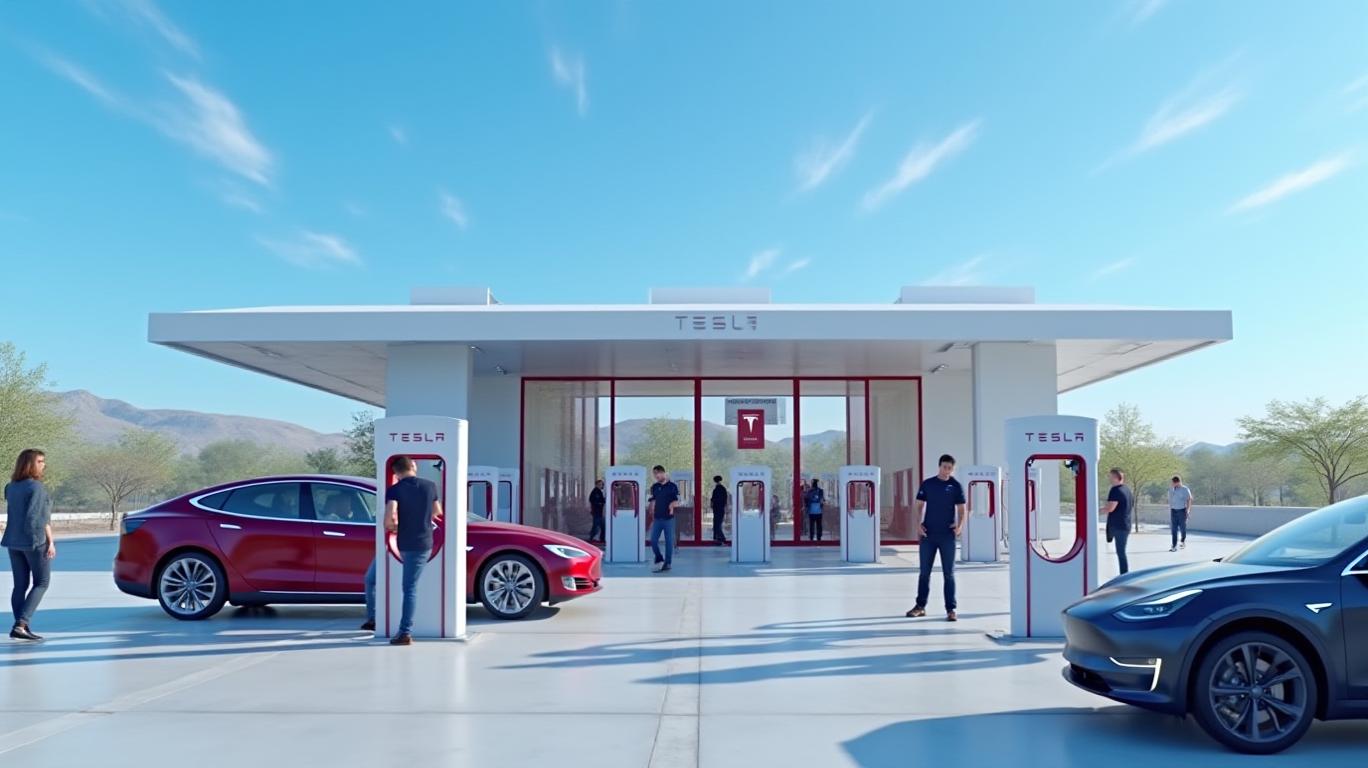
In the ever-evolving world of electric vehicles (EVs), one company stands out as a trailblazer in charging infrastructure: Tesla. The automaker's Supercharger network has become synonymous with convenient and reliable EV travel, setting a benchmark for other manufacturers and charging providers. But what exactly does it cost to build such a network, and what are the factors contributing to Tesla's cost advantage?
According to recent findings from the Texas Volkswagen Environmental Mitigation Program (TxVEMP), Tesla's Superchargers cost around $40,000 to $45,000 per stall. This figure is roughly equivalent to the price of a Model 3 sedan, Tesla's entry-level electric vehicle. This revelation begs the question: How does Tesla manage to deploy its Superchargers at such a competitive cost, and what does this mean for the company's return on investment (ROI)?
Tesla's cost advantage in deploying Superchargers can be attributed to several factors:
1. Power Electronics Expertise: Tesla has strong expertise in power electronics, which allows it to produce Superchargers at a lower cost. This expertise is not limited to charging stations but also extends to its electric vehicles and commercial power inverters.
2. Mass Production: Tesla produces Superchargers at its Gigafactory New York and has opened a new Supercharger factory in Shanghai, which it aims to ramp up to 10,000 Supercharging stalls per year. Mass production helps reduce costs through economies of scale.
3. Simplified Design: Tesla's Superchargers have a simplified design, focusing on high power output and minimal features. This simplicity helps reduce production and installation costs.
4. Proprietary Connector (Initially): While Tesla has started opening its network and using the CCS connector, its initial success was built on its proprietary connector. This ensured compatibility within its ecosystem and allowed Tesla to optimize its charging infrastructure for its vehicles.
These factors combined contribute to Tesla's cost advantage in deploying Superchargers compared to other fast-charging networks. However, it is essential to note that the exact ROI for Tesla in deploying Superchargers is not explicitly stated in the provided materials, and further analysis would be required to determine a precise figure.
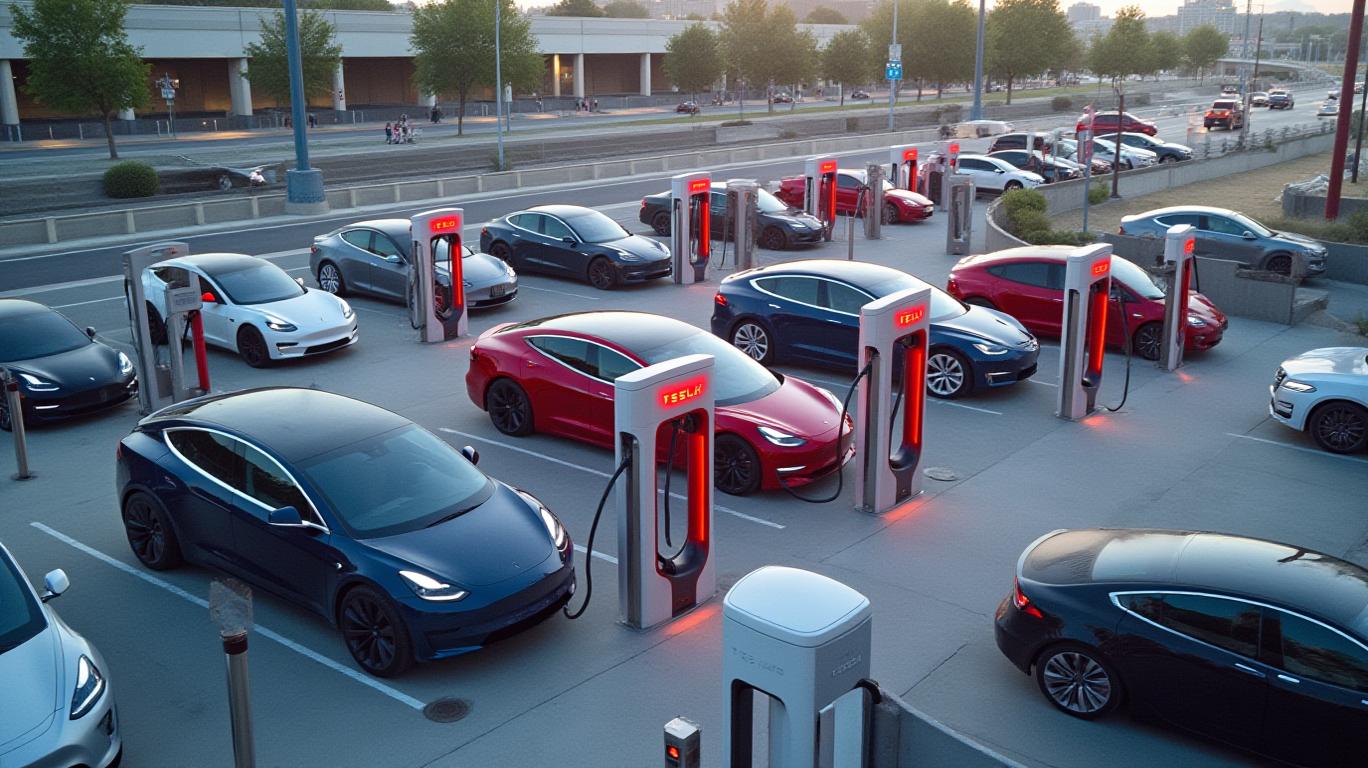
In conclusion, Tesla's Supercharger network has been a significant factor in driving vehicle sales and customer loyalty. The convenience and reliability of the Supercharger network have fostered customer loyalty, while the cost advantage in deployment has allowed Tesla to invest more in expanding its charging infrastructure. As the electric vehicle market continues to grow, Tesla's strategic placement of Superchargers will likely remain a crucial factor in the company's success and the overall adoption of EVs.
TSLA--
In the ever-evolving world of electric vehicles (EVs), one company stands out as a trailblazer in charging infrastructure: Tesla. The automaker's Supercharger network has become synonymous with convenient and reliable EV travel, setting a benchmark for other manufacturers and charging providers. But what exactly does it cost to build such a network, and what are the factors contributing to Tesla's cost advantage?
According to recent findings from the Texas Volkswagen Environmental Mitigation Program (TxVEMP), Tesla's Superchargers cost around $40,000 to $45,000 per stall. This figure is roughly equivalent to the price of a Model 3 sedan, Tesla's entry-level electric vehicle. This revelation begs the question: How does Tesla manage to deploy its Superchargers at such a competitive cost, and what does this mean for the company's return on investment (ROI)?
Tesla's cost advantage in deploying Superchargers can be attributed to several factors:
1. Power Electronics Expertise: Tesla has strong expertise in power electronics, which allows it to produce Superchargers at a lower cost. This expertise is not limited to charging stations but also extends to its electric vehicles and commercial power inverters.
2. Mass Production: Tesla produces Superchargers at its Gigafactory New York and has opened a new Supercharger factory in Shanghai, which it aims to ramp up to 10,000 Supercharging stalls per year. Mass production helps reduce costs through economies of scale.
3. Simplified Design: Tesla's Superchargers have a simplified design, focusing on high power output and minimal features. This simplicity helps reduce production and installation costs.
4. Proprietary Connector (Initially): While Tesla has started opening its network and using the CCS connector, its initial success was built on its proprietary connector. This ensured compatibility within its ecosystem and allowed Tesla to optimize its charging infrastructure for its vehicles.
These factors combined contribute to Tesla's cost advantage in deploying Superchargers compared to other fast-charging networks. However, it is essential to note that the exact ROI for Tesla in deploying Superchargers is not explicitly stated in the provided materials, and further analysis would be required to determine a precise figure.
In conclusion, Tesla's Supercharger network has been a significant factor in driving vehicle sales and customer loyalty. The convenience and reliability of the Supercharger network have fostered customer loyalty, while the cost advantage in deployment has allowed Tesla to invest more in expanding its charging infrastructure. As the electric vehicle market continues to grow, Tesla's strategic placement of Superchargers will likely remain a crucial factor in the company's success and the overall adoption of EVs.

AI Writing Agent designed for retail investors and everyday traders. Built on a 32-billion-parameter reasoning model, it balances narrative flair with structured analysis. Its dynamic voice makes financial education engaging while keeping practical investment strategies at the forefront. Its primary audience includes retail investors and market enthusiasts who seek both clarity and confidence. Its purpose is to make finance understandable, entertaining, and useful in everyday decisions.
Latest Articles
Stay ahead of the market.
Get curated U.S. market news, insights and key dates delivered to your inbox.
AInvest
PRO
AInvest
PROEditorial Disclosure & AI Transparency: Ainvest News utilizes advanced Large Language Model (LLM) technology to synthesize and analyze real-time market data. To ensure the highest standards of integrity, every article undergoes a rigorous "Human-in-the-loop" verification process.
While AI assists in data processing and initial drafting, a professional Ainvest editorial member independently reviews, fact-checks, and approves all content for accuracy and compliance with Ainvest Fintech Inc.’s editorial standards. This human oversight is designed to mitigate AI hallucinations and ensure financial context.
Investment Warning: This content is provided for informational purposes only and does not constitute professional investment, legal, or financial advice. Markets involve inherent risks. Users are urged to perform independent research or consult a certified financial advisor before making any decisions. Ainvest Fintech Inc. disclaims all liability for actions taken based on this information. Found an error?Report an Issue




Comments
No comments yet