
Tesla's Strategic Shift to Autonomous Mobility: Assessing the Risks and Rewards of Musk's Vision Beyond the Auto Business
 Aime Summary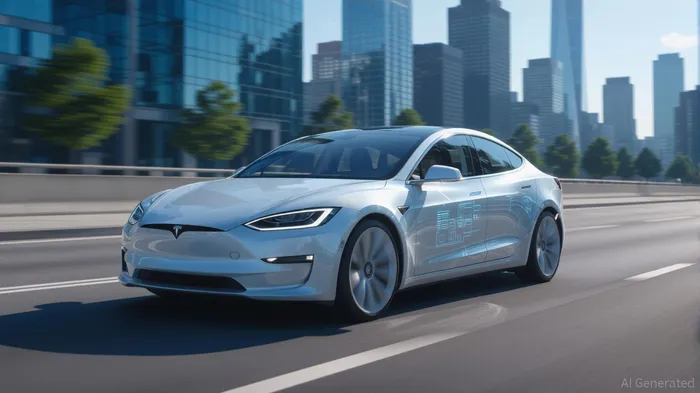
In the summer of 2025, TeslaTSLA-- finds itself at a crossroads. The electric vehicle (EV) pioneer, once celebrated for its disruption of the automotive industry, now faces a reality where traditional revenue streams—vehicle sales and regulatory credit sales—are under siege. With a 12% year-over-year decline in Q2 2025 revenue and a 51% drop in regulatory credit sales, the company is pivoting aggressively toward autonomous mobility. This shift, spearheaded by Elon Musk's ambitious robotaxi initiative and the development of the Optimus Gen 3 robot, promises to redefine Tesla's revenue model. But the road ahead is fraught with both transformative potential and significant risks.
The Erosion of Traditional Revenue Streams
Tesla's Q2 2025 earnings report painted a stark picture. Automotive revenue fell to $16.7 billion, a 16% decline year-over-year, driven by a 13.5% drop in vehicle deliveries. The expiration of the $7,500 U.S. federal EV tax credit by September 2025 and the Republican-passed “One Big Beautiful Bill” (OBBB)—which neutered federal emissions rules—have effectively ended Tesla's $890 million regulatory credit revenue. By 2027, this stream is projected to vanish entirely. Meanwhile, Chinese automakers like BYD are gaining market share, and Tesla's aggressive price cuts (up to 20% in 2025) have compressed gross margins to 16.5%, down from a peak of 30% in 2022.
Robotaxi: A $75 Billion Bet on the Future
Tesla's robotaxi service, launched in Austin, Texas, in late 2025, is the centerpiece of its strategic pivot. Charging $6.90 per ride, the service is projected to generate $1 billion in 2026 and scale to $75 billion by 2030—45% of Tesla's projected vehicle revenue that year. This shift hinges on scaling the service to major U.S. markets, including the Bay Area, Nevada, Arizona, and Florida, pending regulatory approvals. Analysts at ARK Invest estimate the robotaxi could add over $1 trillion in enterprise value by 2029, driven by recurring, high-margin software revenue.
The potential is staggering. Unlike hardware-centric models, autonomous mobility operates on a subscription or usage-based model, offering predictable cash flows. Tesla's $32 billion cash reserves and strong balance sheet (debt-to-equity ratio of 0.18x) provide the financial flexibility to fund this transition. However, the success of robotaxi depends on overcoming regulatory hurdles—particularly in California—and achieving full commercial viability of its Full Self-Driving (FSD) software.
Short-Term Volatility and Investor Skepticism
Musk's recent remarks have triggered market volatility. During the Q2 earnings call, he emphasized the need for regulatory approvals and admitted the robotaxi rollout would take longer than anticipated. This cautious tone, coupled with the lack of public updates on Austin's pilot program, sent Tesla's stock down 5% during the call and continued to decline in after-hours trading. Investors expressed concerns about execution risks, with some analysts warning that Tesla cannot afford a misstep as its core automotive business declines.
The short-term risks are clear: regulatory delays, technological bottlenecks, and competition from Waymo and Cruise could derail the robotaxi rollout. Moreover, the company's reliance on AI-driven innovation requires sustained R&D investment, which has already compressed gross margins. Yet, Musk's vision is not without precedent. Tesla's history of turning bold bets into market-leading products—such as the Model 3 and Cybertruck—suggests the company is capable of executing on ambitious timelines.
The Long-Term Investment Thesis
Beyond robotaxi, Tesla's broader AI and robotics strategy—led by the Optimus Gen 3 robot—positions the company to tap into a $25 trillion global automation market. Even a 1% market share could generate $250 billion in annual revenue by 2030, according to Brownstone Research. This diversification into robotics and AI aligns with Tesla's long-term goal of becoming a leader in autonomous mobility and automation.
For investors, the question is whether Tesla can scale these initiatives profitably. The company's strong cash reserves and low debt provide a buffer, but execution remains critical. Regulatory approvals, particularly in key markets like California and Europe, will determine the speed of robotaxi expansion. Additionally, the ability to integrate customer-owned vehicles into the robotaxi network—allowing owners to monetize their cars—could accelerate adoption.
Weighing the Risks and Rewards
Tesla's pivot to autonomous mobility is a high-stakes gamble. The rewards are enormous: a $75 billion robotaxi revenue stream by 2030 could offset declining automotive sales and position Tesla as a dominant player in the AI-driven economy. However, the risks are equally significant. Regulatory delays, technological challenges, and competition from entrenched players could slow progress.
For investors, the key is to assess Tesla's ability to execute on its vision while managing short-term headwinds. The company's financial resilience and Musk's track record of innovation suggest it has the tools to succeed. Yet, patience will be required. The robotaxi rollout is still in its early stages, and the market's reaction to regulatory and operational hurdles will shape Tesla's trajectory in the coming years.
Conclusion: A Bet on the Future
Tesla's strategic shift to autonomous mobility represents a paradigm shift in how we think about transportation and AI-driven value creation. While the company faces near-term challenges, its long-term vision—rooted in software, AI, and robotics—offers a compelling investment opportunity. For those willing to tolerate short-term volatility, Tesla's robotaxi and robotics initiatives could redefine not only its revenue model but also the broader landscape of autonomous mobility.
As the dust settles on Q2 2025, one thing is clear: Tesla is no longer just an EV company. It is a pioneer of the autonomous future—and the rewards for investors who believe in Musk's vision could be monumental.

Stay ahead of the market.
Get curated U.S. market news, insights and key dates delivered to your inbox.




Comments
No comments yet