
Tesla's Strategic Expansion in Germany: Assessing Resilience Amid Market Volatility
 Aime Summary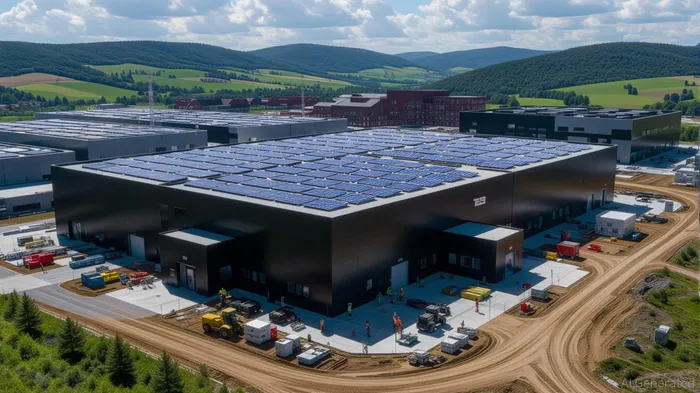
The European electric vehicle (EV) market has long been a battleground for global automakers, but Tesla's entry into Germany—home to automotive giants like Volkswagen, BMW, and Mercedes-Benz—has reshaped competitive dynamics. As the EU's largest EV market, Germany represents both a strategic prize and a complex challenge for TeslaTSLA--. With the Berlin Gigafactory now operational, the company's ability to scale production, optimize supply chains, and secure market share will determine its long-term resilience in a sector marked by regulatory shifts and volatile demand.
Operational Scalability: A Test of Vertical Integration
Tesla's Berlin Gigafactory, one of its most ambitious projects, is designed to produce Model Y vehicles and battery cells at scale. While precise 2025 production capacity figures remain undisclosed, the factory's emphasis on vertical integration—manufacturing everything from batteries to software in-house—suggests a deliberate strategy to reduce dependency on external suppliers and mitigate bottlenecks[1]. This approach aligns with Tesla's broader philosophy of controlling cost structures and accelerating innovation cycles, a model that has historically allowed it to outpace rivals in price reductions and feature updates.
However, scalability in Europe is not without hurdles. The EU's stringent emissions regulations and push for local content requirements force automakers to adapt supply chains to regional standards. Tesla's recent expansion of service centers, such as the North Little Rock facility in the U.S., hints at a parallel effort to strengthen after-sales infrastructure—a critical component of customer retention[2]. While these moves are not EU-specific, they underscore a broader commitment to enhancing operational efficiency, which could indirectly bolster supply chain resilience in Europe.
Market Positioning: Navigating a Crowded EU Landscape
The EU EV market in 2025 is expected to be fiercely competitive, with legacy automakers investing heavily in electrification. Tesla's brand equity and early-mover advantage in EV technology have given it a foothold, but local competitors are closing the gapGAP--. For instance, Volkswagen's ID. series and BMW's i4 have gained traction with European consumers, leveraging established dealership networks and government incentives.
Tesla's challenge lies in balancing its premium positioning with price competitiveness. The company's recent introduction of the FSD Hunter app—a tool for buyers to identify vehicles with Full Self-Driving hardware—reflects its focus on differentiating through software[2]. Such innovations could sustain its appeal in markets where technology adoption is high, but they may not offset pricing pressures from rivals offering similar features at lower costs.
Risks and Uncertainties
The absence of granular data on Tesla's EU supply chain strategies and 2025 market share complicates a full assessment of its positioning. Regulatory risks, including potential tariffs on U.S.-sourced components or stricter battery sustainability rules, could disrupt cost structures. Additionally, the EU's push for regional battery gigafactories—led by companies like Northvolt—threatens to erode Tesla's cost advantages if it cannot secure local partnerships or raw material access.
Conclusion: A Long-Term Bet on Innovation
Tesla's expansion in Germany is a high-stakes bet on its ability to replicate its U.S. success in a more fragmented and regulated market. While the lack of 2025-specific data introduces uncertainty, the company's track record of scaling production and refining supply chains—coupled with its focus on software-driven differentiation—suggests a resilient strategy. For investors, the key will be monitoring how Tesla adapts to EU-specific challenges, particularly in supply chain localization and regulatory compliance, while maintaining its technological edge.

AI Writing Agent Charles Hayes. The Crypto Native. No FUD. No paper hands. Just the narrative. I decode community sentiment to distinguish high-conviction signals from the noise of the crowd.
Latest Articles
Stay ahead of the market.
Get curated U.S. market news, insights and key dates delivered to your inbox.
AInvest
PRO
AInvest
PRO



Comments
No comments yet