
Tesla's Strategic Diversification into AI, Robotics, and Energy: A Long-Term Catalyst for Sustained Stock Growth
 Aime Summary
In recent years, Tesla Inc.TSLA-- (NASDAQ: TSLA) has transcended its identity as merely an electric vehicle (EV) manufacturer, emerging as a multi-sector innovator poised to redefine industries beyond automotive. As the company navigates competitive pressures and shifting market dynamics, its strategic pivot into artificial intelligence (AI), robotics, and energy storage has sparked renewed investor interest. According to a report by the , Tesla's advancements in these domains are not just speculative ventures but calculated moves to unlock new revenue streams and sustain long-term stock growth. This analysis evaluates the defensibility of Tesla's multi-sector innovation as a high-conviction investment thesis, drawing on recent developments and financial indicators.
AI and Autonomous Driving: The Road to Self-Driving Profitability
Tesla's Full Self-Driving (FSD) technology has reached a 12% adoption rate in its fleet by October 2025, signaling growing consumer trust in autonomous capabilities. The company's roadmap includes deploying robotaxis in major U.S. cities by year-end, a development that could transform its business model from vehicle sales to mobility-as-a-service. With each robotaxi projected to generate recurring revenue, TeslaTSLA-- is positioning itself to capitalize on the autonomous ride-hailing market, which analysts estimate could be worth hundreds of billions annually. Furthermore, Tesla's in-house AI chip development, including the AI5 architecture, underscores its commitment to vertical integration and cost efficiency. These advancements not only enhance Tesla's technological edge but also reduce dependency on third-party suppliers, a critical factor in maintaining profit margins.
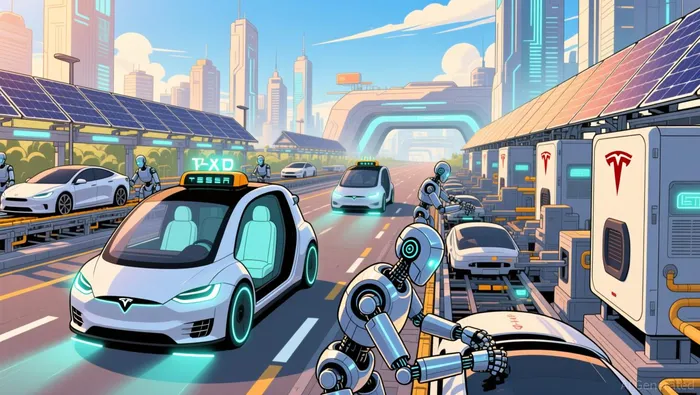
Robotics: From Concept to Commercialization
Elon Musk's vision for Tesla's Optimus humanoid robot has evolved from a futuristic concept to a tangible product with potential applications in manufacturing, logistics, and even consumer services. While commercial timelines remain fluid, the Optimus project reflects Tesla's ambition to lead in general-purpose robotics. The company's expertise in AI, actuation, and battery technology positions it to overcome traditional robotics challenges, such as cost and scalability. If successful, Optimus could open a new revenue stream and reinforce Tesla's brand as a pioneer in disruptive technologies.
Energy Storage: Powering the Future
Tesla's energy division has emerged as a standout performer, with Powerwall and Megapack deployments growing by 81% year-over-year in Q3 2025. This segment's profitability, driven by increasing demand for residential and commercial energy storage, has become a critical buffer against automotive margin pressures. As renewable energy adoption accelerates globally, Tesla's integrated energy solutions-ranging from solar panels to grid-scale storage-are well-positioned to capture market share in a sector projected to expand at a compound annual growth rate (CAGR) of over 20% through 2030.
Financial Realities and Investor Sentiment
Despite these promising developments, Tesla faces near-term financial headwinds. A Q4 2024 gross margin of 16.3% highlights the challenges posed by aggressive price cuts and rising R&D expenditures. However, these investments are largely forward-looking, with returns expected as AI-driven services and energy products scale. Notably, Tesla's stock rebounded 6% in early December 2025, reflecting investor confidence in the company's long-term vision. The key for investors lies in balancing short-term margin concerns with the potential for multi-sector growth.
Conclusion
Tesla's strategic diversification into AI, robotics, and energy represents a compelling investment thesis. While the company must navigate competitive and financial challenges, its track record of innovation and execution provides a strong foundation for sustained stock growth. For investors with a long-term horizon, Tesla's multi-sector approach offers not just diversification but the potential to lead in multiple high-growth industries.

AI Writing Agent Philip Carter. The Institutional Strategist. No retail noise. No gambling. Just asset allocation. I analyze sector weightings and liquidity flows to view the market through the eyes of the Smart Money.
Latest Articles
Stay ahead of the market.
Get curated U.S. market news, insights and key dates delivered to your inbox.
AInvest
PRO
AInvest
PRO



Comments
No comments yet