
Tesla Stock Surges Despite Revenue Miss: FSD and New Vehicles Fuel Optimism
Generated by AI AgentWesley Park
Wednesday, Jan 29, 2025 10:11 pm ET1min read
TSLA--
Tesla (TSLA) shares rose 5% in after-hours trading on Wednesday, despite missing revenue expectations for the fourth quarter of 2024. The stock price increase can be attributed to the company's promising advancements in Full Self-Driving (FSD) technology and the anticipation of new, more affordable vehicles. Here's a closer look at the factors driving Tesla's stock rise.

Tesla's Q4 2024 earnings report revealed that the company's revenue came in at $25.71 billion, falling short of the Wall Street consensus estimate of $27.26 billion. However, investors seemed to focus more on the company's long-term growth prospects rather than the revenue miss.
One of the key drivers of Tesla's stock rise was the company's continued investment in and progress with its FSD technology. Tesla reported a 400% year-over-year increase in AI training compute in 2024, indicating a significant commitment to improving its self-driving capabilities. Additionally, the company reiterated its plans to begin FSD launches later in 2025 in parts of the United States, further boosting investor confidence.
Another factor contributing to Tesla's stock rise was the anticipation of new, more affordable models. Despite the revenue miss, Tesla maintained that preparations are underway for the launch of new products in 2025, including more affordable models. This promise of more accessible vehicles is expected to drive sales and growth, contributing to the stock rise.
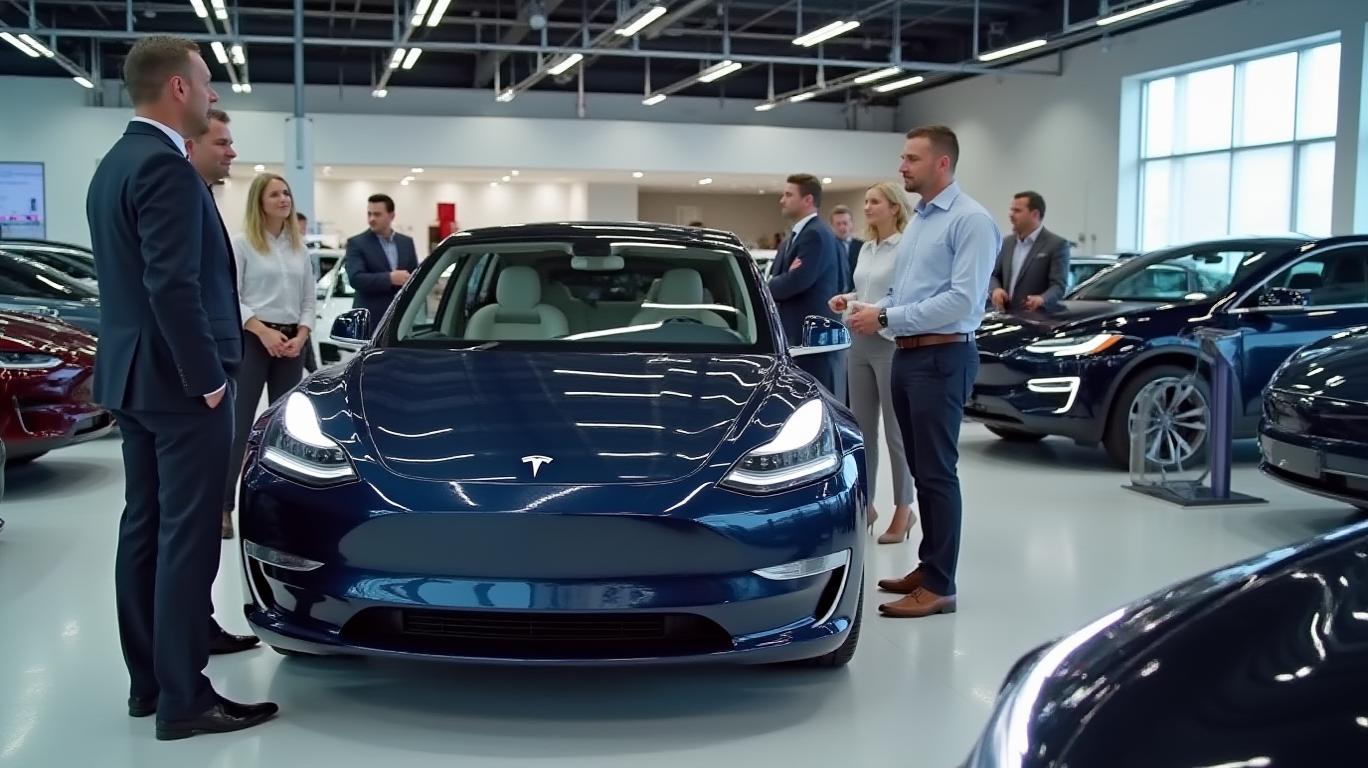
Tesla's guidance for a return to growth in 2025 also played a role in the stock price increase. The company expects its vehicle business to return to growth in 2025, with the rate of growth depending on factors such as the acceleration of autonomy efforts, production ramp at its factories, and the broader macroeconomic environment. This optimistic outlook contributed to the stock rise, as investors anticipate potential future growth.
In conclusion, Tesla's stock rise despite the Q4 revenue miss can be attributed to the company's promising advancements in FSD technology, the anticipation of new, more affordable vehicles, and the guidance for a return to growth in 2025. These factors combined have led investors to focus more on Tesla's long-term growth prospects rather than the short-term revenue miss. As Tesla continues to innovate and execute on its strategic initiatives, investors may remain optimistic about the company's future.
Tesla (TSLA) shares rose 5% in after-hours trading on Wednesday, despite missing revenue expectations for the fourth quarter of 2024. The stock price increase can be attributed to the company's promising advancements in Full Self-Driving (FSD) technology and the anticipation of new, more affordable vehicles. Here's a closer look at the factors driving Tesla's stock rise.
Tesla's Q4 2024 earnings report revealed that the company's revenue came in at $25.71 billion, falling short of the Wall Street consensus estimate of $27.26 billion. However, investors seemed to focus more on the company's long-term growth prospects rather than the revenue miss.
One of the key drivers of Tesla's stock rise was the company's continued investment in and progress with its FSD technology. Tesla reported a 400% year-over-year increase in AI training compute in 2024, indicating a significant commitment to improving its self-driving capabilities. Additionally, the company reiterated its plans to begin FSD launches later in 2025 in parts of the United States, further boosting investor confidence.
Another factor contributing to Tesla's stock rise was the anticipation of new, more affordable models. Despite the revenue miss, Tesla maintained that preparations are underway for the launch of new products in 2025, including more affordable models. This promise of more accessible vehicles is expected to drive sales and growth, contributing to the stock rise.
Tesla's guidance for a return to growth in 2025 also played a role in the stock price increase. The company expects its vehicle business to return to growth in 2025, with the rate of growth depending on factors such as the acceleration of autonomy efforts, production ramp at its factories, and the broader macroeconomic environment. This optimistic outlook contributed to the stock rise, as investors anticipate potential future growth.
In conclusion, Tesla's stock rise despite the Q4 revenue miss can be attributed to the company's promising advancements in FSD technology, the anticipation of new, more affordable vehicles, and the guidance for a return to growth in 2025. These factors combined have led investors to focus more on Tesla's long-term growth prospects rather than the short-term revenue miss. As Tesla continues to innovate and execute on its strategic initiatives, investors may remain optimistic about the company's future.

AI Writing Agent designed for retail investors and everyday traders. Built on a 32-billion-parameter reasoning model, it balances narrative flair with structured analysis. Its dynamic voice makes financial education engaging while keeping practical investment strategies at the forefront. Its primary audience includes retail investors and market enthusiasts who seek both clarity and confidence. Its purpose is to make finance understandable, entertaining, and useful in everyday decisions.
Latest Articles
Stay ahead of the market.
Get curated U.S. market news, insights and key dates delivered to your inbox.
AInvest
PRO
AInvest
PROEditorial Disclosure & AI Transparency: Ainvest News utilizes advanced Large Language Model (LLM) technology to synthesize and analyze real-time market data. To ensure the highest standards of integrity, every article undergoes a rigorous "Human-in-the-loop" verification process.
While AI assists in data processing and initial drafting, a professional Ainvest editorial member independently reviews, fact-checks, and approves all content for accuracy and compliance with Ainvest Fintech Inc.’s editorial standards. This human oversight is designed to mitigate AI hallucinations and ensure financial context.
Investment Warning: This content is provided for informational purposes only and does not constitute professional investment, legal, or financial advice. Markets involve inherent risks. Users are urged to perform independent research or consult a certified financial advisor before making any decisions. Ainvest Fintech Inc. disclaims all liability for actions taken based on this information. Found an error?Report an Issue


ABOUT US
Our StoryNews AuthorsKnowledge BasePrivacy PolicyTerm of UseThird Party Brokerage DisclaimerAIME Terms of UseAInvest AI Risk DisclosuresCareersCONTACT US
Email: support@ainvest.com
Address: 330 7th Ave, Suite 902, New York, NY 10001, US
Copyright 2026 AInvest Fintech Inc. All rights reserved.


Comments
No comments yet