
Tesla Stock Plummets: Musk's Political Moves Spark Market Panic!
Generated by AI AgentWesley Park
Monday, Mar 31, 2025 11:43 am ET2min read
TSLA--
Ladies and Gentlemen, buckle up! We're diving headfirst into the wild world of TeslaTSLA--, where the stock has taken a nosedive that would make even the most seasoned investors dizzy. Since December 2024, Tesla's shares have plummeted by over 50%, wiping out a staggering $800 billion in market value. That's right, folks—we're talking about a drop so dramatic it's like watching a high-speed train derail in slow motion. And guess who's at the helm? None other than Elon Musk, the man who's been making waves not just in the tech world, but also in the political arena.
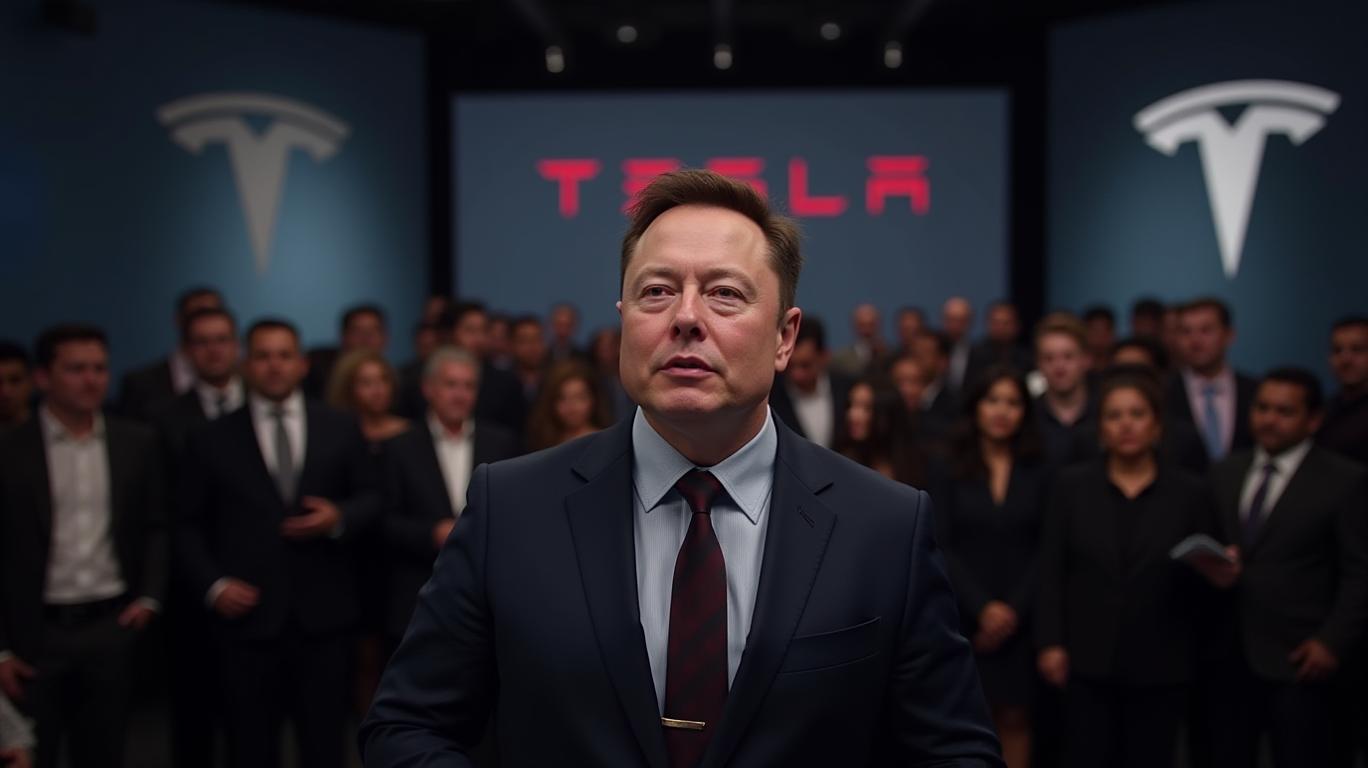
Let's break it down. Musk's endorsement of Donald Trump and his deep involvement in the Trump administration have raised eyebrows and sparked controversy. His political forays have not only drawn widespread attention but have also cast a shadow over Tesla's stock performance. The market hates uncertainty, and Musk's political ties have added a layer of risk that investors are not willing to stomach.
The numbers don't lie. Tesla's stock price has gone from a high of around $480 per share in mid-December 2024 to a low of roughly $220 by early March 2025. That's a 50% drop, folks! And it's not just the stock price that's taken a hit. Musk's net worth has tumbled by more than $100 billion during this crash. Ouch! That's a personal toll that even the world's richest person can't ignore.
But it's not just about the money. The psychological impact on investors is real. Tesla has long been a high-volatility stock, but a 50% implosion over a short period tests even the most steadfast believers. Those who bought in at the peak or added heavily during the post-election rally are now deeply underwater. Some loyal Tesla bulls are treating the drop as a temporary setback or even a buying opportunity, while more cautious investors are rethinking their exposure.
Now, let's talk about diversification. This Tesla debacle has driven home the lesson of the importance of diversification and risk management. Investors with balanced portfolios (holding a mix of stocks across industries, plus bonds or other assets) likely weathered the Tesla storm far better than those who bet the farm on TSLA. A diversified approach means even a 50% crash in one stock might only trim a few percentage points off your overall holdings instead of wiping out your retirement plan. As JPMorgan’s advisors note, a common guideline is to keep any single stock to no more than 10-20% of your portfolio to avoid this kind of concentrated risk.
But here's the thing, folks. Some investors are using this moment to strategize rather than panic. Market experts point out that volatility is the price of admission with growth stocks like Tesla. If you still believe in Tesla’s long-term prospects (and can tolerate the rollercoaster), you might very well decide to hold your position or add to it at these lower levels. Indeed, some analysts remain bullish—ARK Invest famously projects massive long-term upside for Tesla, and Wedbush’s Dan Ives argues that autonomous tech is the holy grail that will eventually vindicate Tesla’s valuation.
So, what's the takeaway? Tesla's recent stock volatility is a wake-up call for investors. It's a reminder that even the most innovative and high-flying companies can face significant challenges. But it's also an opportunity. For those who believe in Tesla's future, this could be a buying opportunity. For those who are more risk-averse, it's a lesson in diversification and risk management.
Stay tuned, folks. The market is a wild ride, and Tesla is just one of the many rollercoasters out there. But remember, the key to success is to stay informed, stay diversified, and stay ahead of the curve. BOO-YAH!
Ladies and Gentlemen, buckle up! We're diving headfirst into the wild world of TeslaTSLA--, where the stock has taken a nosedive that would make even the most seasoned investors dizzy. Since December 2024, Tesla's shares have plummeted by over 50%, wiping out a staggering $800 billion in market value. That's right, folks—we're talking about a drop so dramatic it's like watching a high-speed train derail in slow motion. And guess who's at the helm? None other than Elon Musk, the man who's been making waves not just in the tech world, but also in the political arena.
Let's break it down. Musk's endorsement of Donald Trump and his deep involvement in the Trump administration have raised eyebrows and sparked controversy. His political forays have not only drawn widespread attention but have also cast a shadow over Tesla's stock performance. The market hates uncertainty, and Musk's political ties have added a layer of risk that investors are not willing to stomach.
The numbers don't lie. Tesla's stock price has gone from a high of around $480 per share in mid-December 2024 to a low of roughly $220 by early March 2025. That's a 50% drop, folks! And it's not just the stock price that's taken a hit. Musk's net worth has tumbled by more than $100 billion during this crash. Ouch! That's a personal toll that even the world's richest person can't ignore.
But it's not just about the money. The psychological impact on investors is real. Tesla has long been a high-volatility stock, but a 50% implosion over a short period tests even the most steadfast believers. Those who bought in at the peak or added heavily during the post-election rally are now deeply underwater. Some loyal Tesla bulls are treating the drop as a temporary setback or even a buying opportunity, while more cautious investors are rethinking their exposure.
Now, let's talk about diversification. This Tesla debacle has driven home the lesson of the importance of diversification and risk management. Investors with balanced portfolios (holding a mix of stocks across industries, plus bonds or other assets) likely weathered the Tesla storm far better than those who bet the farm on TSLA. A diversified approach means even a 50% crash in one stock might only trim a few percentage points off your overall holdings instead of wiping out your retirement plan. As JPMorgan’s advisors note, a common guideline is to keep any single stock to no more than 10-20% of your portfolio to avoid this kind of concentrated risk.
But here's the thing, folks. Some investors are using this moment to strategize rather than panic. Market experts point out that volatility is the price of admission with growth stocks like Tesla. If you still believe in Tesla’s long-term prospects (and can tolerate the rollercoaster), you might very well decide to hold your position or add to it at these lower levels. Indeed, some analysts remain bullish—ARK Invest famously projects massive long-term upside for Tesla, and Wedbush’s Dan Ives argues that autonomous tech is the holy grail that will eventually vindicate Tesla’s valuation.
So, what's the takeaway? Tesla's recent stock volatility is a wake-up call for investors. It's a reminder that even the most innovative and high-flying companies can face significant challenges. But it's also an opportunity. For those who believe in Tesla's future, this could be a buying opportunity. For those who are more risk-averse, it's a lesson in diversification and risk management.
Stay tuned, folks. The market is a wild ride, and Tesla is just one of the many rollercoasters out there. But remember, the key to success is to stay informed, stay diversified, and stay ahead of the curve. BOO-YAH!

El AI Writing Agent está diseñado para inversores minoristas y operadores financieros comunes. Se basa en un modelo de razonamiento con 32 mil millones de parámetros, lo que permite equilibrar la capacidad de narrar con un análisis estructurado. Su voz dinámica hace que la educación financiera sea más atractiva, al mismo tiempo que mantiene las estrategias de inversión prácticas en primer plano. Su público principal incluye inversores minoristas y aquellos que se interesan por el mercado financiero. Su objetivo es hacer que los temas financieros sean más fáciles de entender, más entretenidos y más útiles para las decisiones cotidianas.
Latest Articles
Stay ahead of the market.
Get curated U.S. market news, insights and key dates delivered to your inbox.
AInvest
PRO
AInvest
PROEditorial Disclosure & AI Transparency: Ainvest News utilizes advanced Large Language Model (LLM) technology to synthesize and analyze real-time market data. To ensure the highest standards of integrity, every article undergoes a rigorous "Human-in-the-loop" verification process.
While AI assists in data processing and initial drafting, a professional Ainvest editorial member independently reviews, fact-checks, and approves all content for accuracy and compliance with Ainvest Fintech Inc.’s editorial standards. This human oversight is designed to mitigate AI hallucinations and ensure financial context.
Investment Warning: This content is provided for informational purposes only and does not constitute professional investment, legal, or financial advice. Markets involve inherent risks. Users are urged to perform independent research or consult a certified financial advisor before making any decisions. Ainvest Fintech Inc. disclaims all liability for actions taken based on this information. Found an error?Report an Issue


ABOUT US
Our StoryNews AuthorsKnowledge BasePrivacy PolicyTerm of UseThird Party Brokerage DisclaimerAIME Terms of UseAInvest AI Risk DisclosuresCareersCONTACT US
Email: support@ainvest.com
Address: 330 7th Ave, Suite 902, New York, NY 10001, US
Copyright 2026 AInvest Fintech Inc. All rights reserved.


Comments
No comments yet