
Tesla Shares Soar 3.66% on Landmark $1T Compensation Vote for Elon Musk: Riding AI and Robotics Ambitions
 Aime Summary
Tesla shares surged 3.6576% in pre-market trading on Nov. 11, 2025, following a landmark shareholder vote to approve a $1 trillion maximum compensation package for Elon Musk. The deal, tied to ambitious performance targets over the next decade, grants Musk 400 million incentive-laden shares if TeslaTSLA-- achieves $400 million in annual EBITDA—a threshold far below current expectations of $13 billion for 2025. The vote, passed by a margin exceeding three to one, aims to restore Musk’s ownership stake to 25% while aligning his interests with long-term growth in AI and robotics ventures.
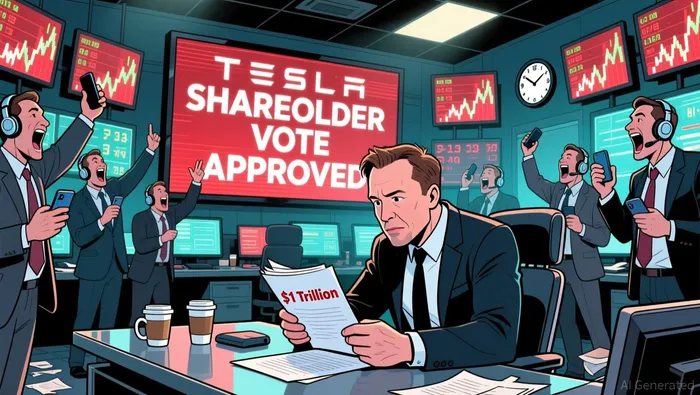 The compensation structure reflects Tesla’s strategic pivot beyond electric vehicles. Musk has emphasized the need for voting control to drive the company’s transformation into a robotics and AI leader, a vision shareholders endorsed despite risks of over-reliance on his leadership. The package builds on prior awards, including the 2018 stock options later re-approved by shareholders, now valued at $120 billion. Critics argue the deal prioritizes Musk’s ambitions over stakeholder dilution, while supporters view it as a necessary incentive to retain transformative leadership.
The vote underscores investor confidence in Musk’s ability to scale Tesla’s FSD subscriptions, Robotaxi deployments, and manufacturing output. Key metrics include delivering 20 million vehicles by 2035, activating 1 million robots, and generating $400 billion in annual operating profit. These targets, if met, could elevate Tesla’s market value from $1.5 trillion to $8.5 trillion. However, the company faces challenges in balancing Musk’s public persona with operational execution, as political statements and production hurdles have historically impacted sales.
A hypothetical backtest strategy could model Tesla’s stock response to similar shareholder-driven compensation events. Historical data shows that Musk’s 2018 pay package approval drove a 20% intraday surge, suggesting shareholder alignment can fuel short-term momentum. However, long-term success hinges on meeting performance milestones. A 10-year simulation tracking EBITDA thresholds, vehicle deliveries, and AI adoption metrics might reveal correlations between operational progress and stock valuation, offering insights into the sustainability of such high-stakes incentives.

Get the scoop on pre-market movers and shakers in the US stock market.
Latest Articles
Stay ahead of the market.
Get curated U.S. market news, insights and key dates delivered to your inbox.


AInvest
PRO
AInvest
PRO



Comments
No comments yet