
Tesla Seeks Ride-Hailing Access at Bay Area Airports
ByAinvest
Tuesday, Sep 9, 2025 2:20 pm ET2min read
TSLA--
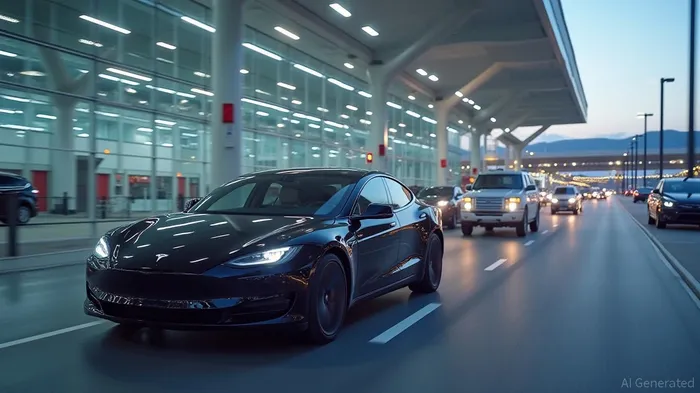
Tesla's senior regulatory counsel, Casey Blaine, informed California regulators over the summer that the company is engaging with these airports to secure necessary approvals for its ride-hailing service. The company's strategy involves signing up customers while navigating the state's multi-step regulatory pathway for autonomous vehicles.
While Tesla has launched its ride-hailing service in the Bay Area with limited permits since July, the company is still pursuing broader approvals to fully realize its vision of an entirely self-driving fleet. Musk has forecasted deploying millions of autonomous taxis within the next year, positioning Tesla as a key player in the emerging robotaxi industry.
The San Francisco Bay Area's airports have been a key arena of policy disputes and negotiations for companies like Waymo, which has made significant progress in securing airport operations. Tesla's move to secure access to these airports could potentially challenge Waymo's dominance and further the ongoing debate between the nascent industry and organized labor.
Tesla's ride-hailing service, branded as "Robotaxi," operates in a "gray area," as the current Tesla cars are equipped with assistive features requiring a human driver to stay alert. The company is gathering data from its privately owned vehicles and the Uber-like Robotaxi fleet to train its software before applying for driverless vehicle permits.
The California Public Utilities Commission (CPUC) has been monitoring Tesla's operations, with staff visiting the company's Palo Alto offices to learn more about its ride-hail service. Despite the Robotaxi branding, Tesla has privately assured state regulators that it knows additional permits are necessary for autonomous ride-hailing operations.
Airports may have different approval processes for conventional ride-hail providers like Uber and Lyft versus autonomous ones like Waymo. Tesla has already secured multiple active business licenses from the city of San Jose, but additional permits and reporting requirements may be necessary for autonomous operations.
As Tesla continues to expand its ride-hailing service, the company's ability to secure airport access and navigate regulatory hurdles will be crucial to its success in the Bay Area and beyond.
References:
[1] https://www.politico.com/news/2025/09/09/tesla-rides-san-francisco-san-jose-airports-00551469
Tesla has approached Bay Area airports to secure access for pickups and drop-offs, expanding its ride-hailing footprint in California. The company has contacted San Francisco International, San Jose Mineta, and Oakland International airports seeking permits required for terminal access. This move would put Tesla's service in front of one of the state's most valuable travel markets. Tesla has been signing up riders in the Bay Area since July under limited permissions while pursuing broader approvals.
Tesla has initiated contact with the three busiest airports in the San Francisco Bay Area to secure permits for pickups and drop-offs, expanding its ride-hailing footprint in California. The company has reached out to San Francisco International Airport, San Jose Mineta International Airport, and Oakland International Airport, aiming to tap into one of the state's most lucrative travel markets.Tesla's senior regulatory counsel, Casey Blaine, informed California regulators over the summer that the company is engaging with these airports to secure necessary approvals for its ride-hailing service. The company's strategy involves signing up customers while navigating the state's multi-step regulatory pathway for autonomous vehicles.
While Tesla has launched its ride-hailing service in the Bay Area with limited permits since July, the company is still pursuing broader approvals to fully realize its vision of an entirely self-driving fleet. Musk has forecasted deploying millions of autonomous taxis within the next year, positioning Tesla as a key player in the emerging robotaxi industry.
The San Francisco Bay Area's airports have been a key arena of policy disputes and negotiations for companies like Waymo, which has made significant progress in securing airport operations. Tesla's move to secure access to these airports could potentially challenge Waymo's dominance and further the ongoing debate between the nascent industry and organized labor.
Tesla's ride-hailing service, branded as "Robotaxi," operates in a "gray area," as the current Tesla cars are equipped with assistive features requiring a human driver to stay alert. The company is gathering data from its privately owned vehicles and the Uber-like Robotaxi fleet to train its software before applying for driverless vehicle permits.
The California Public Utilities Commission (CPUC) has been monitoring Tesla's operations, with staff visiting the company's Palo Alto offices to learn more about its ride-hail service. Despite the Robotaxi branding, Tesla has privately assured state regulators that it knows additional permits are necessary for autonomous ride-hailing operations.
Airports may have different approval processes for conventional ride-hail providers like Uber and Lyft versus autonomous ones like Waymo. Tesla has already secured multiple active business licenses from the city of San Jose, but additional permits and reporting requirements may be necessary for autonomous operations.
As Tesla continues to expand its ride-hailing service, the company's ability to secure airport access and navigate regulatory hurdles will be crucial to its success in the Bay Area and beyond.
References:
[1] https://www.politico.com/news/2025/09/09/tesla-rides-san-francisco-san-jose-airports-00551469
Stay ahead of the market.
Get curated U.S. market news, insights and key dates delivered to your inbox.


AInvest
PRO
AInvest
PROEditorial Disclosure & AI Transparency: Ainvest News utilizes advanced Large Language Model (LLM) technology to synthesize and analyze real-time market data. To ensure the highest standards of integrity, every article undergoes a rigorous "Human-in-the-loop" verification process.
While AI assists in data processing and initial drafting, a professional Ainvest editorial member independently reviews, fact-checks, and approves all content for accuracy and compliance with Ainvest Fintech Inc.’s editorial standards. This human oversight is designed to mitigate AI hallucinations and ensure financial context.
Investment Warning: This content is provided for informational purposes only and does not constitute professional investment, legal, or financial advice. Markets involve inherent risks. Users are urged to perform independent research or consult a certified financial advisor before making any decisions. Ainvest Fintech Inc. disclaims all liability for actions taken based on this information. Found an error?Report an Issue


ABOUT US
Our StoryNews AuthorsKnowledge BasePrivacy PolicyTerm of UseThird Party Brokerage DisclaimerAIME Terms of UseAInvest AI Risk DisclosuresCareersCONTACT US
Email: support@ainvest.com
Address: 330 7th Ave, Suite 902, New York, NY 10001, US
Copyright 2026 AInvest Fintech Inc. All rights reserved.


Comments
No comments yet