
Tesla Secures Texas Rideshare License for Autonomous Robotaxi Operation
 Aime Summary
Tesla Inc. has secured a critical regulatory approval by obtaining a ridesharing license in Texas, marking a pivotal step toward the commercial deployment of its autonomous robotaxi service. The license, granted by the Texas Department of Licensing and Regulation, enables TeslaRACE-- to operate self-driving vehicles for ride-hailing purposes in the state, aligning with new legislation that took effect on September 1 [1]. This license designates Tesla Robotaxi LLC as a licensed transportation network company, placing it in the same category as established players such as Uber TechnologiesUBER-- Inc. and LyftLYFT-- Inc.
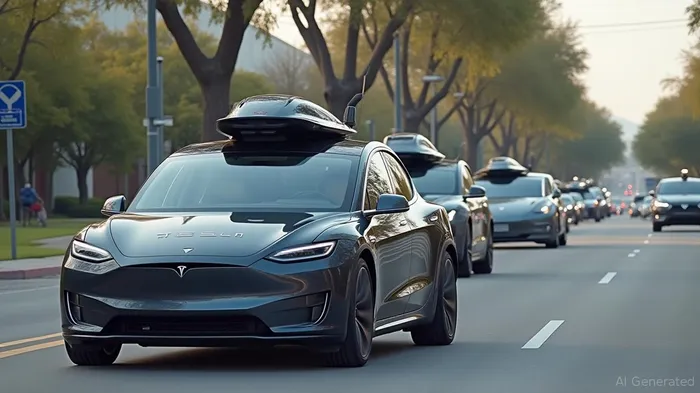
The development follows a pilot program launched in June, during which Tesla tested a limited fleet of Model Y vehicles in Austin. These vehicles, equipped with safety monitors, provided rides to a select group of users. The new license removes previous regulatory barriers that required autonomous vehicles to meet the same oversight standards as human-driven services, allowing Tesla to operate under a more flexible framework [1].
The Texas move represents a strategic advantage for Tesla, which has faced more rigorous scrutiny in states like California. By positioning itself in a state with more lenient regulations, the automaker can accelerate its plans to offer a fully driverless ride-hailing service, a vision championed by CEO Elon Musk as a key component of Tesla’s long-term revenue strategy [1].
Industry observers have speculated that Tesla’s robotaxi service could significantly reduce per-mile operating costs and enable round-the-clock vehicle utilization, potentially transforming urban mobility. While these forecasts remain theoretical, they highlight the disruptive potential of autonomous ride services [1].
The approval underscores a broader regulatory shift toward embracing self-driving technology, particularly in jurisdictions that prioritize innovation over stringent oversight. Tesla’s ability to operate in Texas reflects its aggressive push to lead the autonomous mobility sector, combining advanced technology with favorable policy environments [1].
With the license in place, Tesla is now closer to launching a commercial autonomous ride-hailing service in the U.S., setting the stage for what could be a major evolution in transportation. The company has not yet commented on the licensing decision but has consistently emphasized robotaxi as a central pillar of its business model.
Source: [1] Tesla Secures Texas Rideshare Permit for Robotaxi ... (https://www.bloomberg.com/news/articles/2025-08-08/tesla-secures-texas-rideshare-permit-for-robotaxi-operation)

Stay ahead of the market.
Get curated U.S. market news, insights and key dates delivered to your inbox.
AInvest
PRO
AInvest
PRO



Comments
No comments yet