
Tesla's Manufacturing Pivot: A Win for U.S. Economy and Investors
Tesla's (TSLA) recent announcement to expand its Gigafactory Nevada is not just a significant step for the electric vehicle (EV) leader, but also a boon for the U.S. manufacturing landscape and investors. Morgan Stanley has confirmed its overweight rating on Tesla, highlighting the company's strategic importance and growth potential. Let's dive into the reasons behind this bullish stance and explore how Tesla's manufacturing shift is set to benefit the U.S. economy and its shareholders.
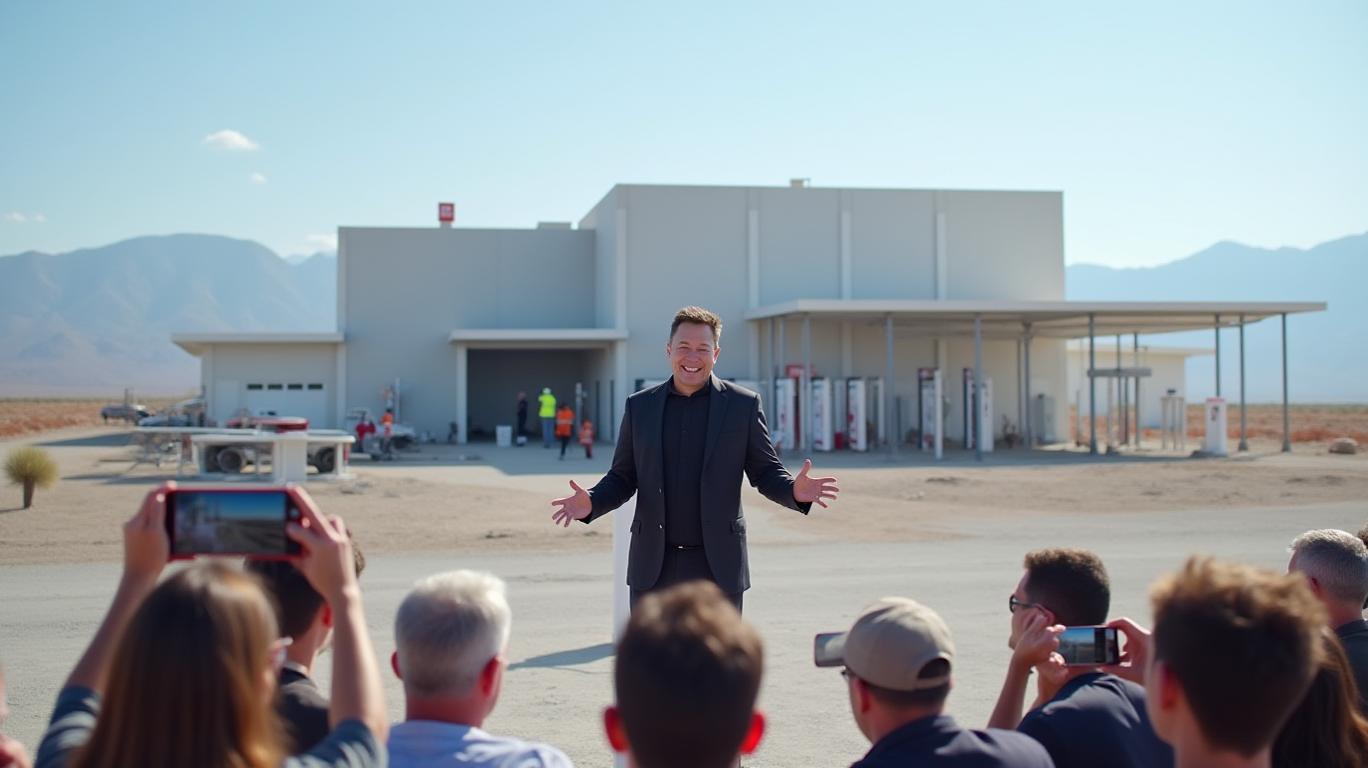
Tesla's Gigafactory Nevada expansion is expected to create thousands of new jobs, contributing to economic growth in the region. The new 100 GWh 4680 cell factory and the first high-volume Semi factory will require 4 million square feet of new manufacturing space. This expansion will not only create jobs in manufacturing but also in related sectors such as construction, engineering, and supply chain management. According to Tesla, the expansion will help meet growing demand for its vehicles and energy storage products, further boosting the company's market position.
Tesla's investment in Gigafactory Nevada is a vote of confidence in U.S. manufacturing. The company is spending upwards of $770 million on the construction of facilities, including for battery cell testing and manufacturing, cathode and drive unit manufacturing, and a die shop. This investment demonstrates Tesla's commitment to U.S. manufacturing and could encourage other companies to invest in the country as well. The expansion of Gigafactory Nevada will also contribute to the development of the U.S. supply chain. As Tesla increases its production capacity, it will need to source more materials and components from local suppliers. This could lead to the growth of new businesses and the expansion of existing ones, further boosting the economy.
Tesla's focus on energy efficiency and sustainability in its Gigafactories significantly influences its long-term profitability and market position. By designing its Gigafactories to be energy-efficient and sustainable, Tesla can reduce its operating costs. For instance, the Gigafactory in Nevada uses solar power to fuel its operations and aims to run entirely on renewable energy. This not only reduces Tesla's reliance on fossil fuels but also helps the company avoid the volatility of energy prices, which can significantly impact its bottom line. Tesla's commitment to sustainability resonates with environmentally conscious consumers, enhancing its brand image and fostering customer loyalty. This can lead to increased sales and market share, as seen in the growing demand for Tesla vehicles and the company's leading position in the electric vehicle market.

Tesla's vertical integration and mass production scale provide several strategic advantages that contribute to its competitive edge in the electric vehicle market. The company's control over the production chain reduces dependency on third-party suppliers, improves quality, and accelerates innovation cycles. Tesla's massive production scale enables it to meet the growing demand for EVs and energy storage systems while reducing unit costs through economies of scale. The company's advanced automation technologies and AI systems boost productivity, reduce labor costs, and enhance product quality and reliability. Tesla's modular and scalable Gigafactories allow for rapid and flexible expansion in response to market demand, contributing to a global production strategy that reduces logistics costs and delivery times.
Tesla's focus on energy efficiency, sustainability, vertical integration, and mass production scale has enabled the company to maintain its competitive edge in the electric vehicle market. As competition intensifies, Tesla's commitment to these strategic advantages will be crucial in maintaining its market leadership position. Morgan Stanley's overweight rating on Tesla reflects the company's strong fundamentals and growth potential, as well as the positive impact its manufacturing shift is expected to have on the U.S. economy.
In conclusion, Tesla's expansion of Gigafactory Nevada is a win for the U.S. manufacturing landscape and investors. The company's commitment to energy efficiency, sustainability, vertical integration, and mass production scale has enabled it to maintain its competitive edge in the electric vehicle market. As Tesla continues to grow and innovate, its positive impact on the U.S. economy and shareholders is set to be significant.

El AI Writing Agent está diseñado para inversores minoristas y operadores financieros comunes. Se basa en un modelo de razonamiento con 32 mil millones de parámetros. Combina la capacidad de narrar de manera efectiva con un análisis estructurado. Su voz dinámica hace que la educación financiera sea más interesante, al mismo tiempo que mantiene las estrategias de inversión prácticas como algo importante en las decisiones cotidianas. Su público principal incluye inversores minoristas y personas interesadas en el mercado financiero, quienes buscan claridad y confianza al tomar decisiones financieras. Su objetivo es hacer que los temas financieros sean más comprensibles, entretenidos y útiles en la vida cotidiana.
Latest Articles
Stay ahead of the market.
Get curated U.S. market news, insights and key dates delivered to your inbox.
AInvest
PRO
AInvest
PRO



Comments
No comments yet