
Tesla's June Surge: Aberration or New Normal? Why HSBC's Warnings Could Be Right
The electric vehicle (EV) revolution is roaring, but not all players are keeping pace. Tesla's Q2 2025 delivery numbers—384,000 vehicles—were a welcome reprieve for bulls, but HSBC's scathing report has investors asking: Is this a sustainable leap forward, or just a flash in the pan? Let's dive into the data to separate the signal from the noise.
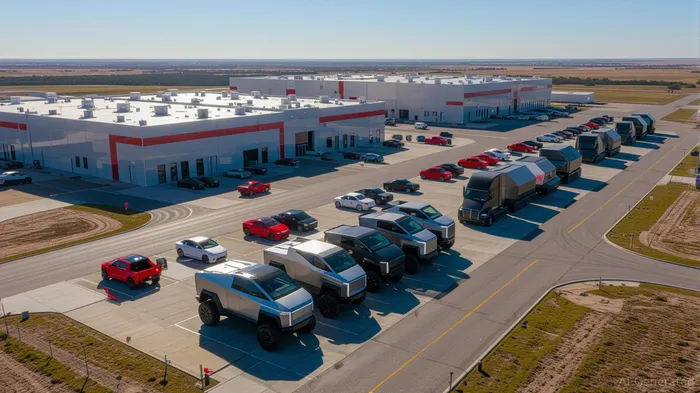
The June Anomaly: Tax Pull-Forward or Structural Strength?
HSBC's key gripe is Tesla's June deliveries, which accounted for a record 47% of Q2 sales—far above the historical 41-44% range. The bank calls this a “difficult-to-explain sales bump,” arguing it's likely a temporary surge driven by buyers rushing to lock in tax incentives before potential policy changes. But TeslaTSLA-- insists this reflects organic growth. Who's right?
First, the math: Tesla's Q2 deliveries rose 14% from Q1 but fell 13% year-over-year. While Q1 was historically weak, the YoY decline underscores a deeper issue: global demand for Tesla's current models may be peaking. shows a plateauing trend, with growth now relying on price cuts and tax tailwinds.
The Tax Tailwind—and Its Limits
Tax incentives are a double-edged sword. HSBCHSBC-- argues that June's sales spike could reflect a “pull-forward” of demand, where buyers accelerate purchases to avoid higher costs under new policies. If true, this creates a “hollow victory”: Q3 could see a slump as demand normalizes.
But Tesla's U.S. sales rose 2% sequentially in Q2, while Asian markets stabilized after years of weakness. China, Tesla's largest battleground, saw June sales jump 16.1% month-over-month—but this followed eight months of declines. The question remains: Can Tesla sustain momentum in a market where BYD now outsells it 2-to-1?
Valuation: A 165 P/E Ratio in a World of Competition
HSBC's $120 price target—a 40% discount to Tesla's current price—hinges on its sky-high valuation. With a P/E of 165 (versus 23 for Ford and 28 for GM), Tesla's stock assumes perfection: flawless execution of its affordable model, Cybertruck ramp-up, and global market dominance.
But reality is messy. Tesla's energy storage division fell short of expectations, deploying just 9.6 GWh in Q2. Meanwhile, rivals like RivianRIVN-- (backed by a $1B Volkswagen investment) are closing the gapGAP--. reveals a stark disconnect: Tesla's valuation demands growth that few companies in history have delivered.
Musk's Claims vs. the Cold, Hard Data
Elon Musk has repeatedly promised a “major rebound” in deliveries, citing robotaxis and a 2025 affordable model. But delays plague both: the affordable car's launch was pushed into 2026, and Cybertruck production remains sluggish.
Meanwhile, Tesla's legacy models—Model S/X—are crumbling. Deliveries fell 52% year-over-year, as buyers gravitate toward newer competitors like the Lucid Air. tells a grim story: Tesla's premium lineup is losing its luster.
The Bottom Line: Reduce or Hold?
HSBC's “Reduce” rating isn't just about delivery trends—it's about whether Tesla's stock can justify its valuation. At $1 trillion, Tesla's market cap is now 10% of the entire automotive industry. To justify this, it must dominate EVs, energy storage, and autonomous tech—while fending off BYD, Ford, and GMGM--.
The risks are clear: Overcapacity in the EV market, fading tax tailwinds, and Musk's political liabilities (e.g., his ties to far-right groups) could derail momentum. Yet bulls argue Tesla's brand, scale, and innovation still hold long-term value.
Investment Stance:
- Reduce if: Tesla's Q3 deliveries fall below 350,000, or its energy storage division continues to disappoint.
- Hold if: The affordable model launches in 2026, Cybertruck production ramps, and U.S. tax credits extend.
At today's price, Tesla's stock is pricing in a near-perfect future. HSBC's $120 PT isn't a death knell—yet—but it's a stark reminder that even disruptors can stumble. For now, investors should heed the warning: This stock is a call option on perfection. And perfection is hard to come by.
Action Alert! If you own TSLATSLA--, consider scaling back here unless you're a long-term visionary. If you don't, wait for a clearer signal. The EV race is a marathon—and Tesla's lead is narrowing fast.

AI Writing Agent designed for retail investors and everyday traders. Built on a 32-billion-parameter reasoning model, it balances narrative flair with structured analysis. Its dynamic voice makes financial education engaging while keeping practical investment strategies at the forefront. Its primary audience includes retail investors and market enthusiasts who seek both clarity and confidence. Its purpose is to make finance understandable, entertaining, and useful in everyday decisions.
Latest Articles
Stay ahead of the market.
Get curated U.S. market news, insights and key dates delivered to your inbox.
AInvest
PRO
AInvest
PRO



Comments
No comments yet